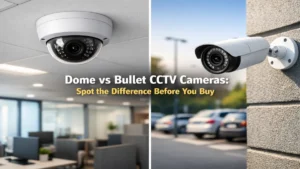
Choosing the right CCTV camera can feel confusing, especially when you’re deciding between two of the most common types: dome cameras and bullet cameras. Both serve the same core purpose, security and surveillance, but they differ in design, functionality, installation and use cases.
This detailed guide will help you understand the differences, advantages, limitations, and real-world applications of each type. By the end, you’ll know exactly which CCTV camera suits your needs, whether for home, office, retail, or industrial use.
Understanding CCTV Cameras: A Quick Overview
CCTV (Closed-Circuit Television) systems are essential for modern security. They help in:
- Monitoring premises in real-time
- Recording incidents for evidence
- Deterring theft and vandalism
- Improving safety and compliance
Two of the most widely used camera designs are:
Let’s break them down in detail.
What is a Dome CCTV Camera?
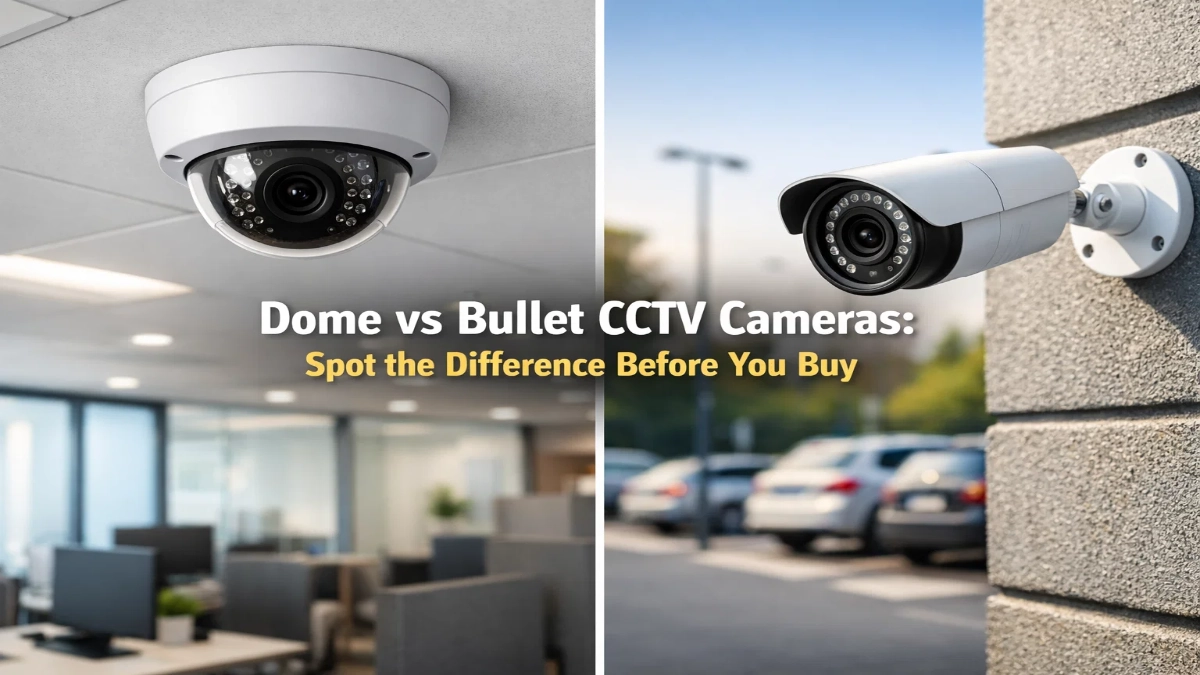
A dome camera is named after its dome-shaped casing. It is usually mounted on ceilings and is commonly used for indoor surveillance.
Key Features of Dome Cameras
- Compact and discreet design
- Wide-angle coverage
- Vandal-resistant casing
- Often comes with IR night vision
- Difficult to identify the viewing direction
Advantages of Dome Cameras
1. Discreet Surveillance
Dome cameras blend into interiors, making them less noticeable. This is ideal for environments where aesthetics matter, such as offices, hotels and retail stores.
2. Vandal Resistance
Most dome cameras are built with tough housings, making them harder to tamper with.
3. Wide Field of View
They often provide broader coverage, reducing the number of cameras needed.
4. Direction Ambiguity
It’s difficult to tell where the camera is pointing, which increases deterrence.
Limitations of Dome Cameras
- Slightly complex installation
- Limited long-distance visibility compared to bullet cameras
- Not always ideal for outdoor use unless weatherproof
What is a Bullet CCTV Camera?
A bullet camera has a long, cylindrical shape and is typically mounted on walls or poles. It is commonly used for outdoor surveillance.
Key Features of Bullet Cameras
- Long-range viewing capability
- Weatherproof housing
- Easy installation and adjustment
- Clearly visible design
Advantages of Bullet Cameras
1. Long-Distance Monitoring
Bullet cameras are ideal for monitoring large areas such as parking lots, warehouses and perimeters.
2. Strong Deterrence
Their visible presence discourages potential intruders.
3. Easy Installation
They are simpler to mount and adjust compared to dome cameras.
4. Outdoor Durability
Most bullet cameras are built to withstand harsh weather conditions.
Limitations of Bullet Cameras
- More visible (less discreet)
- Easier to tamper with if mounted low
- Narrower field of view in some models
Dome vs Bullet Cameras: Key Differences
| Feature | Dome Camera | Bullet Camera |
|---|---|---|
| Design | Dome-shaped | Cylindrical |
| Installation | Ceiling | Wall/Pole |
| Visibility | Discreet | Highly visible |
| Best Use | Indoor | Outdoor |
| Range | Medium | Long |
| Vandal Resistance | High | Moderate |
| Coverage | Wide-angle | Focused |
Which Camera is Better for Indoor Use?
For indoor environments, dome cameras are usually the better choice.
Why?
- They blend with interiors
- Offer wide coverage for rooms
- Reduce chances of tampering
- Ideal for retail stores, offices, hotels, and homes
Best Indoor Locations:
- Living rooms
- Reception areas
- Hallways
- Retail floors
Which Camera is Better for Outdoor Use?
For outdoor surveillance, bullet cameras are generally more effective.
Why?
- Built for weather resistance
- Better long-distance visibility
- Easy to aim at specific areas
- Strong visual deterrence
Best Outdoor Locations:
- Parking areas
- Entry/exit gates
- Building perimeters
- Industrial sites
Factors to Consider Before Buying
Choosing between dome and bullet cameras depends on several factors:
1. Purpose of Surveillance
Ask yourself:
- Do you need general monitoring or focused tracking?
- Is it for deterrence or discreet observation?
2. Installation Location
- Indoor → Dome camera
- Outdoor → Bullet camera
3. Lighting Conditions
Look for cameras with:
- IR night vision
- Low-light performance
- WDR (Wide Dynamic Range)
4. Camera Resolution
Higher resolution = better clarity.
Recommended:
- 2MP (minimum)
- 4MP or higher for detailed monitoring
5. Weather Resistance
For outdoor use, check:
- IP66 or IP67 rating
6. Field of View
- Wide-angle → Dome
- Narrow & focused → Bullet
Use Case Scenarios
1. Home Security
- Indoor: Dome cameras
- Outdoor: Bullet cameras
2. Retail Stores
- Dome cameras for customer areas
- Bullet cameras for entrances
3. Offices
- Dome cameras for indoor monitoring
- Bullet cameras for parking areas
4. Industrial Sites
- Bullet cameras for perimeter security
- Dome cameras for internal operations
Advanced Features to Look For
Modern CCTV systems offer much more than just recording.
Smart Features
- Motion detection
- Human detection
- Intrusion alerts
- Mobile app access
Storage Options
- NVR (Network Video Recorder)
- Cloud storage
Integration
- Works with access control systems
- Remote monitoring
Dome or Bullet: Which Should You Choose?
Choose Dome Cameras If:
- You want discreet surveillance
- You need wide indoor coverage
- You prefer vandal-resistant design
Choose Bullet Cameras If:
- You need long-range monitoring
- You want visible deterrence
- You require outdoor durability
Can You Use Both Together?
Yes, and this is often the best approach.
A hybrid CCTV system combining dome and bullet cameras gives you:
- Complete coverage
- Better security layering
- Flexibility for different environments
A Balanced Perspective on Quality Brands
When selecting CCTV cameras, choosing a reliable brand is just as important as choosing the type.
Brands like Impact by Honeywell offer both dome and bullet cameras designed for:
- Consistent performance
- Reliable image quality
- Integration with NVR systems
- Scalability for homes and businesses
Rather than focusing only on brand promotion, it’s important to evaluate:
- Build quality
- Features offered
- After-sales support
- Compatibility with your system
Installation Tips for Best Performance
For Dome Cameras
- Mount on ceilings
- Avoid direct light exposure
- Clean the dome cover regularly
For Bullet Cameras
- Install at height to prevent tampering
- Angle properly for coverage
- Protect cables from exposure
Common Mistakes to Avoid
- Choosing the wrong camera for the location
- Ignoring resolution and night vision
- Poor camera placement
- Not considering storage requirements
- Overlooking maintenance
There is no one-size-fits-all answer when choosing between dome and bullet cameras. The right choice depends on your specific needs.
- For indoor, discreet monitoring → Dome cameras
- For outdoor, long-range security → Bullet cameras
If you want the best results, consider using both types strategically across your property.
Note: Investing in the right CCTV camera is not just about security; it’s about peace of mind. By understanding the differences between dome and bullet cameras, you can make an informed decision that fits your environment, budget and security goals.
Whether you are securing a home, office, or industrial facility, choosing the right combination of cameras and a reliable brand like Impact by Honeywell can make all the difference.
Read Also: Top 7 Features of Impact by Honeywell CCTV Cameras You Should Know
Read Also: Types of Fire Alarm Systems Used in Industrial Facilities