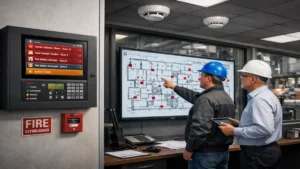
Fire detection requirements vary widely across different types of buildings. A detector suitable for a hotel corridor may not work efficiently in a hospital ICU and a device meant for a chemical plant could be unsafe in a commercial kitchen.
This is why engineers, safety managers and facility owners must understand which type of fire detector is ideal for each environment, based on risk levels, occupancy type, sensitivity needs and local fire codes.
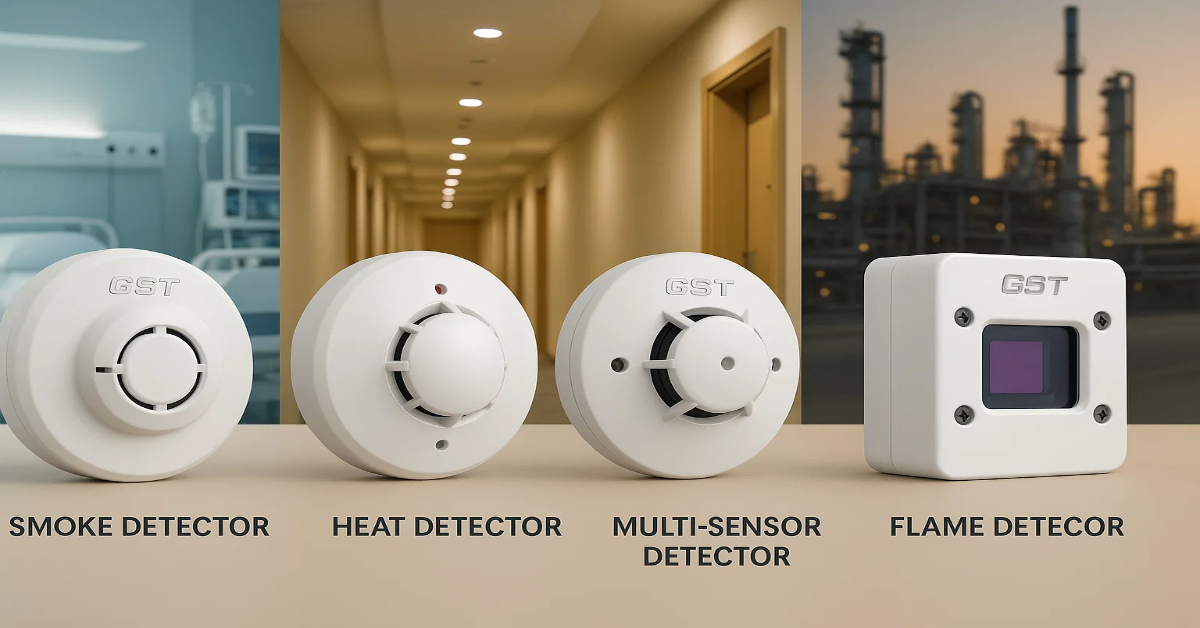
Modern detector manufacturers, including GST, offer a wide range of devices engineered for diverse applications. While each brand has its own strengths, the real decision lies in matching the right technology with the right setting rather than relying on generic “one-type-fits-all” solutions.
This article will guide you through:
- How fire detection needs differ between hospitals, hotels and industrial facilities
- Types of detectors and how each one works
- Which detectors suit each building type
- Mistakes to avoid while selecting detectors
- Expert considerations for long-term performance and compliance
Let’s begin.
Why Different Buildings Need Different Types of Detectors
Every building has unique fire risks. Hospitals are filled with oxygen cylinders and bedsheets. Hotels have kitchens, laundries and high footfall. Industrial plants handle chemicals, machinery and heavy electrical loads.
Choosing a suitable detector depends on factors such as:
1. Fire Risk Type
- Smoldering fire
- Flaming fire
- Electrical fire
- Oil or gas fire
- Chemical ignition
Each risk type demands a specific sensing technology.
2. Environmental Conditions
- Temperature variation
- Humidity
- Dust
- Chemicals
- Airflow
These can affect how a detector performs or even cause false alarms.
3. Occupant Sensitivity
Hospitals need early detection with minimal disruption. Hotels need quiet environments without false alarms. Industrial sites prioritize robustness and hazard-compatible designs.
4. Compliance With Local Codes
Fire norms for healthcare differ from hospitality and heavy industries. The detector choice must satisfy local authority requirements.
This is why leading fire detection brands, including GST, offer multiple models, optical, thermal, multi-sensor and specialized detectors, so engineers can tailor solutions for each application without relying on generic options.
Types of Fire Detectors: A Simple Breakdown
To choose correctly, you must know how each detector works and where it is most effective.
1. Smoke Detectors
Types
- Optical (Photoelectric) Smoke Detectors
Best for detecting slow, smoldering fires. - Ionization Smoke Detectors
Good for flaming fires but less commonly used today due to regulatory restrictions. - Aspirating Smoke Detection (ASD)
Ultra-sensitive and used where early detection is critical.
Where They Work Best
- Hotel corridors and rooms
- Hospital patient areas
- Commercial spaces
- Clean environments
Limitations
- Not ideal for dusty areas
- Not suitable for areas with high steam or smoke (e.g., kitchens)
Modern detectors, including those available from advanced brands like GST, now incorporate improved optical chambers to reduce false alarms in typical hospitality and healthcare zones.
2. Heat Detectors
Types
- Fixed-Temperature
Activates when temperature exceeds a threshold. - Rate-of-Rise (ROR)
Activates when temperature increases rapidly.
Where They Work Best
- Kitchens
- Boiler rooms
- Parking areas
- Laundry rooms
- High-temperature zones
Limitations
- Slow to react to smoldering fires
- Not ideal where early detection is required (e.g., hospitals)
Heat detectors are reliable in environments where smoke is common and could trigger false alarms.
3. Multi-Sensor Detectors
These detectors combine:
- Smoke + Heat
- Optical + Thermal
- Sometimes even CO sensing
Advantages
- Higher accuracy
- Reduced false alarms
- Works across multiple fire scenarios
Where They Work Best
- Hotels (guest rooms and lobbies)
- Hospitals (wards and critical areas)
- Modern commercial buildings
Many brands (GST included) offer multi-sensor detectors engineered to intelligently differentiate between real fire signatures and harmless aerosols.
4. Carbon Monoxide (CO) Fire Detectors
These do not detect CO poisoning; they detect CO generated from a fire.
Where They Work Best
- Underground parking
- Mechanical rooms
- Enclosed generator areas
Limitations
- Not suitable alone for general fire detection
- Must be paired with smoke or multi-sensor detectors
5. Flame Detectors
Types
- UV Flame Detectors
Detect ultraviolet radiation from fire. - IR Flame Detectors
Detect infrared radiation. - UV/IR Flame Detectors
Combine both for accuracy.
Where They Work Best
- Fuel storage zones
- Industrial plants
- Aircraft hangars
- Large machinery rooms
Limitations
- Expensive
- Must be installed with proper line-of-sight
- Not suitable for normal buildings like hotels/hospitals
These are specialty detectors used only in high-risk zones.
6. Gas Detectors
Gas detectors are not fire detectors but are often part of fire safety systems.
Where They Work Best
- Industrial plants
- Gas boiler rooms
- Commercial kitchens
Detector Recommendations for Different Facility Types
Now let’s match building needs with detector categories.
Best Detectors for Hospitals
Hospitals require the fastest possible detection with the lowest disturbance. Critical areas like ICU, NICU and OT have stricter requirements.
Recommended Detector Types
1. Optical Smoke Detectors
Ideal for:
- Patient rooms
- Wards
- General corridors
Optical detectors in brands like GST often come with enhanced algorithms to reduce false alarms caused by disinfectants or aerosol sprays, common in hospitals.
2. Multi-Sensor Smoke + Heat Detectors
Ideal for:
- Emergency zones
- Recovery rooms
- OPD and administrative areas
These detectors provide:
- Early warning
- Better stability
- Reduced false alarms due to airflow from air-conditioning units
3. Aspirating Smoke Detectors (ASD)
Ideal for:
- ICU
- OT
- Server rooms
- Diagnostic labs
This is because ASD:
- Detects fires much earlier than standard detectors
- Works well with HVAC environments
- Is suitable for ultra-sensitive environments
4. Heat Detectors
For:
- Kitchens
- Laundry
- Boiler areas
Best Detectors for Hotels
Hotels face a variety of environments: guest rooms, kitchens, corridors, banquet halls and mechanical rooms.
Recommended Detector Types
1. Multi-Sensor Detectors (Smoke + Heat)
Best for:
- Guest rooms
- Lobbies
- Banquet halls
Hotels need detectors that:
- Avoid false alarms from perfumes, hair sprays and steam
- Detect both smoldering and flaming fires
Modern multi-sensor detectors, including those from GST, use intelligent algorithms to distinguish real fire particles from harmless aerosols.
2. Optical Smoke Detectors
Used for:
- Corridors
- Meeting rooms
- Reception areas
These areas benefit from early detection without requiring the complexity of multi-sensor units.
3. Heat Detectors
Used for:
- Kitchens
- Laundry areas
- Storage zones
Heat detectors prevent false alarms from steam and cooking smoke.
4. CO Fire Detectors
Used for:
- Parking areas
- Generator rooms
Hotels with underground parking should combine CO fire detectors with exhaust control systems.
Best Detectors for Industrial Sites
Industrial environments are the most complex due to:
- High heat
- Dust
- Chemicals
- Machinery
- Open flames
- Explosive atmospheres
Recommended Detector Types
1. Heat Detectors
For:
- Workshops
- Mechanical rooms
- High-temperature areas
- Machine zones
Heat detectors withstand tough conditions where smoke detectors might fail.
2. Flame Detectors
For:
- Fuel storage
- Chemical plants
- Powerhouses
- Manufacturing lines
UV/IR or triple-IR flame detectors provide rapid detection even in dusty or large open spaces.
3. Gas Detectors
For:
- Chemical handling zones
- Boiler rooms
- Gas pipelines
- Paint booths
4. Optical Smoke Detectors (Industrial-Grade)
Used in:
- Clean manufacturing zones
- Packaging areas
- Warehouses with controlled environments
Modern detectors from brands like GST are designed with anti-dust structures to operate effectively in light-industrial conditions.
5. Aspirating Detectors
Used in:
- High-value equipment areas
- Cleanrooms
- Electrical control hubs
ASD ensures early fire detection, helping to prevent downtime in critical industrial operations.
Common Mistakes to Avoid While Choosing Fire Detectors
1. Using the same detector type throughout a facility
A hotel room and a boiler room cannot use the same device. Tailor choices per zone.
2. Ignoring environmental factors
Heat, humidity, or dust can impair detector performance.
3. Not evaluating false alarm reduction features
Modern detectors, including those by GST and other reputed brands, use digital algorithms to differentiate real fire from nuisances.
4. Installing detectors without compatibility checks
If you use a specific brand panel, ensure the detectors are approved for that system.
5. Overlooking maintenance requirements
Dirty environments require detectors with anti-dust design and easier maintenance.
6. Ignoring local fire code requirements
Healthcare codes differ from industrial norms. Compliance is mandatory.
Engineering Considerations
1. Response Time
Hospitals: Need ultra-fast
Hotels: Fast but stable
Industries: Depends on zone
2. Sensitivity Level
High sensitivity needed in:
- Hospitals
- High-value rooms
- Cleanrooms
Moderate sensitivity for:
- Hotels
- Offices
Lower sensitivity for:
- Industrial hot zones
3. Redundancy Requirements
Critical zones require:
- Multi-sensor technology
- ASD
- Overlapping coverage
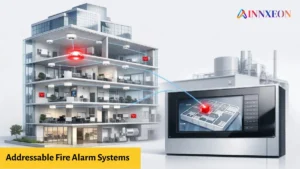
4. Integration with Addressable Panels
Today, most large buildings shift to addressable systems for:
- Zone identification
- Faster response
- Better maintenance alerts
Brands like GST offer a full ecosystem of addressable detectors suitable for these applications.
Choosing the right fire detector is not about selecting a brand first, it’s about selecting the right technology for the environment. Hospitals, hotels and industrial sites each have unique fire risks, occupancy patterns and environmental conditions.
In general:
- Hospitals benefit most from multi-sensor and aspirating systems.
- Hotels require multi-sensor and optical detectors for guest areas and heat detectors for service zones.
- Industrial sites need robust thermal, flame and gas detection systems depending on the hazard type.
Advanced detector lines offered by established manufacturers such as GST provide a wide range of options suitable for all these sectors. Their engineering depth ensures you can design systems that enhance safety without being dependent on promotional claims.
A well-chosen detector not only saves lives but also reduces false alarms, maintenance downtime and long-term operational risks. The right selection today becomes the foundation of safer infrastructure tomorrow.
Read Also: Buy GST Detectors and Modules: Confirm Authenticity and Warranty