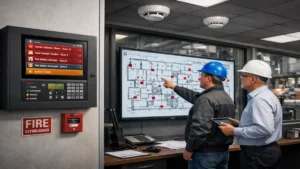
Modern construction projects are no longer defined only by concrete, steel and glass. Today, buildings are expected to be intelligent, safe, scalable and future-ready. Whether it is a commercial tower, hospital, airport, data centre or residential township, developers and consultants prioritise systems that deliver precision, reliability and long-term value.
One technology that has become a clear preference in this evolving construction landscape is the addressable fire alarm system.
Unlike conventional fire alarm systems, addressable systems provide exact device-level information, advanced diagnostics and seamless integration with modern building management systems. As construction projects become larger, denser and more complex, addressable systems are no longer an upgrade; they are a necessity.
This article explains why addressable systems are preferred in modern construction, how they support safety and operational efficiency and why GST (Gulf Security Technology) addressable fire alarm systems are widely specified in today’s large-scale projects.
Understanding Addressable Fire Alarm Systems
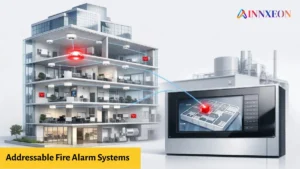
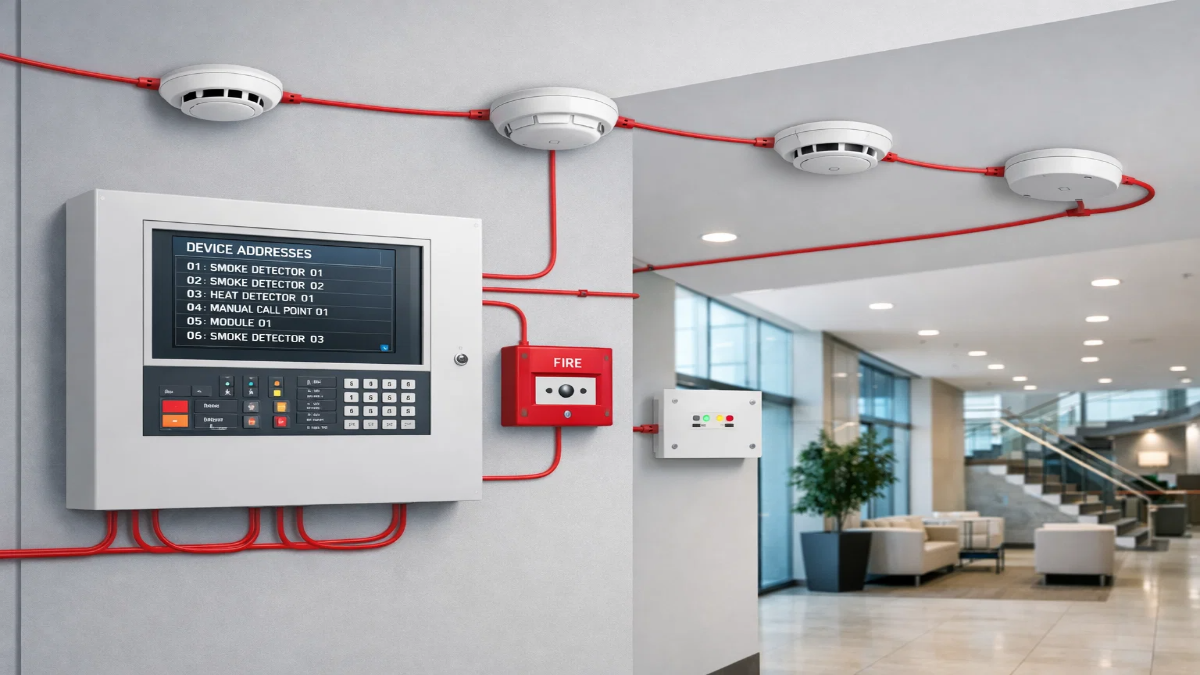
An addressable fire alarm system assigns a unique digital address to every connected device like detectors, manual call points, modules and sounders.
When an event occurs, the fire alarm control panel identifies:
- Which device triggered
- Exact location of the device
- Type of fault or alarm
- Time and status of the event
This level of intelligence allows facility teams and emergency responders to act faster and more accurately.
Addressable vs Conventional Systems (Quick Comparison)
| Feature | Conventional System | Addressable System |
|---|---|---|
| Location identification | Zone-level only | Exact device location |
| Scalability | Limited | Highly scalable |
| Wiring efficiency | High cable volume | Optimized loop wiring |
| Maintenance | Manual & time-consuming | Automatic diagnostics |
| Integration | Limited | Fully integrable |
| Suitability | Small buildings | Modern large projects |
Modern construction clearly aligns with the addressable model.
Why Modern Construction Demands Addressable Systems
1. Increasing Building Complexity
Today’s buildings are:
- Taller
- Wider
- More densely occupied
- Mixed-use (commercial + residential + parking + retail)
A single fire zone covering hundreds of devices is not practical in such environments.
Addressable systems solve this by offering pinpoint accuracy, enabling teams to:
- Identify the exact detector in alarm
- Respond to the correct floor and room
- Avoid confusion during emergencies
GST addressable systems support high device density, making them ideal for complex architectural designs.
2. Faster Emergency Response Saves Lives
In fire safety, seconds matter.
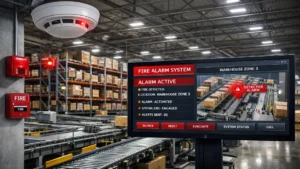
Addressable systems significantly reduce response time because:
- The panel displays the exact device location
- Firefighters know where to go immediately
- Security teams avoid unnecessary floor evacuations
In large hospitals, hotels, airports, and IT parks, this accuracy directly impacts:
- Occupant safety
- Property protection
- Regulatory compliance
Modern construction prioritizes risk mitigation and addressable systems align perfectly with that goal.
3. Scalability for Future Expansion
Modern buildings are rarely static. Developers often plan:
- Future floors
- Additional wings
- Tenant reconfigurations
- System upgrades
Addressable systems allow easy expansion without rewiring the entire system.
GST addressable panels are designed with:
- Modular architecture
- Flexible loop capacity
- Software-based configuration
This ensures the system grows with the building, protecting long-term investment.
4. Reduced Cabling and Optimized Infrastructure
Construction efficiency is a major concern in modern projects.
Addressable systems use loop wiring, which:
- Reduces cable quantity
- Simplifies routing
- Saves shaft and tray space
- Lowers installation time
For large projects, this translates into:
- Lower labor cost
- Cleaner installations
- Faster project completion
GST systems are engineered to support long loop lengths and high device counts, making them suitable for large campuses and high-rise structures.
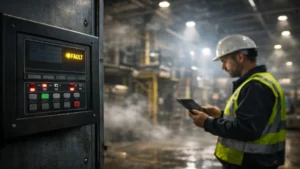
5. Advanced Fault Detection and Maintenance Efficiency
Maintenance teams in modern buildings manage multiple systems simultaneously.
Addressable systems continuously monitor:
- Device health
- Wiring integrity
- Power status
- Communication errors
When a fault occurs, the panel identifies:
- The exact device
- Nature of the fault
- Corrective action required
This proactive approach:
- Reduces downtime
- Prevents false alarms
- Improves system reliability
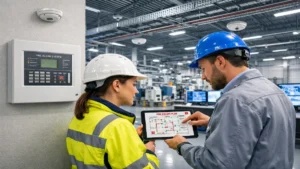
GST addressable fire alarm systems offer intelligent diagnostics, helping facility managers maintain compliance with minimal effort.
Integration with Smart Building Ecosystems
Modern construction emphasizes smart and connected infrastructure.
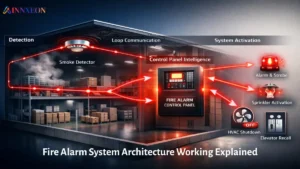
Addressable fire alarm systems integrate seamlessly with:
- Building Management Systems (BMS)
- HVAC systems
- Smoke control systems
- Access control
- Public address systems
- Elevators
GST systems support industry-standard communication protocols, enabling centralized monitoring and control.
This integration allows automated actions such as:
- Releasing fire doors
- Activating smoke exhaust
- Controlling elevators
- Broadcasting emergency messages
Such automation is essential for modern high-occupancy buildings.
Compliance with Modern Fire Safety Codes
Fire safety regulations across regions increasingly favor addressable technology, especially for:
- High-rise buildings
- Healthcare facilities
- Commercial complexes
- Industrial plants
Addressable systems help meet:
- Local fire authority requirements
- International standards
- Insurance compliance
- Consultant specifications
GST fire alarm systems are designed and manufactured in compliance with globally recognized standards, making them suitable for both domestic and international projects.
Lower Total Cost of Ownership (TCO)
Although addressable systems may have a higher initial cost than conventional systems, modern construction focuses on lifecycle cost, not just installation cost.
Addressable systems offer savings through:
- Reduced cabling
- Faster fault resolution
- Lower maintenance labor
- Fewer false alarms
- Easy upgrades
Over the building’s lifespan, addressable systems deliver better ROI.
GST systems are known for:
- Long-term reliability
- Stable performance
- Cost-effective maintenance
This makes them a preferred choice for developers focused on sustainability and operational efficiency.
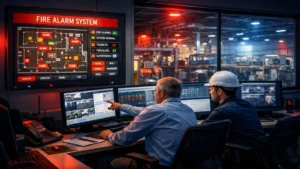
Improved User Experience for Facility Teams
Modern buildings rely on professional facility management teams.
Addressable systems provide:
- Clear event logs
- Visual floor plans
- Easy system navigation
- Detailed reporting
GST fire alarm panels feature user-friendly interfaces, enabling operators to understand system status quickly, even under pressure.
This usability reduces human error and improves emergency handling.
Why Consultants Prefer GST Addressable Systems
Fire consultants and system designers prioritize:
- Proven reliability
- Flexible design
- Strong technical support
- Long-term availability
GST (Gulf Security Technology) has established itself as a trusted brand by offering:
- Robust addressable panels
- Wide range of compatible devices
- High loop capacity
- Strong after-sales support
These factors make GST a preferred specification in modern construction projects across commercial, industrial and infrastructure sectors.
Real-World Applications in Modern Construction
Addressable systems are ideal for:
- IT parks and SEZs
- Airports and metros
- Hospitals and healthcare campuses
- Shopping malls and multiplexes
- Data centers
- Smart residential townships
GST addressable fire alarm systems have proven performance in high device density and mission-critical environments, where reliability is non-negotiable.
The Future of Fire Safety in Construction
Modern construction is moving toward:
- Smart buildings
- AI-driven safety
- Predictive maintenance
- Centralized command centers
Addressable systems form the foundation of this future.
With evolving regulations, increasing building scale and rising safety expectations, addressable fire alarm systems will continue to dominate new construction projects.
Addressable fire alarm systems are no longer an optional upgrade, they are a core requirement in modern construction.
They deliver:
- Precision
- Speed
- Scalability
- Integration
- Long-term value
For developers, consultants and facility managers seeking reliable and future-ready fire safety solutions, GST addressable fire alarm systems offer the performance, flexibility and intelligence required to meet today’s construction challenges.
As buildings evolve, fire safety systems must evolve with them, and addressable technology leads that evolution.