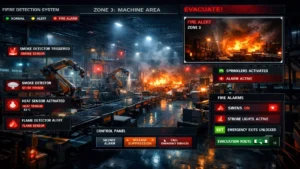
False fire alarms are more than just annoying interruptions. In commercial buildings, they disrupt operations, reduce trust in safety systems, create unnecessary evacuations and may even lead occupants to ignore real emergencies. For facility managers and safety engineers, repeated false alarms translate into lost productivity, higher maintenance costs and potential compliance issues.
Yet here’s the good news: most false alarms are preventable.
With the right system design, smarter detection technology and proper engineering practices, modern solutions like the Gulf Security Technology (GST) fire alarm platforms significantly reduce unwanted activations while improving reliability and response speed.
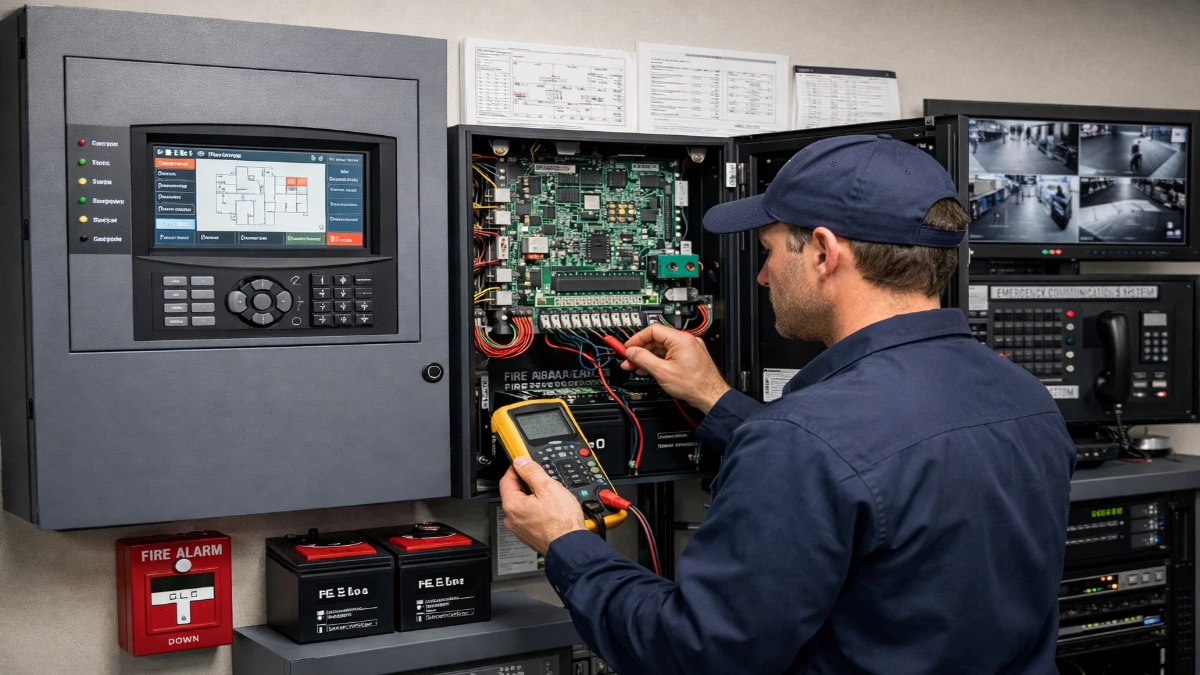
This guide explains why false fire alarms happen in commercial buildings and how engineers prevent them using advanced fire alarm strategies, addressable technology and intelligent detectors.
What Is a False Fire Alarm?
A false fire alarm is any alarm activation not caused by an actual fire.
It may result from:
- Environmental factors
- Human error
- Equipment issues
- Poor system design
Even though no fire exists, the building reacts as if one does. That means evacuations, shutdowns and emergency service calls.
Why False Fire Alarms Are a Serious Problem
Many people think, “It’s just a false alarm.” But in commercial environments, the consequences add up quickly.
Operational Impact
- Business downtime
- Lost working hours
- Production stoppages
Financial Impact
- Maintenance expenses
- Fire brigade fines
- Service call costs
Safety Impact
- Occupant complacency
- Delayed response to real fires
- Reputation damage
When people hear alarms too often, they start ignoring them. That’s dangerous.
Common Causes of False Fire Alarms
Let’s break down the most frequent reasons engineers see in offices, malls, hospitals, warehouses and data centres.
1. Dust and Construction Debris
Dust is the silent enemy of smoke detectors.
During construction or renovation:
- Drilling creates fine particles
- Ceiling work releases debris
- HVAC systems spread contaminants
These particles enter smoke chambers and mimic smoke behaviour, triggering alarms.
Engineer Solution
- Use addressable detectors with drift compensation
- Install temporary covers during construction
- Clean detectors regularly
- Enable maintenance alerts
Modern addressable fire alarm panel systems from GST automatically detect contamination levels and notify technicians before nuisance alarms occur.
2. Steam, Humidity and Temperature Changes
Commercial kitchens, bathrooms and mechanical rooms produce steam that looks like smoke to traditional detectors.
Examples:
- Pantry cooking
- Boiler rooms
- Laundry areas
- HVAC discharge
Conventional optical sensors can’t easily differentiate between smoke and vapour.
Engineer Solution
- Install heat detectors instead of smoke detectors
- Use multi-criteria sensors
- Apply sensitivity tuning
- Select environment-specific devices
Choosing conventional detectors blindly without environmental analysis often causes this issue.
3. Improper Detector Placement
Bad placement = bad performance.
Common mistakes:
- Near air vents
- Above kitchens
- Near loading docks
- Close to the exhaust fans
Airflow carries dust or smoke directly into sensors.
Engineer Solution
- Follow international codes (NFPA/EN standards)
- Perform airflow analysis
- Zone correctly
- Use beam or heat detection in large spaces
Engineers designing a conventional fire alarm panel layout must be extra careful because location mistakes affect entire zones.
4. Electrical and Wiring Faults
Loose wiring or poor grounding can trigger:
- Intermittent signals
- Short circuits
- Ghost alarms
Older systems suffer most.
Engineer Solution
- Shielded cabling
- Loop integrity checks
- Short-circuit isolators
- Routine inspections
A modern GST fire alarm system uses addressable loops that isolate faults automatically, preventing one cable issue from triggering the entire building.
5. Poor Maintenance
Many false alarms come from one simple cause: neglect.
Dirty detectors, expired sensors and outdated firmware create unreliable signals.
Engineer Solution
Follow a preventive maintenance schedule:
- Quarterly testing
- Annual calibration
- Detector cleaning
- Software updates
Smart panels now provide predictive maintenance alerts, so issues get fixed before failure.
6. Human Error
People trigger alarms, too.
Examples:
- Smoking indoors
- Aerosol sprays
- Hot work (welding)
- Unauthorized testing
Engineer Solution
- Staff training
- Hot-work permits
- Temporary isolation modes
- Awareness signage
Education reduces unnecessary triggers dramatically.
How Engineers Prevent False Fire Alarms (Modern Strategy)
Now let’s move from problems to solutions.
1. Switch to Addressable Technology
An addressable fire alarm panel identifies exactly which device activates.
Benefits:
- Pinpoint accuracy
- Faster troubleshooting
- Individual sensitivity control
- Reduced nuisance alarms
Instead of shutting down an entire zone, engineers can isolate one device.
2. Use Intelligent Addressable Detectors
Advanced addressable detectors combine:
- Smoke sensing
- Heat sensing
- Algorithms
- Drift compensation
They analyse patterns instead of reacting instantly.
Result: fewer false trips.
GST detectors, for example, compare real-time environmental data to distinguish between smoke and dust.
3. Proper System Design & Zoning
Good engineering starts before installation.
Best practices:
- Risk assessment
- Hazard mapping
- Separate kitchen/mechanical zones
- Use different detector types
A one-size-fits-all design always causes problems.
4. Smart Sensitivity Settings
Modern panels allow time-based sensitivity:
- Day = low sensitivity
- Night = high sensitivity
This prevents alarms during busy hours while keeping full protection.
5. Preventive Maintenance Plans
Top facilities follow:
| Task | Frequency |
|---|---|
| Visual inspection | Monthly |
| Cleaning | Quarterly |
| Functional testing | Quarterly |
| Full system audit | Annually |
A properly maintained GST fire alarm system dramatically lowers nuisance calls.
6. Integration with BMS & ELV Systems
Integrating with:
- CCTV
- BMS
- PAVA
- Access control
helps verify events.
Example:
Camera checks confirm whether smoke exists before mass evacuation.
This reduces panic and improves response accuracy.
Addressable vs Conventional: Which Reduces False Alarms More?
| Feature | Addressable | Conventional |
|---|---|---|
| Device identification | Yes | No |
| Sensitivity control | Individual | Zone-based |
| Maintenance alerts | Yes | Limited |
| False alarm reduction | Excellent | Moderate |
| Ideal for | Large buildings | Small sites |
Conclusion: Addressable always performs better in commercial spaces.
Why GST Systems Stand Out
Engineers prefer GST because:
- Intelligent detection algorithms
- Drift compensation technology
- Self-diagnostics
- Loop fault isolation
- Scalable architecture
Whether using addressable detectors or conventional detectors, GST provides reliability that minimises nuisance alarms while maintaining full compliance.
Simply put: fewer disruptions, safer buildings.
Best Practices Checklist for Engineers
- Conduct a site survey
- Choose the correct detector type
- Install an addressable fire alarm panel
- Schedule maintenance
- Train staff
- Integrate with ELV systems
- Use predictive diagnostics
Follow these steps and false alarms drop significantly.
Final Thoughts
False fire alarms are not random events. They usually point to design gaps, environmental mismatches, or maintenance issues.
The solution is not just better equipment. It’s smarter engineering.
When you combine:
- Intelligent design
- Advanced addressable detectors
- Proper zoning
- Preventive care
- Reliable solutions like the GST fire alarm system
You create a building that responds only when it truly matters.
And that’s the goal: maximum safety with minimum disruption.
Read Also: Interface Challenges Between Fire Alarm Systems and Other ELV Networks
Read Also: Fire Alarm + PAVA Integration: A Smarter Emergency Communication Strategy