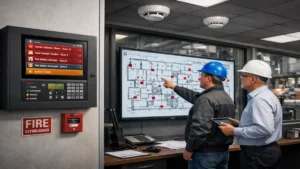
Fire safety in large buildings is no longer just about compliance; it is about risk reduction, operational continuity and protecting human life. As infrastructure grows more complex, traditional fire alarm technologies struggle to provide the speed, accuracy and intelligence needed for modern environments.
This is where GST Addressable Fire Alarm Systems by Gulf Security Technology stand out. Designed for large-scale fire safety projects, these systems significantly reduce risk through precise detection, faster response and intelligent system control.
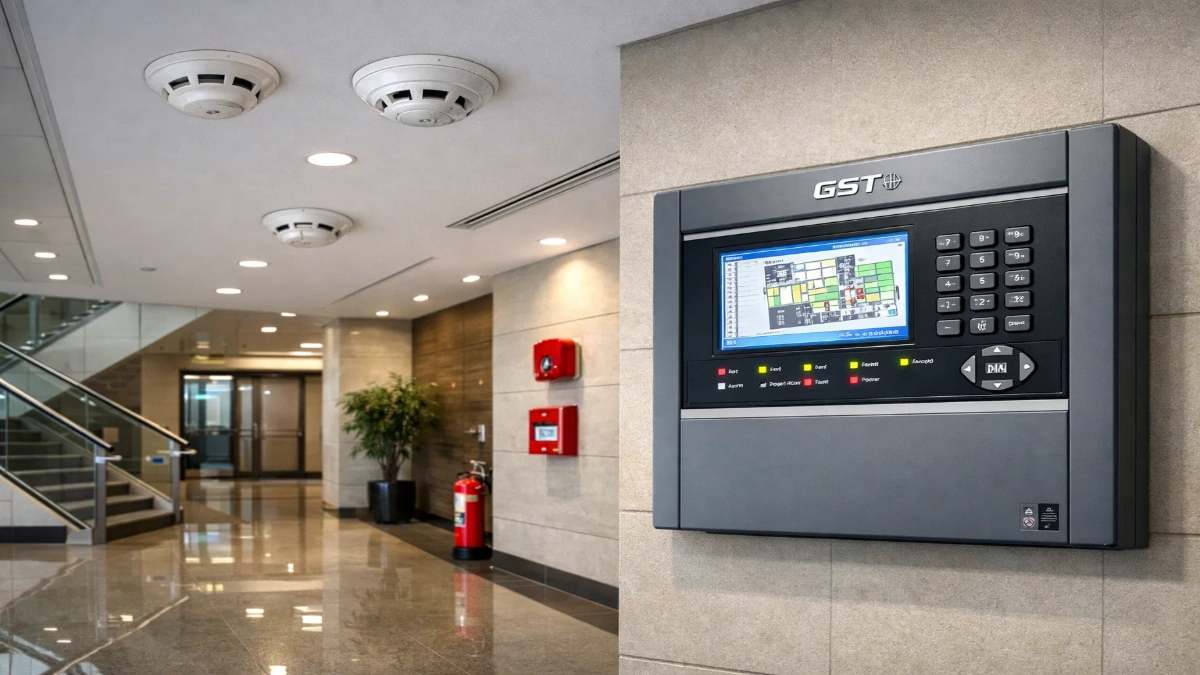
In this article, we explain why engineers, consultants and facility managers trust GST addressable systems and how they help minimise fire-related risks in large projects such as hospitals, airports, data centres, commercial complexes and industrial facilities.
Understanding Risk in Large Fire Safety Projects
Before discussing solutions, it is important to understand why risk is higher in large projects.
Common Fire Safety Risks in Large Buildings
Large fire safety projects face multiple challenges:
- Thousands of devices are spread across wide areas
- Complex evacuation routes
- Mixed-use occupancies
- High-value assets and critical operations
- Difficulty in identifying the exact fire locations
A delayed or inaccurate alarm response can lead to:
- Loss of life
- Severe property damage
- Business interruption
- Legal and compliance issues
To control these risks, intelligent fire detection and monitoring systems are essential.
What Is a GST Addressable Fire Alarm System?
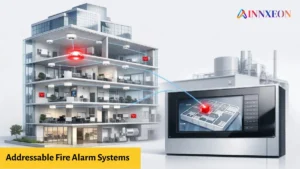
A GST addressable fire alarm system assigns a unique digital address to every connected device, detectors, call points, sounders and modules. This allows the control panel to identify exactly which device is in alarm, trouble, or fault condition.
Unlike traditional systems, addressable technology provides actionable information, not just alerts.
Addressable vs Conventional Systems: Risk Perspective
Understanding the difference between addressable and conventional systems highlights why addressable technology is preferred for large projects.
Conventional Fire Alarm Systems
A conventional fire alarm panel divides a building into zones. When an alarm occurs, the panel only identifies the affected zone, not the specific device.
Risk limitations:
- Slower response time
- Larger search area for the fire source
- Higher false alarm impact
- Limited system intelligence
GST Addressable Fire Alarm Systems
GST addressable systems pinpoint the exact device location, such as:
- “Smoke Detector – Level 5 – East Wing – Server Room”
This precision dramatically reduces risk by enabling faster, more informed decisions.
How GST Addressable Systems Reduce Fire Risk
1. Precise Fire Location Identification
One of the biggest risk factors during a fire event is uncertainty. GST addressable systems eliminate this by:
- Identifying the exact detector or call point
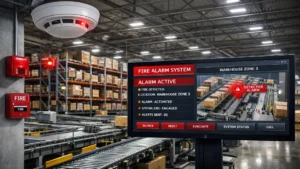
- Displaying clear location text on the panel
- Reducing manual investigation time
This accuracy helps emergency teams respond faster and more effectively, limiting fire spread.
2. Faster Emergency Response Time
In fire safety, every second matters.
GST addressable systems:
- Instantly transmit detailed alarm data
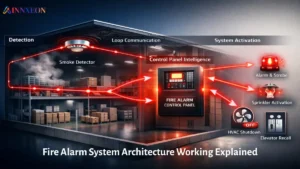
- Trigger predefined cause-and-effect actions
- Support phased evacuation strategies
Because responders know where to go immediately, the risk of escalation reduces significantly.
3. Intelligent False Alarm Management
False alarms are a serious risk in large buildings. They can:
- Cause panic
- Disrupt operations
- Reduce trust in the fire system
GST addressable systems use:
- Advanced detection algorithms
- Multi-criteria sensing
- Adjustable sensitivity levels
This intelligence allows the system to distinguish real fire conditions from environmental disturbances, minimising unnecessary evacuations.
4. Continuous System Health Monitoring
A fire alarm system that fails silently creates a hidden risk.
GST addressable systems continuously monitor:
- Device communication
- Power supply status
- Loop integrity
- Device contamination levels
Any fault is immediately reported to the control panel, ensuring no undetected failures remain in the system.
5. Reduced Cabling and Installation Risk
Complex cabling increases installation errors and future faults.
GST addressable systems:
- Use loop-based wiring
- Support a large number of devices per loop
- Simplify system architecture
Fewer cables mean:
- Lower installation risk
- Reduced chances of wiring faults
- Easier system expansion
6. Scalable Design for Future Growth
Large projects often expand over time. A rigid system creates future risks.
GST addressable solutions are:
- Modular
- Highly scalable
- Software-configurable
New devices can be added without major rewiring, ensuring long-term risk control as the facility grows.
Role of GST Addressable Detectors in Risk Reduction
Detection quality directly affects system performance.
GST addressable detectors provide:
- High sensitivity with stability
- Drift compensation to prevent false alarms
- Fast response to real fire signatures
Compared to conventional detectors, addressable detectors provide individual status reporting, making maintenance and fault detection more reliable.
Centralised Control Through GST Fire Alarm Systems
A GST fire alarm system acts as a centralised command centre for large facilities.
Benefits of Centralised Intelligence
- Unified monitoring across buildings
- Event logging and historical data
- Integration with BMS, HVAC and access control
- Automated emergency responses
This centralised approach ensures consistent risk management across the entire project.
Cause-and-Effect Programming: Smarter Risk Control
GST addressable panels allow detailed cause-and-effect logic, such as:
- Activating smoke control systems
- Unlocking emergency exits
- Shutting down elevators
- Isolating affected zones only
Instead of a full building response, actions remain targeted and controlled, reducing unnecessary disruption and improving safety outcomes.
Compliance and Regulatory Risk Reduction
Non-compliance is a major project risk.
GST addressable systems are designed to meet:
- International fire safety standards
- Local authority requirements
- Consultant and insurer expectations
Their detailed event logs and diagnostics simplify:
- Fire audits
- Safety inspections
- Regulatory approvals
Lower Maintenance Risk Over System Lifetime
A system that is difficult to maintain becomes unreliable over time.
GST addressable systems:
- Identify faulty devices individually
- Reduce troubleshooting time
- Support predictive maintenance
This proactive maintenance approach ensures the system remains fully operational when needed most.
Real-World Applications Where GST Reduces Risk
GST addressable systems are ideal for:
- Airports and metro stations
- Hospitals and healthcare campuses
- Data centres and IT parks
- High-rise commercial buildings
- Industrial and manufacturing plants
In each case, the system’s intelligence helps manage complex risk environments effectively.
Addressable vs Conventional: Long-Term Risk View
| Factor | Conventional System | GST Addressable System |
|---|---|---|
| Fire Location Accuracy | Zone-based | Device-level |
| Response Speed | Slower | Faster |
| False Alarm Control | Limited | Advanced |
| Maintenance Visibility | Low | High |
| Scalability | Restricted | Flexible |
This comparison clearly shows why addressable systems are safer for large projects.
Why GST Is the Safer Choice
Large fire safety projects demand accuracy, reliability and intelligence. GST addressable fire alarm systems reduce risk by:
- Delivering precise, real-time information
- Supporting faster and smarter emergency responses
- Minimising false alarms and system failures
- Ensuring long-term reliability and compliance
For consultants, engineers and building owners, choosing GST addressable systems is not just a technical decision; it is a risk management strategy that protects lives, assets and reputations.
Read Also: Why Engineers Choose GST-IFP4E Addressable Fire Alarm Panel for Mid-to-Large Projects
Read Also: Lifecycle Cost Advantages of GST Addressable Fire Alarm Systems