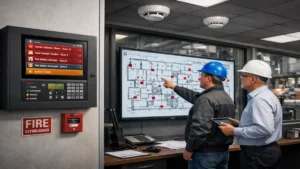
Fire protection is a crucial requirement for every commercial building, factory, warehouse, hospital, school and residential complex. While most people look at the initial price of a fire alarm system, the real financial impact comes from long-term maintenance costs. This includes servicing, calibration, spare parts, software updates, labour and routine inspections.
Among the various fire alarm brands used in India, GST (Gulf Security Technology) has gained recognition for offering lower long-term maintenance costs. This is not because of promotions or marketing claims but due to practical and structural advantages built into the system’s architecture, device design and long-term reliability.
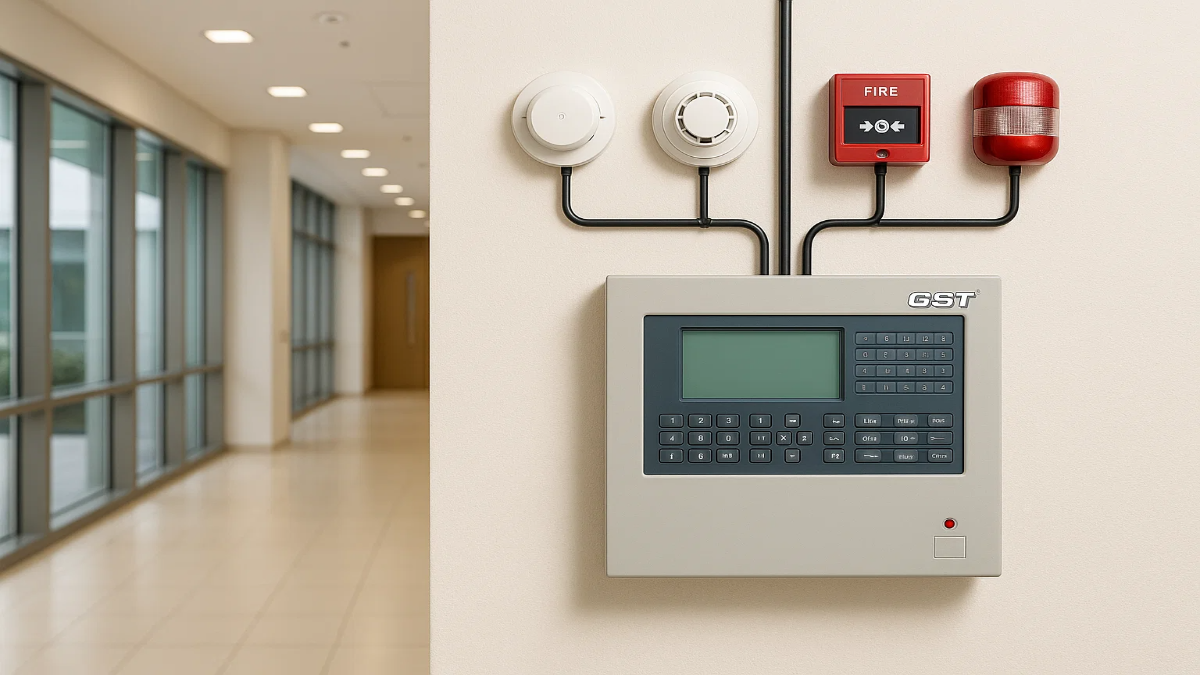
This article explains in detail why GST fire alarm systems cost less to maintain, how they perform compared to general industry standards and what makes them a preferable choice for long-term operational cost savings.
Understanding What Long-Term Maintenance Really Means
Choosing a fire alarm system is not only about the price of the panel and detectors. Maintenance is an ongoing responsibility. Every building must follow the required inspection, testing and maintenance schedule to comply with fire safety norms.
Long-term maintenance includes:
- Regular monthly and annual inspections
- Cleaning and recalibration of smoke or heat detectors
- Replacement of damaged or expired devices
- Software updates
- Troubleshooting and repair of faults
- Battery replacement
- Cost of technician visits
- Spare part availability
- System downtime cost
The total cost depends on how stable, durable and user-friendly the system is over several years of use. This is where GST systems provide an advantage.
Why GST Fire Alarm Systems Reduce Long-Term Maintenance Costs
GST systems are widely used in medium and large-scale buildings because they help reduce operational and maintenance expenses over the life of the system. The following sections explain how.
Flexible System Design Helps Avoid Costly Replacements
GST panels and devices use a modular structure. When one detector or module becomes faulty, the rest of the system continues working without interruption. This means building owners don’t have to replace entire loops or multiple devices unnecessarily.
The flexibility also allows technicians to isolate specific devices, perform repairs quickly and restore the system without causing downtime.
This modular approach helps reduce long-term maintenance bills because only the damaged part requires attention, not the entire system.
Strong Build Quality Ensures Long Life of Detectors and Modules
Fire detection devices must work reliably for several years. Any weakness in build quality can lead to sensor failure, false alarms and frequent replacements. GST detectors and modules are engineered with strong casing materials, stable electronic boards and high-precision sensors.
They perform consistently even in industrial environments where conditions are dusty, humid or subject to temperature variations.
Durable hardware directly lowers long-term costs because devices do not need frequent replacement, recalibration or emergency servicing.
Widespread Availability of Spare Parts Reduces Downtime and Cost
One of the biggest advantages of GST systems in India is the easy availability of spare parts, such as:
- Smoke detectors
- Heat detectors
- Sounders and strobes
- Modules
- Bases and isolators
- Hooters
- Manual call points
When spare parts are easily accessible, maintenance becomes faster and more affordable. Other brands sometimes require long waiting periods or higher costs for replacements, leading to longer downtime and increased expenses.
GST’s wide distribution network ensures that spare parts are readily available across the country, which naturally reduces maintenance costs and prevents delay-related expenses.
Lower False Alarm Rate Reduces Repeated Service Visits
False alarms can be expensive for building owners. Each false alarm leads to:
- Cost of technician visits
- Disturbance to operations
- Wear on the alarm panel and sounders
- Emergency reset procedures
- Unnecessary evacuation of occupants
GST systems are designed with intelligent sensing algorithms that help distinguish between real fire conditions and disturbances like dust, steam or temperature fluctuations.
A lower false alarm rate results in smooth building operations and saves significant maintenance costs over the years. It also increases system life because devices are not triggered unnecessarily.
Power-Efficient Design Lowers Running Expenses
Fire alarm systems run 24/7, which means their power consumption has a long-term financial impact. Devices that consume more loop current or panel power require larger batteries and frequent replacements.
GST systems are designed to use low loop current and optimised standby power. This reduces the load on backup batteries and extends their life. In addition, lower power consumption results in reduced electricity usage over many years.
Saving on electricity and battery replacements contributes to a noticeable reduction in long-term maintenance expenses.
Simple Software Structure Reduces Technical Complexity
Modern addressable systems depend heavily on programming and software configuration. Some systems require advanced software, hardware keys or certified specialists for even basic changes.
GST takes a simplified approach where:
- Loop device programming is easy
- Software updates are straightforward
- Mapping and commissioning require less time
- System configuration can be done by widely-trained technicians
When software maintenance is simple, buildings do not need to pay extra for specialists, complicated tools or extended technical sessions. This directly lowers ongoing maintenance costs.
Expansion-Friendly Architecture Saves Cost as Buildings Grow
Commercial properties often expand by adding new floors, rooms or utility spaces. A fire alarm system that cannot expand easily becomes more expensive in the long run because it requires partial or complete replacement.
GST systems are built for scalability. Their architecture supports:
- Adding more detectors
- Adding modules for new rooms
- Extending loops
- Integrating new building sections
This compatibility reduces long-term expenses because buildings can grow without replacing existing fire alarm infrastructure.
How GST Compares with Typical Fire Alarm Brands in Maintenance Cost
Every brand has strengths, but GST stands out in several cost-related areas. Below is a general and informational comparison reflecting common industry practices.
| Maintenance Aspect | GST Fire Alarm (General) | Other Brands (Typical) |
|---|---|---|
| Spare part availability | Widely available | Limited in many regions |
| Detector replacement cycles | Long durability | Varies widely |
| False alarm frequency | Low | Often higher |
| Software updates | Easy | Complicated |
| Technician availability | High | Moderate |
| Expansion cost | Moderate | Significantly higher |
| Loop current consumption | Low | Moderate |
| Emergency service needs | Low | Can be frequent |
These differences become more noticeable over a 5–10 year operational cycle, where GST systems tend to reduce maintenance-related expenses by a substantial percentage.
Why Commercial Buildings Prefer Low-Maintenance Systems Like GST
Modern commercial buildings have strict requirements for safety and operational continuity. Facilities such as hospitals, malls, factories, hotels, IT parks and warehouses cannot afford constant service interruptions.
They choose GST systems because of advantages like:
- Stable performance
- Minimal disturbance due to false alarms
- Fast repair cycles
- Lower spare part cost
- Easy availability of trained technicians
- Long operational lifespan
Low-maintenance systems not only reduce expenses but also improve building safety, compliance and operational efficiency.
Common Real-World Situations Where GST Helps Lower Costs
In practical scenarios, GST systems provide noticeable savings. For example:
- A large mall benefits from low false alarms, reducing unnecessary evacuations and technician callouts.
- A factory with dusty conditions sees longer detector life due to stable sensor performance.
- A hospital achieves continuous operation because spare parts are readily available.
- A growing office adds new areas to the existing fire alarm system without major expenses.
These kinds of everyday situations create long-term financial advantages for building owners.
Key Areas Where GST Delivers Long-Term Savings
While there are many technical factors, the most important reasons behind reduced long-term maintenance costs include:
- Durable components that last longer
- Easy spare part availability
- Lower service interruption
- Faster inspection and testing
- Reduced labour requirement
- Simple troubleshooting for technicians
- Lower power consumption
- Predictable maintenance expenses
These practical benefits help businesses plan and control maintenance budgets effectively.
GST: A Practical and Cost-Efficient Choice for Long-Term Fire Safety
Long-term maintenance cost is one of the most important considerations when choosing a fire alarm system. While many brands deliver good performance, GST fire alarm systems offer strong advantages in terms of maintenance efficiency and operational stability.
They reduce expenses in areas like false alarms, spare parts, technician visits, power usage, software upgrades and future expansion. These factors make GST a practical and cost-effective solution for buildings seeking long-term reliability and predictable maintenance budgets.
GST systems are widely used because they combine durability, accessibility and flexibility, three qualities that significantly reduce lifetime maintenance costs without compromising safety.
Read Also: Why GST 200N 1-Loop & 2-Loop Are the Highest-Selling Addressable Fire Alarm Panels in 2025
Read Also: How Much Does a Full GST Fire Alarm System Cost for a Commercial Building?