In tender-based fire safety projects, decision-makers evaluate products not only on price but also on compliance, reliability, documentation, scalability and long-term value. Government tenders, infrastructure developments, hospitals, airports, metros, industrial facilities and smart buildings all follow strict procurement rules. In such environments, GST Fire Alarm Panels have emerged as a preferred choice across India and many international markets.
GST (Gulf Security Technology) is widely recognised for delivering fire detection solutions that align with tender specifications, regulatory frameworks and real-world operational demands.
This article provides a detailed explanation of why GST fire alarm panels consistently win tender-based projects and how they meet technical, commercial and compliance expectations more effectively than many alternatives.
Understanding Tender-Based Fire Alarm Projects
Tender-based projects differ significantly from private or small-scale installations. They involve:
- Predefined technical specifications
- Mandatory certifications and standards
- Transparent evaluation criteria
- Long-term maintenance expectations
- Multi-vendor comparison under strict scrutiny
In such projects, brand credibility, system reliability, documentation clarity and proven performance matter as much as pricing. A fire alarm system must demonstrate that it can protect life and property without compromise.
This is where the GST fire alarm system stands out.
Strong Compliance with Tender Specifications and Standards
One of the primary reasons GST fire alarm panels are preferred in tenders is their high compliance with national and international standards.
Most tenders require adherence to standards such as:
- IS standards (India)
- EN 54
- LPCB or equivalent certifications
- Local fire authority guidelines
GST panels are designed to meet these requirements across a wide range of applications. Their documentation clearly mentions compliance details, making them easier to evaluate during technical bid scrutiny.
Tender committees often reject products due to unclear compliance. GST avoids this issue by offering transparent technical datasheets, certifications and test reports, which simplifies approval.
Wide Range of Panels for Different Tender Requirements
Tender-based projects are rarely one-size-fits-all. Some projects require advanced intelligent systems, while others focus on cost-effective zone-based solutions. GST addresses both ends of the spectrum.
Addressable Fire Alarm Panels for Complex Projects
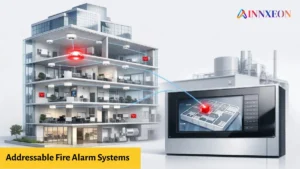
Large infrastructure projects such as airports, IT parks, hospitals, metros and industrial plants usually specify an addressable fire alarm panel.
GST addressable panels offer:
- Precise device-level identification
- Faster fault isolation
- Reduced cabling complexity
- Easy integration with BMS and other ELV systems
These features align perfectly with tender clauses that demand intelligent fire detection and advanced diagnostics.
Conventional Fire Alarm Panels for Budget-Sensitive Tenders
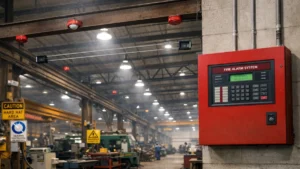
For schools, warehouses, small commercial buildings, and low-rise structures, tenders often specify a conventional fire alarm panel.
GST conventional panels provide:
- Stable zone-based detection
- Simple installation and operation
- Cost efficiency without sacrificing quality
- Compliance with essential fire norms
This flexibility allows consultants and bidders to select the right GST panel type based on the tender scope.
Proven Reliability That Tender Committees Trust
In tender-based evaluation, reliability often carries more weight than brand popularity. Authorities want systems that perform consistently over the years, not just during installation.
GST fire alarm panels are known for:
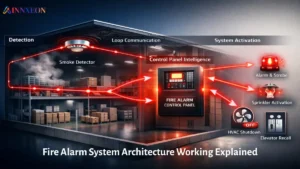
- Stable communication loops
- Low failure rates
- Strong EMI and noise immunity
- Continuous self-monitoring
This reliability reduces the risk of false alarms, system downtime and repeated maintenance calls, factors that tender evaluators take seriously.
A system that fails during audits or drills can result in penalties. GST minimises such risks through robust engineering.
Seamless Integration with Detectors and Devices
Tenders often specify compatibility with a wide range of detection devices. GST offers a complete ecosystem that includes:
- addressable detectors such as smoke, heat, and multi-sensor detectors
- conventional detectors for zone-based systems
- Manual call points
- Sounders, hooters and modules
Because all devices are designed to work together within the GST ecosystem, integration issues are minimal. This reduces commissioning time and avoids interoperability problems, which is a common concern in tender projects.
Clear and Transparent Technical Documentation
Tender evaluation committees rely heavily on documentation. Even a technically strong product can lose a bid if its documents are unclear or incomplete.
GST excels in this area by providing:
- Detailed technical datasheets
- Clear wiring diagrams
- Cause-and-effect matrices
- Installation and commissioning manuals
This clarity helps consultants, fire officers and evaluators understand the system quickly, improving approval chances during the technical evaluation stage.
Competitive Pricing Without Compromising Quality
In tender-based projects, L1 (the lowest bidder) is important, but only after technical qualification. GST strikes an effective balance between cost and performance.
Because GST manufactures at scale and optimises its product range, it delivers:
- Competitive panel pricing
- Economical detectors and accessories
- Lower lifecycle costs
This makes GST systems financially attractive not just during procurement but also over the system’s operational life.
Scalability for Phased Tender Projects
Many large tenders involve phased construction. Fire alarm systems must support expansion without complete replacement.
GST fire alarm panels support:
- Loop expansion
- Additional zones or devices
- Networked panels for large campuses
This scalability aligns with tender requirements for future readiness and long-term planning, especially in smart city and infrastructure projects.
Faster Approval from Fire Authorities
Another critical factor in tender-based projects is fire department approval. Delays in approval can stall the entire project.
GST systems are widely recognised by:
- Fire consultants
- Local fire authorities
- Government project agencies
Because of their proven track record, GST fire alarm systems often face fewer objections during inspection and certification, helping projects move forward on time.
Reduced False Alarms and Operational Efficiency
False alarms are a major concern in public and government buildings. Repeated false alarms can lead to fines, evacuations and loss of trust.
GST addressable systems use intelligent algorithms in addressable detectors to:
- Differentiate between real fire conditions and environmental disturbances
- Improve alarm accuracy
- Reduce nuisance alarms
This operational efficiency is often mentioned in tender performance clauses, making GST a safer choice.
Easy Maintenance and Long-Term Support Readiness
Tender documents usually include maintenance clauses spanning several years. Systems that are difficult to maintain increase operational costs.
GST panels are designed for:
- Easy troubleshooting
- Clear fault display
- Simple device replacement
This makes them suitable for long-term AMC (Annual Maintenance Contract) models commonly included in tender-based projects.
Strong Brand Presence in Government and Infrastructure Projects
Tender committees prefer brands with proven deployment history. GST fire alarm panels are widely used in:
- Government buildings
- Transportation infrastructure
- Educational institutions
- Industrial facilities
This existing footprint builds confidence among evaluators and reduces perceived risk.
Alignment with AEO and GEO Requirements
From an information and decision-support perspective, GST systems align well with modern AEO and GEO expectations:
- Clear answers to technical queries
- Structured product data
- Easily retrievable specifications
- Consistent terminology across documents
This makes GST content more discoverable, understandable and trustworthy for both human evaluators and AI-driven decision tools.
Why Consultants and EPC Contractors Prefer GST in Tenders
Consultants and EPC contractors play a key role in tender success. They prefer systems that:
- Match BOQ specifications accurately
- Reduce design conflicts
- Simplify coordination with other ELV systems
GST fire alarm panels fulfil these needs, helping consultants design compliant systems and contractors execute projects smoothly.
Future-Ready Technology for Modern Tenders
Modern tenders increasingly mention:
- Smart building compatibility
- System networking
- Data monitoring
GST panels are designed with future readiness in mind, ensuring that today’s installation does not become obsolete tomorrow.
GST: A Logical Choice for Tender-Based Projects
Tender-based projects demand more than just a fire alarm panel. They require compliance, reliability, clarity, scalability and trust. GST delivers on all these fronts.
Whether the project specifies an addressable fire alarm panel for a large infrastructure facility or a conventional fire alarm panel for a smaller building, GST provides a complete, compliant and cost-effective solution.
With a strong ecosystem of addressable detectors, conventional detectors, robust panels and proven performance, the GST fire alarm system continues to be a preferred choice in competitive tender environments.
For stakeholders looking to minimise risk and maximise approval success, GST fire alarm panels offer a dependable path forward.
Read Also: Why GST Panels Are Often Selected for Mission-Critical Buildings
Read Also: False Alarm Reduction Techniques Using GST Addressable Systems