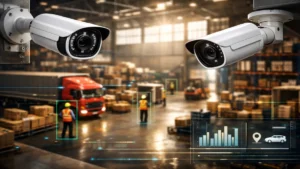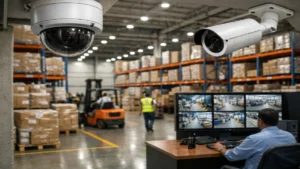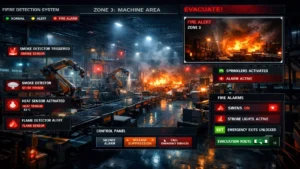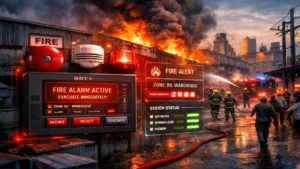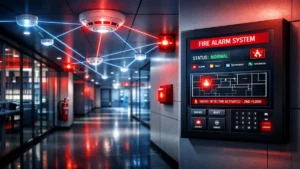
When we review a building’s fire safety system together, we usually begin by checking detectors, panels and alarm devices. Everything appears to be installed correctly, and the system looks ready.
But then we ask ourselves something important:
“If an alarm activates somewhere in this facility right now, will the right people know immediately?”
That question shifts our thinking from fire detection alone to complete safety communication.
In modern infrastructure, installing detectors is only one part of safety engineering. The real objective is to ensure that every alarm condition is detected, communicated, monitored and acted upon without delay.
Across factories, commercial complexes, hospitals and campuses, we’ve repeatedly seen that safety systems become truly reliable only when detection and monitoring are designed together.
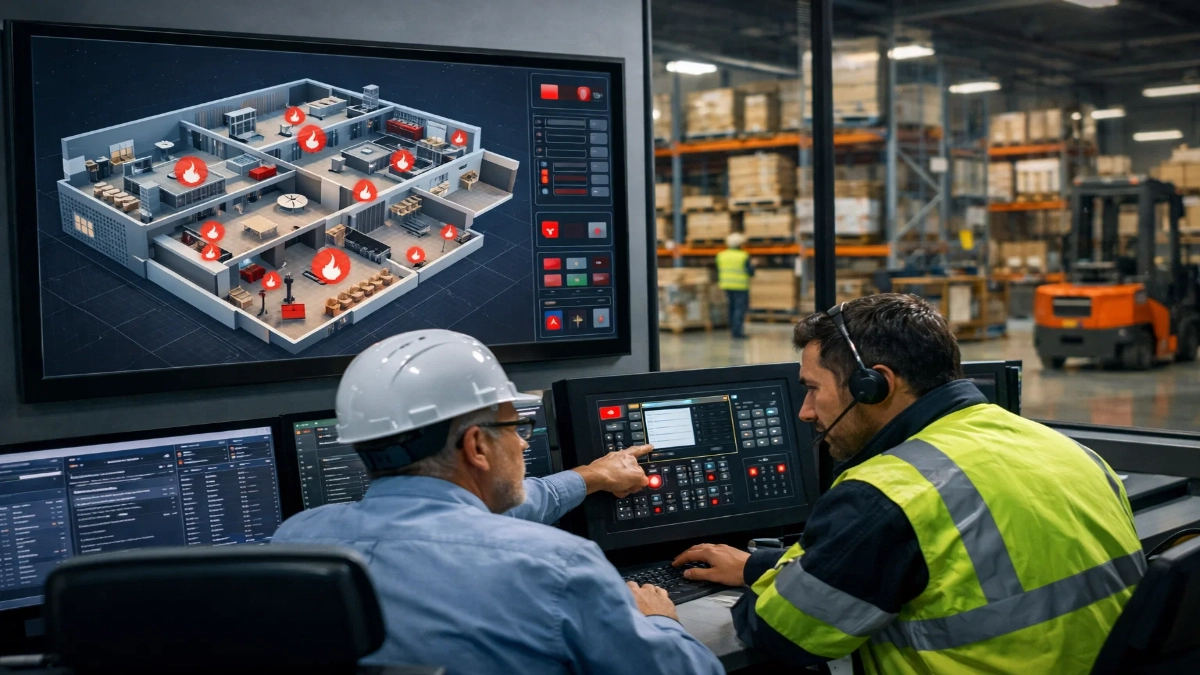
This is where dependable equipment ecosystems, such as the GST fire alarm system supplied across India by Innxeon, support engineers in building safety infrastructure that does more than detect fire events. It ensures those events are seen, understood and responded to quickly.
Let’s walk through how detection and monitoring work together to create safer facilities.
Detection and Monitoring: Understanding the Complete Safety Picture
Detection identifies fire conditions. Monitoring ensures the alarm information reaches people who can respond. Together, they form a complete fire safety communication system.
When we design fire safety systems, we’re really designing information flow during emergencies.
Detection devices answer:
“Is something wrong?”
Monitoring systems answer:
“Who knows about it right now?”
Both are essential.
If we install detectors without monitoring visibility, alarms may activate, but response may be delayed. If we design monitoring without reliable detection, there is nothing meaningful to monitor.
Safety infrastructure works best when these two layers are designed together.
Simple way to think about it:
- Detection = Sensing danger
- Monitoring = Communicating danger
- Integration = Enabling response
What Happens When Detection Exists Without Monitoring
Detection without monitoring can delay emergency response, hide equipment faults and reduce safety reliability in large facilities.
Let’s think about a real scenario.
We install detectors across a manufacturing plant using a conventional fire alarm panel. Everything is compliant and functional.
But the plant operates 24/7.
Now imagine:
- An alarm triggers in a storage area
- No operator sees it immediately
- Security notices it minutes later
Those minutes matter.
In large facilities, alarms often occur in areas that are:
- Remote
- Unoccupied
- Noisy
- Restricted
Without monitoring visibility, alarms may not reach the right people quickly.
Another issue we often encounter is a silent system failure. A detector wiring fault might go unnoticed without monitoring alerts.
That’s why modern fire safety design focuses on supervised systems, not just installed devices.
Risks of detection-only systems:
- Delayed response
- Missed alarms
- Undetected faults
- Poor incident documentation
- Reduced compliance confidence
How Detection and Monitoring Work Together
Detectors sense fire conditions, the control panel processes the signal and the monitoring systems display and communicate the event instantly.
Let’s walk through the sequence together.
Picture a smoke detector in an electrical room sensing smoke.
Here’s what happens next:
Step-by-Step System Flow
- Detector senses smoke
- Signal goes to the fire alarm panel
- Panel processes alarm condition
- Alarm devices activate
- Monitoring interface shows the location
- Operators respond
This chain of events is what transforms detection into action.
In many projects we support, engineers use an addressable fire alarm panel connected to monitoring software for full visibility.
When equipment like addressable detectors communicates with monitoring systems through GST panels supplied by Innxeon, the entire safety workflow becomes clearer and faster.
Addressable vs Conventional Systems in Monitoring Environments
Addressable systems provide device-level monitoring information, while conventional systems provide zone-level information.
Let’s compare them the way engineers usually do during design discussions.
Addressable Systems: Precision Monitoring
When we install addressable detectors, each device has a unique identity. The monitoring system shows the exact detector that triggered the alarm.
This gives us:
- Exact alarm location
- Faster troubleshooting
- Better maintenance tracking
- Scalable infrastructure
That’s why large facilities often use addressable systems.
Conventional Systems: Simple Monitoring
When we use conventional detectors, devices are grouped into zones.
Monitoring tells us:
“Alarm in Zone 3”
Not:
“Detector near Panel Room activated.”
This approach works well for:
- Small buildings
- Budget-sensitive projects
- Simple layouts
Both architectures can be implemented using the GST fire alarm system, depending on project needs.
Quick Comparison Summary
- Addressable = Device-level monitoring
- Conventional = Zone-level monitoring
- Both rely on panel-based monitoring
- Both require a reliable supply and compatibility
Real-World Story: Designing Safety for an Industrial Plant
Let’s walk through a typical project together.
We’re designing fire safety for a multi-building industrial campus.
The facility includes:
- Production areas
- Warehouses
- Electrical rooms
- Administrative offices
If we only install detection devices, alarms may occur in distant buildings without immediate awareness.
Now, imagine we integrate monitoring.
The control room sees:
- Alarm location instantly
- System status in real time
- Fault notifications
- Alarm history logs
Security teams respond faster.
Maintenance teams identify issues earlier.
Management gains confidence in system reliability.
This is why engineers increasingly design systems where detection and monitoring are inseparable.
Reliable distribution from suppliers like Innxeon ensures GST equipment reaches project sites on time, allowing these integrated systems to be commissioned without delays.
Engineering Best Practices for Detection + Monitoring Systems
Design detection and monitoring together from the beginning of the project, not as separate phases.
From experience across multiple projects, a few practices consistently improve safety system performance.
Plan Monitoring During Design, Not Commissioning
Monitoring should be part of system architecture discussions early in the project.
Adding monitoring later often causes:
- Compatibility issues
- Wiring changes
- Additional cost
Choose Scalable Panel Infrastructure
Large facilities grow over time. A scalable addressable fire alarm panel supports expansion without redesign.
Use Compatible Detection Ecosystems
Detection devices, panels, and monitoring interfaces should work within the same ecosystem, such as the GST product range supplied by Innxeon.
Compatibility reduces commissioning risks.
Monitor System Health Continuously
Monitoring should include:
- Fault alerts
- Power status
- Communication status
- Device health
This prevents system failure during emergencies.
Engineering Checklist
- Integrate monitoring early
- Use scalable architecture
- Ensure device compatibility
- Monitor system health
- Maintain event logs
Why Reliable Supply Matters in Integrated Safety Systems
When we talk about detection and monitoring, we often focus on engineering design.
But project execution depends heavily on equipment availability.
Safety systems cannot be partially installed or delayed due to missing components.
Suppliers like Innxeon help maintain project continuity by distributing GST detection equipment across India, ensuring contractors and integrators receive the panels, detectors and accessories needed to complete monitoring-ready installations.
Reliable supply supports reliable safety infrastructure.
Building Safety Systems That Communicate
When we design safety infrastructure together, thinking about both detection and monitoring, we move from installing equipment to building responsive safety systems.
Detection tells us something is wrong.
Monitoring ensures someone knows immediately.
That connection is what makes safety infrastructure reliable.
Across modern facilities, integrated systems using components like the GST fire alarm system, supplied consistently by Innxeon, help engineers create environments where alarms lead to action without delay.
If detection is the eyes of a safety system, monitoring is the voice.
And effective safety infrastructure always needs both.
Read Also: Avoiding Fire Safety Delays: Why Vendor Capability Matters
Read Also: How Innxeon Ensures Reliable Fire Alarm Delivery Across India
Frequently Asked Questions
What is fire detection infrastructure?
Fire detection infrastructure includes detectors, control panels and alarm devices that identify fire indicators such as smoke or heat. These components work together to detect fire conditions early and alert occupants or operators.
In most buildings, detection infrastructure forms the first layer of safety response and connects directly to monitoring systems.
What is fire alarm monitoring?
Fire alarm monitoring is the process of supervising alarm signals, system faults and device status in real time. Monitoring ensures alarm events are visible to operators so emergency response can begin immediately.
Monitoring may occur through control panels, graphical software or remote alert systems.
Why should detection and monitoring be integrated?
Detection identifies hazards, while monitoring ensures alarms are noticed and acted upon. Without monitoring, alarms may go unseen in large or unmanned areas.
Integration improves response speed, system reliability and maintenance visibility.
How do addressable detectors improve monitoring?
Addressable detectors send unique identification signals to the panel, allowing monitoring systems to display the exact device location during alarms or faults.
This improves troubleshooting, maintenance efficiency and emergency response accuracy.
When should conventional detectors be used?
Conventional detectors are typically used in smaller buildings or simple layouts where zone-level monitoring is sufficient.
They provide reliable detection with simpler wiring and lower system complexity.