Enterprise CCTV is no longer “just cameras and a recorder.”
Today, video surveillance behaves like a mission-critical IT system. It consumes bandwidth like streaming platforms, stores petabytes of data like data centres and requires cybersecurity controls similar to financial applications.
That’s exactly why IT teams, not just security teams, now own CCTV architecture decisions.

They expect:
- Clean network design
- Zero downtime
- Secure endpoints
- Cloud readiness
- Easy scalability
- Predictable storage
- Compliance support
If your CCTV system doesn’t meet these expectations, it becomes a network liability instead of a safety asset.
This guide breaks down how to design an enterprise-grade CCTV network architecture that engineers respect, auditors approve and management trusts.
What Is Enterprise CCTV Network Architecture?
Enterprise CCTV network architecture refers to:
The structured design of cameras, switches, servers, storage, software and cybersecurity layers that deliver reliable, secure, and scalable video surveillance across an organization.
It blends physical security + IT infrastructure + cybersecurity + analytics into one unified system.
Typical Enterprise CCTV Stack (Visual Overview)
At a high level, modern enterprise CCTV includes:
- IP Cameras
- PoE Access Switches
- Core Network / VLAN Segmentation
- VMS or NVR Servers
- Storage (NAS/SAN/Hybrid Cloud)
- Monitoring Clients
- Cybersecurity Layer
Each layer must align with IT best practices.
What IT Teams Expect From CCTV Architecture
Let’s get straight to what matters.
When IT engineers evaluate a CCTV deployment, they ask:
- Will this flood my network?
- Is it secure?
- Can I scale it easily?
- Is it standards-based?
- How easy is maintenance?
- Can it integrate with existing systems?
- Does it follow enterprise policies?
If you design with these expectations first, adoption becomes smooth.
1. Clean, Structured Network Design
Why it matters
Poorly planned CCTV traffic causes:
- Network congestion
- Packet loss
- Video lag
- System downtime
IT teams want predictable traffic behaviour.
Best practices
Use dedicated VLANs
Separate surveillance traffic from corporate traffic.
Example:
- VLAN 10 → CCTV Cameras
- VLAN 20 → VMS Servers
- VLAN 30 → Management
Segment using Layer 3 routing
Avoid flat networks. Route between segments for control and security.
Multicast or optimised streaming
Reduce duplicate streams when many users view the same camera.
QoS policies
Prioritise video packets.
2. Power over Ethernet (PoE) Strategy
Why IT cares
Power planning impacts reliability.
Unmanaged PoE leads to:
- Switch overload
- Camera shutdowns
- Unexpected outages
Recommendations
- Use PoE+ or PoE++ switches
- Calculate the total watt budget
- Keep 25–30% headroom
- Deploy redundant power supplies
3. Edge Processing Instead of Central Overload
The shift
Traditional systems pushed everything to servers.
Modern enterprise architecture uses edge intelligence.
Benefits
Edge cameras now perform:
- Motion detection
- Object detection
- License plate recognition
- Intrusion alerts
This reduces:
- Bandwidth
- Server CPU load
- Storage waste
IT teams love this because it improves efficiency dramatically.
4. Storage Architecture That Scales Predictably
Storage is the biggest cost driver.
IT expects:
- Calculated retention
- Structured growth
- No surprises
Storage options
DAS (Direct Attached)
- Small systems
- Low cost
- Limited scalability
NAS
- Easy scaling
- Mid-size enterprises
- Flexible
SAN
- High performance
- Large campuses
- Centralized control
Hybrid Cloud
- Long-term archives
- Disaster recovery
Pro tip
Always calculate:
Cameras × Bitrate × Retention days = Storage needed
Add 20–30% buffer.
5. High Availability & Redundancy
Enterprise systems cannot fail.
IT teams expect uptime like critical servers.
Must-have protections
- Server failover
- RAID storage
- Dual NICs
- Redundant power
- Backup links
- VM clustering
Without redundancy, CCTV becomes a single point of failure.
6. Cybersecurity First, Not Afterthought
Reality check
Every IP camera is a network device.
That means:
Every camera is a potential attack surface.
Security teams now treat CCTV like any other endpoint.
Mandatory practices
- Change default passwords
- Use HTTPS
- Enable certificate authentication
- Disable unused ports
- Firmware updates
- Zero-trust segmentation
- Role-based access control
Bonus
Integrate with Active Directory or SSO.
IT teams prefer centralised identity management.
7. VMS That Fits Enterprise IT
The Video Management System must behave like enterprise software.
IT-friendly features
- API support
- Open standards (ONVIF)
- Virtualization ready
- Container or cloud support
- Central logging
- Monitoring alerts
Avoid proprietary lock-in.
8. Centralised Monitoring & Health Checks
IT teams expect visibility.
They want:
- Camera uptime status
- Storage health
- CPU usage
- Network load
- Alert logs
If they can’t monitor it, they won’t trust it.
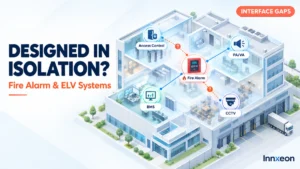
9. Integration With Enterprise Systems
Modern CCTV must connect with:
- Access control
- Fire alarms
- BMS
- Analytics tools
- SIEM platforms
Integration enables:
- Faster incident response
- Automated alerts
- Better investigations
10. Cloud & Hybrid Readiness
Even if you deploy on-prem today, IT expects:
“Can we move this to cloud tomorrow?”
Good architecture supports
- Cloud backup
- Remote viewing
- SaaS VMS
- Elastic storage
Cloud flexibility future-proofs investment.
11. Compliance & Data Governance
Large enterprises must meet:
- Data privacy rules
- Retention policies
- Audit trails
IT teams expect:
- Encryption at rest
- Encryption in transit
- Access logs
- Automatic deletion policies
Architecture must support compliance by design.
12. Scalability Without Redesign
Engineers hate rebuilds.
Good design allows:
- Add cameras easily
- Expand storage
- Add servers
- Increase analytics
No forklift upgrades.
13. Vendor Expectations
Enterprises prefer vendors that deliver:
- Open protocols
- Local support
- Long lifecycle
- Firmware updates
- Professional integration
This is why many integrators trust Gulf Security Technology (GST) solutions, as they align with enterprise IT standards and scalable architectures rather than proprietary lock-ins.
Enterprise CCTV Reference Architecture (Simple Model)
Edge Layer
- IP Cameras with analytics
Access Layer
- PoE switches
- VLAN segmentation
Core Layer
- L3 routing + firewall
Compute Layer
- Virtualised VMS/NVR
Storage Layer
- NAS/SAN/Hybrid
Security Layer
- IAM + encryption + monitoring
Cloud Layer
- Backup & remote access
Final Thoughts
Here’s the reality:
Enterprise CCTV is no longer a “security project.”
It’s an IT infrastructure project.
If your system:
- Scales easily
- Stays secure
- Integrates smoothly
- Uses open standards
- Minimizes bandwidth
- Supports cloud
Then IT teams will support it.
If not, they will resist it.
Design with IT expectations first, and your CCTV deployment will be future-proof, reliable and trusted.
Read Also: AI Video Analytics in Indoor Commercial Environments
Read Also: Inside Innxeon Technologies: Brands, Expertise & PAN-India Fire Safety Vision