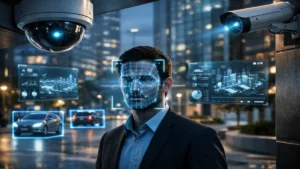
Indoor commercial buildings are no longer protected by “just cameras.” Today, security systems think, analyse and respond in real time. This intelligence comes from AI video analytics, a technology that transforms traditional CCTV footage into actionable insights.
From office towers and shopping malls to hospitals, factories and campuses, AI-driven surveillance helps teams detect threats faster, reduce manual monitoring, improve safety and optimise operations. Instead of watching hours of recordings, engineers and facility managers receive instant alerts, accurate reports and predictive intelligence.
Simply put:
👉 Cameras capture video.
👉 AI video analytics interprets it.
👉 Businesses make smarter decisions.
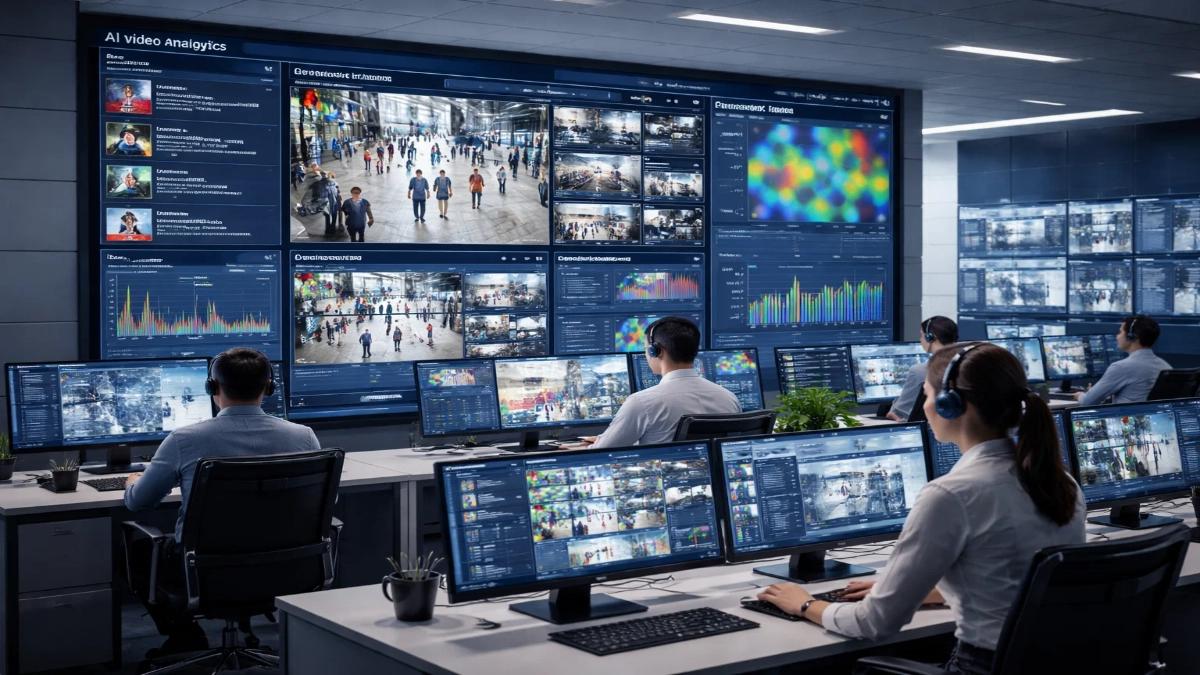
This article explains how AI video analytics works indoors, where it delivers the most value and how to design scalable deployments that engineers will appreciate.
What Is AI Video Analytics?
AI video analytics uses artificial intelligence (AI), machine learning (ML) and computer vision to automatically analyse live or recorded video feeds. The system identifies patterns, objects, behaviours and anomalies without constant human intervention.
Unlike traditional motion detection systems, AI can:
- Recognise people vs. objects
- Detect suspicious behaviour
- Track movement paths
- Count occupancy
- Identify faces or vehicles (where permitted)
- Send real-time alerts
Why Indoor Commercial Spaces Need AI Analytics
Indoor environments create unique challenges:
- High foot traffic
- Complex layouts
- Blind spots
- Lighting variations
- Limited security staff
- Multiple departments using the same infrastructure
Traditional CCTV alone cannot scale to these demands.
AI video analytics solves this by:
1. Reducing Human Dependency
Security operators no longer watch screens continuously. The system flags only critical events.
2. Increasing Accuracy
AI distinguishes real threats from shadows, reflections, or harmless movement.
3. Providing Business Intelligence
Beyond safety, analytics reveal operational data like footfall, peak hours and space usage.
4. Delivering Real-Time Action
Instant alerts allow teams to respond within seconds.
Core Features of AI Video Analytics
People Counting & Occupancy Monitoring
Track how many people enter or exit areas. Ideal for malls, lobbies and conference halls.
Intrusion Detection
Detect unauthorised entry into restricted zones using virtual tripwires.
Behavior Analysis
Identify loitering, running, fighting, or abnormal activity.
Facial Recognition (Where legally allowed)
Enhance access control and VIP management.
Object Detection
Detect abandoned bags, missing equipment, or theft attempts.
PPE & Compliance Monitoring
Ensure helmets, masks, or safety gear usage in industrial settings.
Heatmaps & Flow Analysis
Visualise movement patterns to optimise space planning.
Use Cases Across Indoor Commercial Environments
Corporate Offices
- Access monitoring
- Visitor tracking
- After-hours intrusion detection
- Workspace utilisation analytics
Shopping Malls & Retail
- Customer flow analysis
- Queue management
- Shoplifting detection
- Conversion rate insights
Hospitals
- Patient safety monitoring
- Restricted area alerts
- Staff compliance tracking
Warehouses & Factories
- Forklift safety
- PPE detection
- Zone-based access control
- Process optimization
Educational Campuses
- Student safety
- Crowd management
- Incident detection
How AI Video Analytics Works (Step-by-Step)
Step 1: Capture
IP cameras record high-resolution footage.
Step 2: Process
Edge devices or servers analyse video using AI models.
Step 3: Detect
Algorithms identify events, objects, or anomalies.
Step 4: Alert
System sends real-time notifications.
Step 5: Store & Report
Data converts into dashboards and reports.
Deployment options include:
- Edge AI (camera-based analytics)
- Server-based analytics
- Hybrid architecture
- Cloud-based platforms
Architecture Options for Engineers
Edge-Based Analytics
- Processing inside the camera
- Lower bandwidth usage
- Faster response time
Best for: medium sites
Server-Based Analytics
- Centralized processing
- Easier upgrades
- High computing power
Best for: large campuses
Hybrid
- Edge for basic tasks
- Server for advanced AI
Best for: enterprise projects
Benefits That Matter to Engineers & Facility Managers
Faster Incident Response
Immediate alerts reduce reaction time.
Lower Monitoring Costs
Fewer guards are required for screen watching.
Reduced False Alarms
AI understands context better than motion detection.
Actionable Data
Reports guide layout and staffing decisions.
Scalability
Add cameras without redesigning infrastructure.
Compliance Support
Helps meet safety regulations and audit requirements.
Designing an Effective AI Video Analytics System
1. Choose the Right Cameras
- Minimum 4MP
- Wide Dynamic Range
- Good low-light performance
2. Optimise Placement
- Cover entrances, corridors and blind spots
- Avoid glare or backlighting
3. Plan Network Capacity
- Use PoE switches
- VLAN segregation
- Adequate bandwidth
4. Select Processing Hardware
- GPU-based servers
- Edge AI devices
5. Define Use Cases First
Don’t deploy AI without clear goals. Start with:
- Safety
- Security
- Operations
- Compliance
6. Ensure Privacy Compliance
- Mask sensitive areas
- Follow local regulations
- Secure data storage
Common Challenges (And Solutions)
| Challenge | Solution |
|---|---|
| High false alerts | Train AI models |
| Poor lighting | Use WDR cameras |
| Bandwidth overload | Edge processing |
| Privacy concerns | Anonymization tools |
| Complex setup | Professional integration |
AI Video Analytics + Smart Buildings
Modern buildings integrate multiple ELV systems:
- CCTV
- Access Control
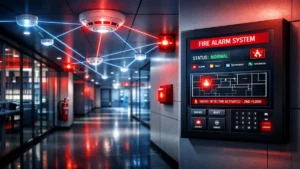
- Fire Alarm
- BMS
- IoT Sensors
AI video analytics connects seamlessly with these platforms to create intelligent ecosystems.
Examples:
- Trigger doors during emergency evacuation
- Count occupancy for HVAC optimisation
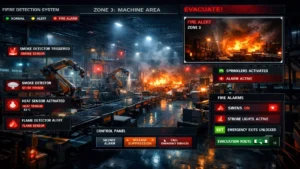
- Alert security during fire alarm events
- Analyse crowd density for safety compliance
This convergence transforms buildings into self-aware environments.
Future Trends to Watch
Edge AI Everywhere
More intelligence is built directly into cameras.
Predictive Analytics
Systems forecast risks before incidents occur.
Cloud Integration
Centralised multi-site monitoring.
Behavioral AI
Detect suspicious behaviour patterns automatically.
Digital Twins
Video analytics feeding building simulations.
Final Thoughts
AI video analytics is no longer optional for modern indoor commercial environments. It is the foundation of smart security and operational intelligence.
Organisations that adopt AI today:
- Improve safety
- Reduce costs
- Gain actionable insights
- Respond faster
- Scale effortlessly
For engineers, it means smarter design.
For managers, it means better decisions.
For businesses, it means measurable ROI.
If you are planning your next CCTV or ELV upgrade, integrate AI video analytics from day one. It transforms your cameras from passive recorders into active problem solvers.
Read Also: Edge AI vs Centralized Analytics in Enterprise CCTV
Read Also: Why Fire Alarm Systems Should Be Integrated with CCTV for Maximum Safety