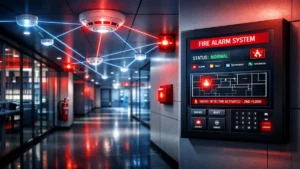
In an emergency, seconds save lives.
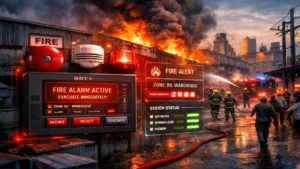
Yet many buildings still rely only on sirens and flashing lights to alert occupants. The problem? A loud buzzer tells people something is wrong, but it doesn’t tell them what to do next.
This gap creates confusion, delays evacuation and increases risk.
That’s exactly why Fire Alarm + PAVA (Public Address & Voice Alarm) integration has become the gold standard for modern safety infrastructure.
Instead of only alarms, buildings now deliver clear voice instructions, zone-wise evacuation and real-time communication.
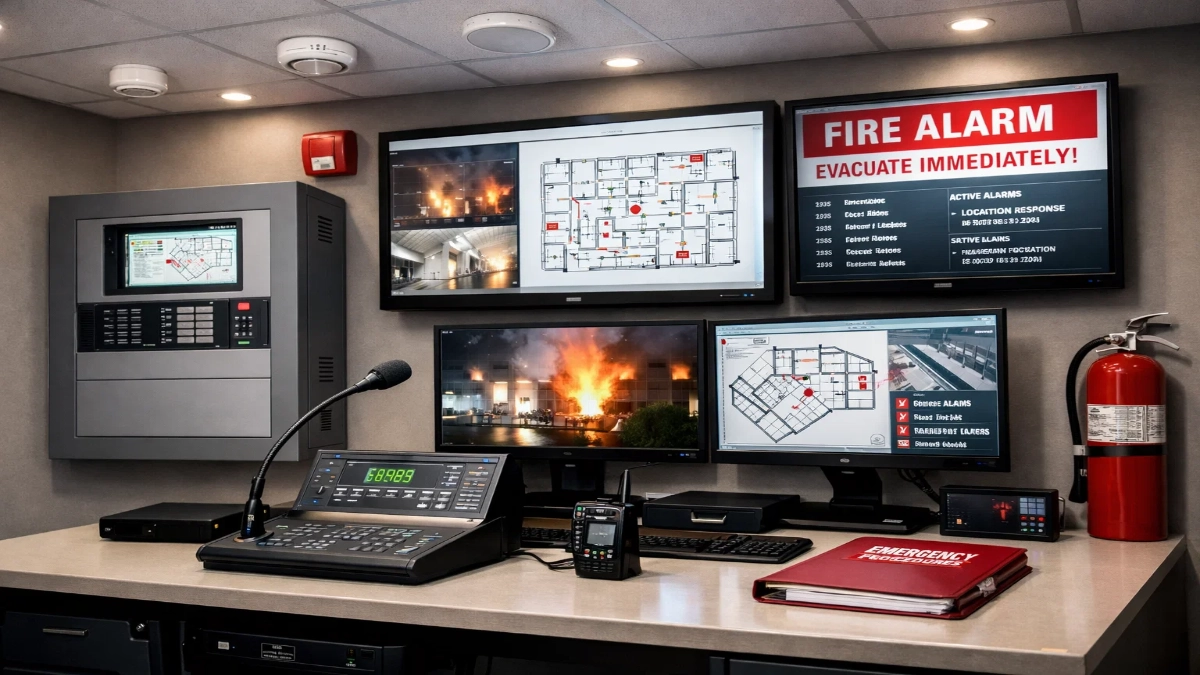
If you manage a commercial tower, hospital, warehouse, mall, school or industrial plant, this integrated approach isn’t just “advanced”, it’s becoming essential.
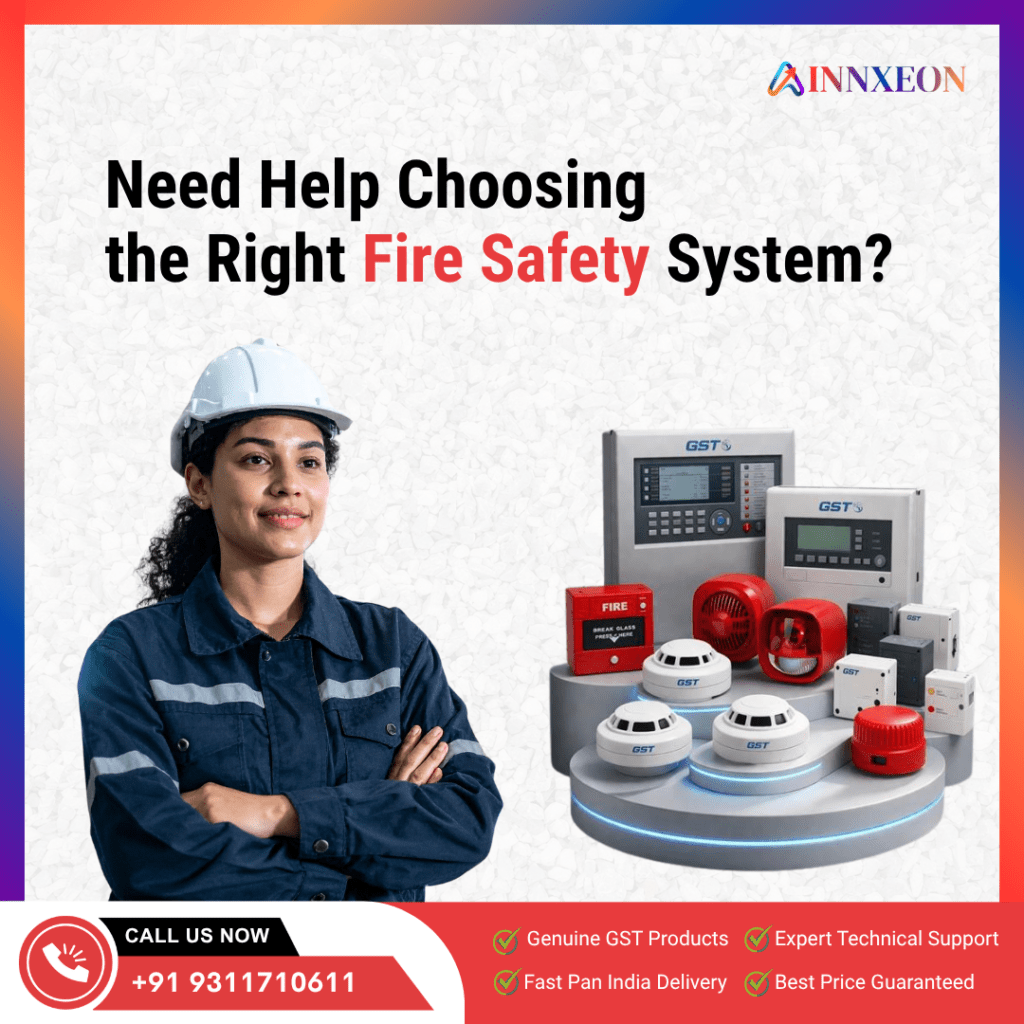
And when it comes to reliable, scalable fire safety solutions, many projects across India trust systems from Gulf Security Technology (GST) for dependable performance and seamless integration.
Let’s break everything down in simple terms.
What is Fire Alarm + PAVA Integration?
Fire Alarm System
Detects fire threats using:
- Smoke detectors
- Heat detectors
- Manual call points
- Control panels
It triggers:
- Sirens
- Flashers
- System alerts
PAVA System
Delivers:
- Pre-recorded evacuation messages
- Live announcements
- Zoned communication
- Emergency instructions
Integration (The Smart Part)
When both systems connect:
- Fire detection triggers automatic voice alerts
- Operators give live instructions
- Specific areas evacuate first
- Panic reduces drastically
Result: Faster, safer and more controlled evacuation.
Why Traditional Sirens Alone Are Not Enough
Let’s be honest.
When a siren rings:
- People hesitate
- Some ignore it
- Others panic
- No one knows where to go
This wastes critical time.
Voice messages solve this instantly.
Instead of:
❌ “BEEP BEEP BEEP”
You get:
✅ “Attention please. Fire detected on the third floor. Occupants on levels 3 and 4 proceed to Staircase B immediately.”
Clear. Calm. Actionable.
How Fire Alarm + PAVA Integration Works
Step-by-Step Flow
1. Detection
Smoke/heat detected via:
- Addressable detectors
- Conventional detectors
2. Panel Activation
The addressable fire alarm panel or conventional fire alarm panel processes the signal.
3. Trigger PAVA
Panel sends command to PAVA controller.
4. Voice Announcement
System plays:
- Pre-recorded messages OR
- Live microphone instructions
5. Zoned Evacuation
Only affected floors evacuate first to prevent chaos.
Key Benefits of Integration
1. Faster Evacuation
People react faster to voice than sound.
Studies show:
Voice messages reduce evacuation time by 20–40%.
2. Reduced Panic
Clear instructions = calm behaviour.
3. Zoned Control
Avoids crowd congestion by evacuating strategically.
4. Real-Time Communication
Security teams guide occupants dynamically.
5. Compliance Ready
Supports NBC, NFPA and international safety standards.
6. Scalable for Large Buildings
Perfect for:
- Airports
- Malls
- Factories
- Hospitals
- Data centres
Addressable vs Conventional Systems – Which Integrates Better?
Addressable Systems (Recommended)
Using an addressable fire alarm panel offers:
- Exact device location
- Faster fault diagnosis
- Intelligent automation
- Perfect PAVA coordination
Best with:
- Addressable detectors
- Large or complex buildings
Conventional Systems
Using a conventional fire alarm panel:
- Zone-based detection only
- Lower initial cost
- Limited automation
Works for:
- Small offices
- Shops
- Low-risk buildings
Why the GST Fire Alarm System Fits Perfectly for Integration
Many integrators prefer the gst fire alarm system because it delivers:
Reliability
Built for 24/7 operation in tough conditions.
Advanced Addressable Technology
Pinpoint device identification.
Seamless PAVA Interface
Easy connectivity with voice evacuation solutions.
Scalability
From small buildings to large campuses.
Cost Efficiency
Enterprise-level features without premium cost.
Long-Term Support
Availability of parts and service across India.
This combination makes GST a practical choice for businesses that want professional-grade safety without overcomplication.
Where Fire Alarm + PAVA Integration is Most Useful
Commercial Buildings
Clear announcements prevent elevator misuse and guide stair evacuation.
Hospitals
Patients need instructions, not loud sirens.
Schools & Colleges
Students follow spoken commands faster.
Warehouses & Factories
High noise areas require voice + speakers.
Hotels
Guests unfamiliar with the layout need guidance.
Shopping Malls
Large crowds demand a controlled evacuation.
Core Components You Need
Detection Layer
- Addressable detectors
- Conventional detectors
Control Layer
- Addressable fire alarm panel
- Conventional fire alarm panel
Communication Layer
- PAVA controller
- Amplifiers
- Speakers
- Microphones
Monitoring Layer
- Fire command centre
- BMS integration
- Remote alerts
Implementation Best Practices
1. Choose Addressable Technology
Gives better control and automation.
2. Use Zoned Messaging
Avoid full-building panic.
3. Install Adequate Speakers
Ensure clear audibility everywhere.
4. Pre-Record Multilingual Messages
Useful in public spaces.
5. Conduct Regular Drills
Training saves more lives than hardware.
6. Integrate with BMS & CCTV
Complete situational awareness.
Real-World Scenario Example
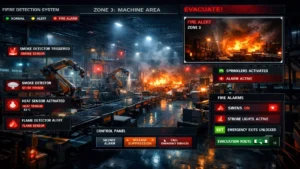
Imagine a warehouse fire.
Without integration:
- Siren rings
- Workers confused
- Delayed evacuation
With integration:
“Fire detected in storage zone 3. Workers in zone 3 evacuate immediately through exit gate C.”
Clear. Fast. Safe.
That’s the difference.
Note: Fire safety isn’t just about detection anymore.
It’s about communication.
Because knowing there’s danger is only half the battle, knowing what to do saves lives.
By combining:
- Addressable fire alarm panel
- Conventional fire alarm panel
- Addressable detectors
- Conventional detectors
- GST fire alarm system
- PAVA
You create a smart, responsive, life-saving ecosystem.
If you’re planning a new project or upgrading an existing one, integrating Fire Alarm + PAVA is not optional anymore; it’s the future of building safety.
And choosing a reliable platform like GST ensures your system performs when it matters most.
Read Also: Edge AI vs Centralized Analytics in Enterprise CCTV
Read Also: Fire Alarm Control Panels as the Brain of ELV Systems