CCTV has changed. It is no longer “just cameras and a DVR.”
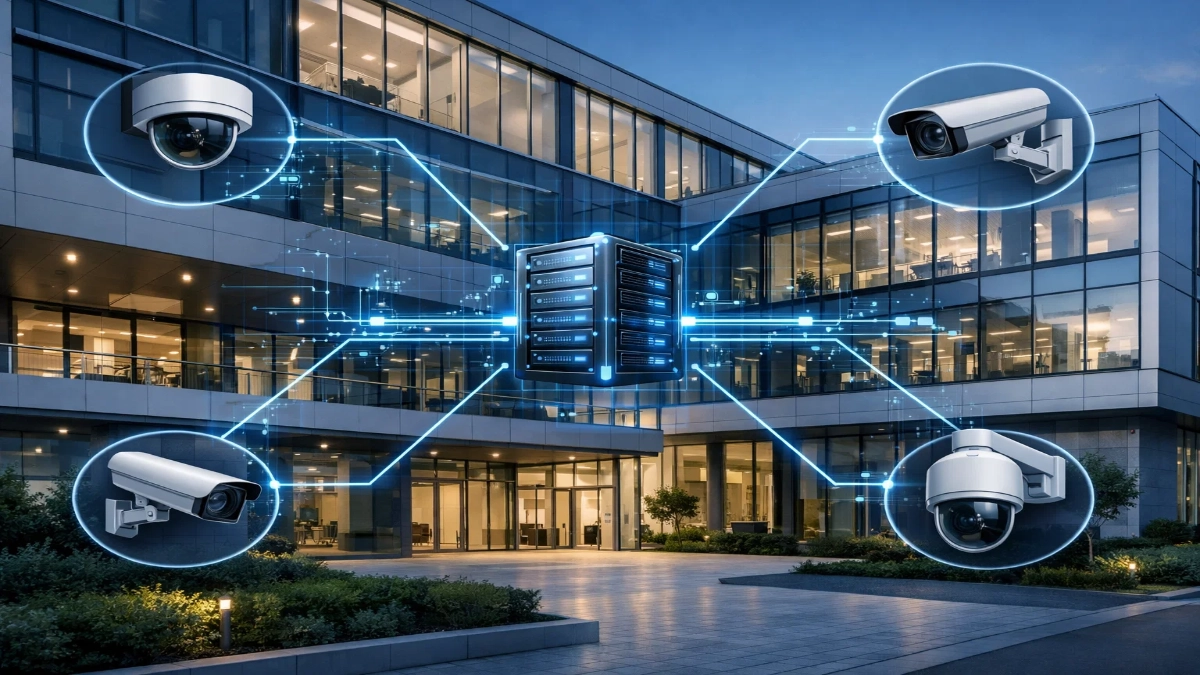
Today, most modern CCTV deployments look and feel like IT network projects, complete with IP planning, bandwidth calculations, cybersecurity hardening, VLANs, cloud integrations and long-term scalability design.
If you’re an engineer, consultant or facility manager, you’ve probably noticed this shift already: the success of a CCTV system now depends more on the network than the camera. And this is exactly why CCTV projects are increasingly being led (or heavily influenced) by network and IT teams.
In this article, we will break down why this is happening, what it means for design and maintenance and how you can build CCTV systems that perform reliably, scale smoothly and stay secure.
The Big Shift: CCTV Is Now an IP-Based Infrastructure
Traditional CCTV systems were simpler:
- Analog cameras
- Coaxial cabling
- DVR/NVR recording
- Minimal software
- Limited integrations
Now, most CCTV systems are fully IP-based and operate like any other enterprise network service.
Modern CCTV includes:
- IP cameras with Ethernet connectivity
- PoE switches powering edge devices
- NVRs running on servers
- Video management software (VMS)
- Mobile viewing apps and web dashboards
- Central monitoring over WAN
- AI video analytics
- Cloud storage or hybrid cloud recording
So the system is no longer just a “security installation.”
It’s now a distributed network of endpoints streaming high-volume data continuously.
1) IP Cameras Are Network Devices First
An IP camera is effectively a computer on your network.
It has:
- A MAC address
- An IP address (Static or DHCP reservation)
- Firmware (that needs updates)
- User accounts and roles
- Ports and services (RTSP, ONVIF, HTTPS, etc.)
- Security certificates (in enterprise setups)
- CPU/GPU processing for analytics
This means your CCTV design now requires:
- IP addressing plan
- Switch port planning
- Device discovery and onboarding strategy
- Access control and user rights design
- Firmware lifecycle management
In short, you are no longer “installing cameras.”
You are deploying network endpoints at scale.
2) Video Traffic Is Heavy and Constant (Bandwidth Becomes the Real Bottleneck)
Unlike most office traffic, CCTV produces continuous high data loads.
Even one camera can generate a lot of traffic depending on:
- Resolution (2MP / 4MP / 8MP)
- FPS (15/20/25/30)
- Compression (H.264 / H.265 / Smart codecs)
- Bitrate (CBR/VBR)
- Scene complexity (movement, lighting, noise)
Now scale it:
- 20 cameras → manageable
- 100 cameras → serious planning
- 500 cameras → fully engineered network project
Example (real-world)
A 4MP camera at ~4 Mbps average:
- 50 cameras = 200 Mbps continuous traffic
- 100 cameras = 400 Mbps continuous traffic
That is not a small load.
And if the network is not designed for it, you will see:
- Live view lag
- Dropped frames
- NVR recording gaps
- Slow playback
- Random camera disconnects
So the engineer’s first question is no longer “which camera model?”
It’s now:
Can the network carry the video load reliably, 24×7?
3) PoE Switching and Port Engineering Is Now Core CCTV Design
Power delivery has shifted, too.
In the past, cameras were powered using local adapters or separate power lines.
Today, PoE is standard.
That makes the switch room a critical part of CCTV.
Engineers now must calculate:
- PoE budget per switch
- Max power draw per port
- Total watt consumption across cameras
- Uplink port capacity
- Redundancy planning
If PoE planning is weak, you get:
- Cameras rebooting randomly
- Night IR is turning on and crashing the power budget
- Switch overheating or shutting down ports
- Unstable performance under peak loads
Reality check:
CCTV stability is often decided inside the network rack, not at the camera site.
4) Storage and Recording Is Now a Server + Network Strategy
Recording is not just “add a hard disk.”
Modern recording design includes:
- NVR server selection (CPU/RAM/NIC)
- RAID planning (RAID 5/6/10)
- Storage throughput (MB/s sustained write)
- Retention days calculation
- Failover and redundancy
- Distributed recording architecture
Even storage depends on the network because cameras stream over IP.
If the network struggles, storage will never receive clean streams.
This is why enterprise CCTV designs look similar to:
- Data centre capacity planning
- Server sizing documentation
- Storage IOPS and throughput planning
In short: CCTV recording is now an IT workload.
5) CCTV Systems Now Require Cybersecurity Like Any Other IT System
This is one of the biggest reasons CCTV became a network project.
IP cameras and VMS platforms are common cybersecurity targets because:
- They are always online
- They have remote access requirements
- They often run outdated firmware
- They are deployed in bulk
- They may include default passwords (sadly, still common)
A weak CCTV network can expose:
- Internal LAN
- Server infrastructure
- Sensitive footage
- Compliance gaps
- Corporate privacy risks
Common CCTV security risks engineers see
- Cameras connected directly to the main LAN
- No VLAN segmentation
- Unencrypted streams
- Default admin passwords
- Open internet access to NVR ports
- No audit logs
- No patch management process
So the modern baseline includes:
- VLAN for cameras
- Separate VLAN for NVR/VMS servers
- Access rules (ACLs + firewall policies)
- Password policy + role-based access
- Firmware update schedule
- Disable unused services (UPnP, Telnet)
- Secure remote access (VPN, not port forwarding)
That is classic network security work.
Not traditional “security installation” work.
6) VLANs, QoS and Network Segmentation Are Now Standard Practice
Once cameras scale, you must control traffic.
Why VLANs matter
VLANs isolate CCTV devices from other network devices. This protects:
- Your office network from CCTV traffic flooding
- CCTV from being accessed by unauthorised systems
- Performance during peak usage
Why QoS matters
QoS helps prioritise important streams (like critical locations).
Without segmentation, you may experience:
- CCTV traffic is slowing down other operations
- Network congestion during peak hours
- Video loss on busy uplinks
So CCTV engineers are now discussing:
- VLAN tagging
- trunk ports
- uplink design
- LACP port aggregation
- spanning tree considerations
- switch stack redundancy
That is pure networking.
7) Remote Monitoring + Multi-Site Viewing Made WAN Design a CCTV Requirement
In many industries, CCTV is no longer local.
Examples:
- Retail chains
- Warehouses
- Hospitals
- Schools and campuses
- Manufacturing plants with multiple units
- Smart city deployments
They need:
- Central monitoring from one control room
- Live view across cities
- Mobile viewing for management teams
- Cloud sync for backup footage
This adds new technical layers:
- WAN bandwidth planning
- VPN tunnels / SD-WAN integration
- Centralised VMS federations
- Edge recording + central event sync
- Failover strategies for internet outages
So CCTV now touches:
LAN + WAN + cloud.
That is why engineers treat modern CCTV like an infrastructure project.
8) AI Analytics Made CCTV a Data and Compute Project Too
Cameras are no longer passive video capture devices.
Now they are expected to detect:
- Intrusion
- Line crossing
- Loitering
- People counting
- Vehicle analytics
- Face recognition (where legally permitted)
- ANPR/LPR (number plate recognition)
- Object left behind
- PPE compliance
- Fire and smoke detection (video-based)
These analytics require:
- More bandwidth (higher quality streams)
- More computing at the edge or server
- Better storage performance
- Stronger network architecture
In many projects, AI is the new KPI.
And AI performance depends on video quality, which depends on the network health.
So yes, analytics is pushing CCTV further into the network + compute world.
9) Compliance, Privacy and Data Governance Are Now Part of CCTV Planning
Organisations now care about:
- Who can access footage
- Who exported footage and when
- How long is the footage stored
- Where it is stored (on-prem vs cloud)
- Whether audio recording is enabled
- Whether the footage is encrypted
This is especially important in:
- Corporate offices
- Hospitals
- Airports
- Educational institutions
- Banking and finance
- Government facilities
To meet compliance expectations, teams implement:
- Audit logs
- Encryption at rest and in transit
- User-based access control
- Export permissions
- Retention controls and auto-deletion
- Secure backup strategy
Again, these are governance concepts from IT, not old-school CCTV.
10) Integration With Other Systems Makes CCTV a Connected Ecosystem
Modern CCTV rarely works alone. It integrates with:
- Access control systems (door events trigger recording)
- Fire alarm systems (event-based monitoring)
- Building management systems
- Visitor management platforms
- Alarm monitoring centers
- PSIM platforms
- SOC dashboards
- Incident management tools
Integration means:
- APIs
- network routing
- event data sync
- server-to-server communication
- uptime requirements
- system interoperability testing
When systems connect, the network becomes the “spine” of security operations.
CCTV Is Becoming a Network Project: What This Means for Engineers
Here’s the real takeaway:
CCTV success now depends on:
- network design
- security hardening
- bandwidth and storage engineering
- structured documentation
- IT-grade troubleshooting
- scalability planning
So if you’re designing or deploying CCTV today, treat it like an enterprise deployment.
A Practical Network Checklist for CCTV Projects
Engineers love checklists. Here’s one you can actually use on site:
Network Planning
- Assign static IPs or DHCP reservations
- Separate camera network (VLAN)
- Plan uplinks: 1G vs 10G
- Ensure switch backplane capacity
- Avoid long daisy-chains
PoE and Switching
- Verify PoE class and power budget
- Use managed PoE switches
- Document port mappings
- Keep spare capacity (15–25%)
Bandwidth and Performance
- Calculate bitrate per camera
- Plan for peak traffic, not average
- Use H.265 where supported
- Configure VBR smartly
- Ensure playback doesn’t break live streaming
Recording Design
- Confirm retention days requirement
- Size storage with overhead
- Use RAID and health monitoring
- Plan N+1 redundancy for critical sites
Cybersecurity
- Change default passwords immediately
- Disable unused services
- Patch firmware and VMS regularly
- Use VPN for remote access
- Restrict access by roles
Documentation
- Network diagram
- Camera locations and IP table
- Switch mapping sheet
- Recording settings backup
- SOP for maintenance and escalation
Common Mistakes That Turn CCTV Into a Painful Project
Even good systems fail due to predictable mistakes.
Avoid these:
- Plugging cameras directly into the office LAN
- Using unmanaged switches for large systems
- No bandwidth calculation before deployment
- No VLAN separation
- Ignoring storage throughput
- No firmware update plan
- Using port forwarding for remote access
- No documentation for future troubleshooting
The best CCTV engineers are not the ones who install fast.
They are the ones who design to avoid failure.
The Future: CCTV Will Become “Security Networking” as a Standard Skill
The industry is moving toward:
- Cloud-first video systems
- Edge AI processing
- Centralised command centres
- SOC-driven monitoring
- Zero-trust network design
- Compliance-heavy deployments
That means CCTV will keep shifting toward:
Networking + Cybersecurity + System integration
So if you’re in security engineering today, learning network basics is no longer optional.
It’s a career advantage.
Why This Change Is Actually Good
This transition is not a problem. It’s progress.
When CCTV becomes a network project:
- Systems scale better
- Performance becomes predictable
- Maintenance becomes structured
- Uptime improves
- Incidents become easier to investigate
- Security becomes stronger
And most importantly:
The CCTV system starts delivering business value, not just surveillance.