Fire safety has always been a critical pillar of building design and industrial risk management. For decades, traditional fire safety systems relied on basic detection devices, manual monitoring and reactive response strategies. While these systems saved countless lives, they often lacked intelligence, real-time awareness and predictive capability.
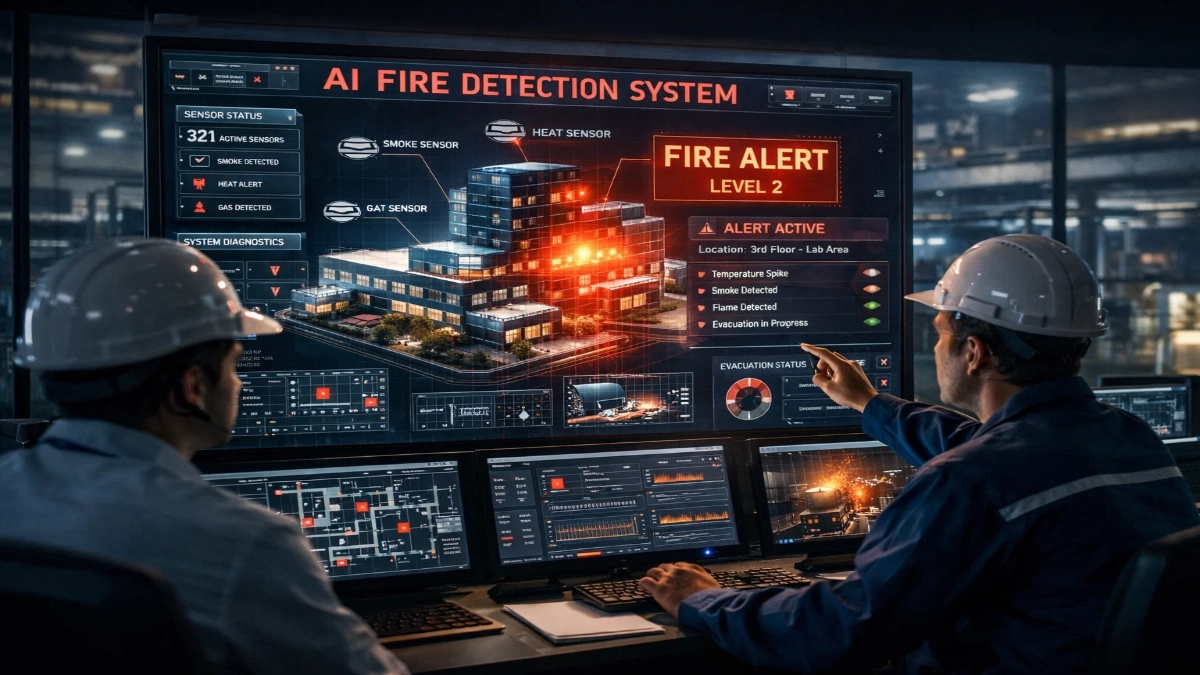
Today, technology is dramatically transforming modern fire safety systems. With the integration of artificial intelligence, Internet of Things (IoT), advanced analytics and cloud connectivity, fire protection systems are becoming smarter, faster and far more reliable than ever before.
Modern fire safety is no longer limited to simply detecting smoke and triggering alarms. Instead, it focuses on early detection, intelligent decision-making, predictive maintenance and coordinated emergency response.
For engineers, system integrators, safety consultants and facility managers, understanding these technological advancements is essential. In this article, we explore how technology is reshaping modern fire safety systems and why organisations must embrace these innovations to enhance safety, compliance and operational resilience.
The Evolution of Fire Safety Systems
To understand the transformation, it is important to look at how fire safety systems have evolved.
Traditional fire protection relied on three main components:
- Smoke detectors
- Manual call points
- Conventional fire alarm panels
These systems were effective but limited. Conventional panels typically divide buildings into zones. When a detector triggered, the panel would indicate only the zone where the incident occurred rather than the exact location. This often slowed emergency response.
Modern fire safety systems now operate with addressable technology, network connectivity and intelligent control logic.
Key improvements include:
- Precise device identification
- Faster alarm verification
- Remote monitoring capabilities
- Integration with other building systems
Instead of isolated devices, modern systems function as interconnected safety networks capable of making intelligent decisions during emergencies.
Smart Fire Detection Technologies
One of the most significant technological transformations in fire safety is advanced detection technology.
Modern detectors use multi-criteria sensing and sophisticated algorithms to identify fire conditions earlier while reducing false alarms.
Multi-Sensor Detectors
Traditional detectors rely on a single detection principle, such as smoke or heat. However, modern detectors combine multiple sensing technologies, including:
- Smoke detection
- Heat detection
- Carbon monoxide sensing
- Infrared analysis
These multi-sensor detectors analyse multiple environmental factors simultaneously, improving accuracy and reducing nuisance alarms.
Aspirating Smoke Detection (ASD)
Aspirating smoke detection systems provide ultra-early warning detection. These systems continuously draw air samples through a network of pipes and analyse them for microscopic smoke particles.
ASD technology is widely used in:
- Data centres
- Clean rooms
- Telecom facilities
- High-value asset environments
Because these systems detect smoke at a very early stage, they allow emergency teams to intervene before a fire escalates.
Video-Based Fire Detection
Another emerging technology is video analytics for fire detection. Intelligent cameras can now detect:
- Smoke patterns
- Flame movement
- Abnormal heat signatures
This technology is particularly useful in large open environments such as:
- Warehouses
- Industrial plants
- Power generation facilities
- Airports
By analysing visual data in real time, video detection systems can identify fire conditions even before traditional detectors activate.
The Role of Artificial Intelligence in Fire Safety
Artificial intelligence is revolutionising how fire safety systems analyse risks and respond to emergencies.
AI-enabled fire safety systems can process vast amounts of environmental data to recognise fire patterns and trigger alerts more accurately.
Intelligent Alarm Verification
False alarms are one of the biggest operational challenges in fire safety systems. Frequent false alarms lead to unnecessary evacuations, operational disruptions and reduced trust in alarm systems.
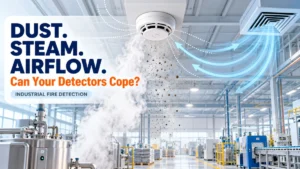
AI algorithms can analyse sensor data patterns to determine whether an alarm condition is genuine or caused by environmental factors such as dust, steam or humidity.
This significantly reduces nuisance alarms while maintaining high detection sensitivity.
Predictive Risk Analysis
AI also enables predictive fire risk assessment. By analysing historical data, environmental conditions and equipment performance, AI systems can identify areas with elevated fire risk.
For example, AI systems may detect patterns such as:
- Overheating electrical equipment
- Increasing smoke particle trends
- Abnormal environmental conditions
This allows facility managers to address potential hazards before they develop into real fire incidents.
Internet of Things (IoT) and Connected Fire Systems
The Internet of Things is another major driver of transformation in fire safety systems.
IoT technology allows fire safety devices to communicate with each other and share data across networks.
Connected Detection Devices
Modern fire detectors, alarm panels and sensors can now connect through secure networks to provide real-time system status and event data.
Benefits include:
- Real-time monitoring of system health
- Remote diagnostics and maintenance
- Faster incident response
Facility managers can monitor fire safety systems from centralised dashboards instead of physically inspecting each device.
Remote System Monitoring
IoT-enabled fire systems allow remote monitoring through cloud-based platforms. This capability is particularly valuable for organisations that manage multiple facilities.
Remote monitoring allows safety teams to:
- View system alerts instantly
- Diagnose faults remotely
- Track device status
- Receive maintenance notifications
This level of visibility significantly improves operational efficiency and system reliability.
Cloud-Based Fire Safety Management
Cloud technology has introduced a new level of flexibility and scalability in fire safety systems.
Traditional systems relied on on-site monitoring panels. However, modern cloud platforms allow organisations to manage fire safety infrastructure across multiple buildings from a single interface.
Centralised System Management
Cloud platforms enable centralised management of:
- Fire alarm panels
- Detection devices
- System logs
- Event notifications
Safety teams can monitor multiple facilities in real time, which is particularly beneficial for large enterprises, industrial groups and multi-site organisations.
Data Analytics and Reporting
Cloud-based systems also provide advanced analytics capabilities. These platforms collect system performance data and generate insights such as:
- Device fault trends
- Maintenance schedules
- Alarm history analysis
These insights help engineers optimise system performance and ensure regulatory compliance.
Integration with Building Management Systems
Another major technological advancement is integration between fire safety systems and building management systems (BMS).
Instead of functioning independently, modern fire systems can coordinate with multiple building subsystems during emergencies.
Integrated systems may automatically control:
- HVAC shutdown
- Smoke extraction systems
- Elevator recall operations
- Emergency lighting activation
- Access control unlocking
This coordinated response significantly improves evacuation safety and emergency management.
For example, when smoke is detected in a specific area, the system can automatically:
- Activate alarms
- Shut down air handling units
- Trigger smoke control systems
- Unlock emergency exits
This level of automation dramatically improves response time and reduces human intervention during critical situations.
Wireless Fire Detection Systems
Wireless technology is also transforming fire safety installations, especially in complex or heritage buildings.
Traditional fire detection systems require extensive cabling infrastructure, which can be difficult to install in certain environments.
Wireless fire detection systems offer several advantages:
- Faster installation
- Minimal structural disruption
- Lower installation costs
- Flexible system expansion
These systems are widely used in:
- Historic buildings
- Hospitals
- Museums
- Temporary facilities
Wireless detectors communicate with control panels using secure radio protocols while maintaining high reliability.
Advanced Notification and Communication Systems
Modern fire safety systems now incorporate advanced communication technologies to improve emergency notification.
Voice Evacuation Systems
Traditional fire alarms rely on simple sirens or bells. However, modern buildings increasingly use voice evacuation systems.
These systems provide clear voice instructions during emergencies, helping occupants evacuate safely and efficiently.
Voice systems can deliver messages such as:
- Evacuation instructions
- Safe exit routes
- Emergency updates
Research shows that voice messages significantly improve evacuation behaviour compared to traditional alarms.
Mobile Alert Integration
Modern systems can also send alerts directly to smartphones or mobile devices. This feature allows facility managers and emergency teams to receive notifications instantly, even if they are not on site.
Predictive Maintenance and System Reliability
Technology has also improved the reliability of fire safety systems through predictive maintenance.
Traditional maintenance relied on periodic inspections and manual testing. However, modern systems continuously monitor device performance and identify potential issues before failures occur.z
Predictive maintenance capabilities include:
- Device health monitoring
- Battery performance analysis
- Fault detection algorithms
- Maintenance alerts
By identifying potential failures early, organisations can ensure that fire safety systems remain fully operational at all times.
The Role of Data in Modern Fire Safety
Data analytics plays an increasingly important role in fire safety engineering.
Modern systems generate large amounts of operational data, including:
- Detector sensitivity levels
- Alarm events
- Environmental conditions
- Device diagnostics
Engineers can analyse this data to improve system design, optimise detection thresholds, and enhance overall safety performance.
Data-driven fire safety strategies allow organisations to move from reactive fire protection toward proactive risk management.
Challenges in Adopting Advanced Fire Safety Technology
While technology offers significant advantages, organisations must also address certain challenges when implementing modern fire safety systems.
Common challenges include:
- Integration complexity
- Cybersecurity concerns
- System compatibility issues
- Training requirements for staff
To overcome these challenges, organisations must work with experienced system integrators and follow established fire safety standards and regulations.
Proper system design, testing and commissioning remain essential to ensure reliable system performance.
The Future of Fire Safety Technology
The future of fire safety systems will likely involve even greater technological innovation.
Emerging technologies include:
- AI-driven predictive fire modeling
- Digital twin simulations for building safety
- Advanced sensor fusion technologies
- Drone-assisted emergency response
These innovations will further improve early detection, situational awareness and emergency response coordination.
As buildings become smarter and more connected, fire safety systems will evolve into fully integrated intelligent safety ecosystems.
Why Engineers Must Embrace Technological Advancements
For engineers, safety consultants and facility managers, adopting modern fire safety technologies is no longer optional. It is a necessity.
Advanced systems provide:
- Faster detection
- Improved reliability
- Reduced false alarms
- Better system visibility
- Enhanced compliance with safety regulations
Organisations that invest in modern fire safety technology can significantly reduce risk while improving operational resilience.
In high-risk environments such as industrial facilities, data centres and commercial complexes, these technologies play a crucial role in protecting lives, assets and business continuity.
Note: Technology is fundamentally transforming modern fire safety systems. From AI-driven detection algorithms to IoT-enabled monitoring and cloud-based system management, fire protection is becoming smarter, faster and more reliable.
These advancements allow organisations to detect fires earlier, respond more effectively and maintain higher levels of system reliability.
For engineers and safety professionals, staying informed about these technologies is essential for designing robust fire protection strategies.
As buildings become increasingly intelligent and connected, fire safety systems will continue evolving into integrated safety networks that deliver proactive protection rather than reactive response.
Investing in advanced fire safety technology today will help organisations create safer environments, protect critical infrastructure and ensure long-term operational resilience.
Read Also: What Are the Legal Fire Safety Requirements for Businesses in India?
Read Also: Is Your Surveillance System Designed for Today’s Threats?