Picture a massive textile warehouse on the outskirts of Surat. Hundreds of crores of rupees worth of inventory, thirty workers on the night shift and a fire alarm panel that had not been serviced in two years.
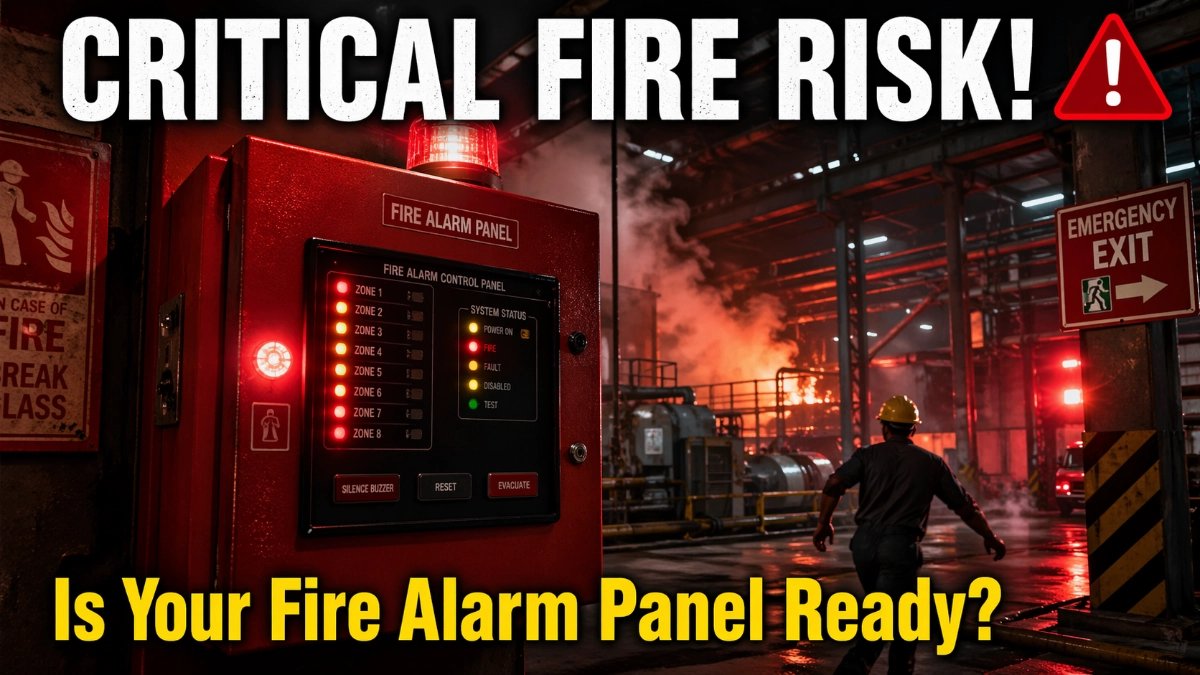
A short circuit sparked in the storage area at 3:17 AM. The fire spread quietly for nearly eighteen minutes before a worker noticed the smoke. The alarm panel? It triggered nothing. One sensor had failed months ago. Another had been disabled after too many false alerts. Nobody had fixed either.
By the time the fire brigade arrived, two floors were already gone. Thankfully, no lives were lost, but the financial and legal aftermath took years to resolve.
This is not a made-up horror story. Incidents like this happen across India’s industrial zones every year. And almost every time, the investigation points back to one weak link: an unreliable or non-compliant fire alarm panel.
In this guide, we examine why fire alarm panels are critical infrastructure, not just a regulatory box to tick. We look at the real security and reliability risks they carry, the compliance challenges Indian facilities face, and why GST Fire Alarm Systems have become the preferred choice for engineers and facility managers who refuse to gamble with safety.
What Makes Fire Alarm Panels Critical Infrastructure?
Critical infrastructure refers to systems and assets so essential that their failure would severely affect public safety, economic stability, or national security. Traditionally, we think of power grids, water supply and communication networks as critical infrastructure.
Fire alarm panels deserve the same classification, and here is why.
The First Line of Defence
A fire alarm panel is the central nervous system of any fire detection and response network. It receives signals from every detector, call point and sensor in a building. It decides whether to trigger alarms, activate suppression systems, unlock emergency exits, or notify the fire brigade, all within seconds.
When this panel works correctly, people evacuate safely and property damage is minimised. When it fails even partially, the consequences can be catastrophic.
Life Safety and Asset Protection
Life safety: A functioning fire alarm panel gives occupants the critical minutes they need to evacuate. Studies show that 90% of fire fatalities in buildings are preventable with early detection and fast alarm response.
Asset protection: In factories, data centres, and warehouses, even a small fire can destroy irreplaceable equipment or inventory. The economic cost of fire damage in Indian industries runs into thousands of crores of rupees annually.
Business continuity: A single fire incident can halt production for weeks or months. For export-driven manufacturers, this can mean contract losses and reputational damage that takes years to recover from.
| Key Fact: According to NFPA data, buildings with properly functioning fire alarm systems have significantly lower injury and death rates compared to buildings with non-functional or absent systems. |
Why India Needs to Take This More Seriously
India’s rapid industrial and urban growth has outpaced fire safety infrastructure in many regions. Across industrial zones like Noida, Mumbai, Chennai, Pune and Hyderabad, thousands of facilities still operate with outdated or non-certified fire alarm panels. Many were installed under old standards and have never been upgraded.
The National Building Code of India (NBC 2016) clearly mandates automatic fire detection and alarm systems for most commercial and industrial buildings. Yet compliance rates remain concerningly low in many sectors.
The gap between what the law requires and what is actually installed and maintained is where tragedies happen.
Key Security Risks in Fire Alarm Systems
Most people think of fire alarm systems as purely mechanical detectors, wires, panels and sirens. But modern fire alarm infrastructure, especially addressable fire alarm panels, carries security risks that are often overlooked.
1. Cyber Vulnerabilities in Networked Systems
Modern addressable fire alarm panels increasingly communicate over IP networks for remote monitoring, diagnostics and integration with building management systems (BMS). This connectivity brings real value, but it also opens new attack surfaces.
A poorly secured system can be accessed by unauthorised parties to disable alarms, trigger false evacuations, or mask real fire events. In high-value facilities like data centres, pharmaceutical plants, or defence installations, this represents a serious threat.
| Best practice: Ensure addressable fire alarm systems are on isolated, firewalled network segments. Use panels that support encrypted communication and role-based access controls. |
2. Physical Tampering Risks
Tampered or deliberately disabled fire alarm systems are more common than many facility managers realise. This happens because:
- Workers disable detectors to smoke or avoid nuisance alarms.
- Contractors disconnect sensors during construction and forget to reconnect them.
- Panels are placed in unsecured locations where anyone can access controls.
GST fire alarm panels include tamper detection and event logging features that record every modification to the system. This creates an audit trail and deters unauthorised changes.
3. Poor Installation as a Security Risk
An incorrectly installed fire alarm system can be as dangerous as no system at all. Common installation errors include:
- Undersized cable runs that cause voltage drops and missed signals.
- Detectors are placed in dead air spaces where smoke never reaches.
- Missing end-of-line resistors that create supervision failures.
- Panels installed without proper earthing are vulnerable to electrical surges.
These errors are not always visible during a routine inspection. They only reveal themselves when a real fire occurs, often with devastating consequences.
Reliability Risks That Can Lead to Disaster
Security vulnerabilities are serious, but day-to-day reliability failures are actually more common and equally dangerous. Here are the reliability risks every facility manager must understand.
False Alarms: The Boy Who Cried Wolf
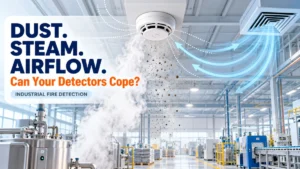
False alarms are not just an inconvenience. They create a culture of complacency. When a fire alarm goes off five times a month due to dust, steam, or cooking fumes, people stop taking it seriously. When a real fire starts, the instinct becomes to wait and see rather than evacuate immediately.
Poorly calibrated detectors, especially cheap conventional detectors that lack intelligent algorithms, are a leading cause of false alarms in Indian facilities. GST addressable detectors use multi-criteria sensing to distinguish real fire conditions from everyday nuisances, dramatically reducing false alarm rates.
Silent Failures: No Alarm When It Matters Most
Worse than a false alarm is no alarm at all. System components fail silently over time, especially in harsh industrial environments with heat, dust, chemicals and humidity.
A key advantage of addressable fire alarm panels is that they continuously monitor each detector individually and flag faults in real time. With a conventional fire alarm panel, an entire zone can go dark without anyone knowing until an inspection or a fire.
System Downtime During Critical Hours
Fire alarm panels require periodic maintenance, software updates, and battery testing. In many facilities, maintenance is deferred indefinitely due to cost pressures or operational inconvenience.
A panel with a flat backup battery will not function during a power outage, precisely when fires are most likely in the aftermath of an electrical fault. GST panels feature self-diagnostic routines and alert facility managers to battery degradation before it becomes a critical failure.
| Reality Check: NFPA studies consistently show that in fires where fire alarm systems failed to operate, the number one cause was that the system had been manually disabled or had not been properly maintained. This is entirely preventable. |
Compliance Challenges in India: What Facility Managers Face
India has a robust framework for fire safety on paper. The National Building Code (NBC 2016), local fire department regulations and industry-specific guidelines from bodies like PESO and the Factories Act all impose clear obligations. But navigating these requirements is genuinely challenging.
Fire Department Approvals: A Complex Maze
Every state and municipal fire department in India has slightly different approval processes, documentation requirements and inspection protocols. What satisfies the Mumbai Fire Brigade may not meet the requirements of the Chennai Corporation of Greater Chennai’s fire wing.
Facilities that use non-certified or grey-market equipment often find their approvals rejected, sometimes after an expensive installation is already complete. This is not just a compliance headache; it is a financial disaster.
GST fire alarm systems come with certifications from BIS, UL and CE, and they are pre-approved or accepted by fire authorities across major Indian cities, significantly reducing approval friction.
Documentation Gaps: The Invisible Risk
Even correctly installed systems fail compliance audits because of missing documentation. Inspectors require:
- As-built drawings showing detector placement.
- Panel configuration records.
- Battery test logs.
- Maintenance service reports.
- Fault history records.
Generic or unbranded systems often provide no documentation support. GST provides comprehensive commissioning documentation, system logs, and service records that satisfy inspector requirements.
Non-Certified Equipment: A Growing Problem
The Indian market is flooded with cheap, uncertified fire alarm panels and detectors, many imported without proper testing. These products may look identical to certified equipment but lack the engineering rigour to perform reliably under real fire conditions.
Worse, using non-certified equipment can invalidate your insurance claims in the event of a fire. Insurance companies increasingly verify that installed systems meet BIS standards and fire authority approvals.
Addressing Compliance Issues Using GST Fire Alarm Panels
GST (Gulf Security Technology) has built a strong reputation in India’s fire safety industry through consistent product quality, wide certification coverage and genuine after-sales support. Here is how GST fire alarm systems address the compliance and reliability challenges we have outlined.
Certifications That Open Doors
GST fire alarm panels and detectors carry certifications including BIS (Bureau of Indian Standards), CE and UL listings. These certifications are not just labels; they represent rigorous testing for performance under real fire conditions, electrical safety and long-term reliability.
Across industrial zones from Noida to Pune to Chennai, fire authorities recognise and accept GST systems, making the approval process faster and more predictable.
Scalability for Every Facility Type
Whether you manage a 500-square-metre retail outlet or a 50,000-square-metre manufacturing plant, GST offers the right solution. Their conventional fire alarm panels are cost-effective and simple for smaller facilities. Their addressable fire alarm panels offer zone-level precision and integration capabilities for complex environments.
This scalability means you do not need to replace your entire system as your facility grows; you expand the GST network intelligently.
Ease of Compliance Documentation
Every GST system installation comes with structured documentation support. Commissioning engineers provide system configuration records, detector mapping, zone lists and service logs. This dramatically simplifies annual fire department inspections and insurance audits.
Reliability Engineered for Indian Conditions
India’s industrial environment is tough on electronics, with high ambient temperatures, dust, humidity and frequent power fluctuations all stressing fire alarm systems. GST panels and detectors are tested to operate reliably across the temperature and humidity ranges found in Indian factories and warehouses.
Their self-diagnostic capabilities mean problems are flagged before they become failures, giving maintenance teams time to act proactively rather than reactively.
| Facility managers across India consistently report that switching from generic panels to GST fire alarm systems reduces false alarm incidents, simplifies fire authority inspections and provides greater confidence in system reliability. |
Addressable vs Conventional Fire Alarm Panels: Which Is Right for You?
Understanding the difference between addressable and conventional fire alarm systems is essential for making the right infrastructure decision. Both have a place in India’s fire safety landscape.
| Feature | Addressable Panel | Conventional Panel |
| Detection precision | Exact device location identified | Zone-level only |
| Fault identification | Device-specific fault alerts | Zone fault only |
| False alarm management | Intelligent multi-criteria detection | Basic threshold detection |
| Scalability | Highly scalable, hundreds of devices per loop | Limited by zone count |
| Installation cost | Higher initial cost | Lower initial cost |
| Best for | Large / complex facilities | Small / simple facilities |
| Compliance documentation | Rich event logs and device history | Basic zone records |
| GST range | GST i-bus series, intelligent panels | GST conventional series |
For large factories, hospitals, hotels, and commercial complexes, addressable fire alarm panels deliver the precision, documentation and integration capabilities that modern fire safety requires. For smaller facilities with straightforward layouts, conventional fire alarm panels remain a cost-effective and compliant solution.
GST offers strong product lines in both categories, and their system design engineers can help you select the right architecture for your specific facility requirements.
Best Practices for a Secure and Reliable Fire Alarm System
Installation Best Practices
- Always engage a licensed fire alarm system integrator with proven experience.
- Follow the NBC 2016 Part 4 guidelines for detector spacing and placement.
- Use manufacturer-approved cable types and follow wiring specifications exactly.
- Commission the system with the manufacturer’s technical team present.
- Conduct a full acceptance test with the local fire authority before occupancy.
Maintenance Best Practices
- Schedule quarterly preventive maintenance visits, not just annual checks.
- Test every detector individually during annual service, not just zone-level tests.
- Replace backup batteries every 3–4 years, regardless of apparent condition.
- Maintain a physical maintenance log at the panel location.
- Never disable detectors without a documented, time-limited isolation procedure.
Vendor Selection Best Practices
- Choose panels and detectors with verifiable BIS certification.
- Confirm that the vendor has an authorised service network in your region.
- Request references from similar facility types before finalising.
- Avoid grey-market or unbranded equipment regardless of price advantage.
- Verify that the vendor can provide complete commissioning documentation.
Future Trends in Fire Alarm Infrastructure
Fire alarm technology is evolving rapidly, and the systems you install today should be capable of adapting to tomorrow’s requirements.
IoT-Connected Fire Alarm Systems
The next generation of fire alarm infrastructure connects panels to cloud-based monitoring platforms. Facility managers receive real-time alerts, fault notifications and maintenance reminders directly on their mobile phones from anywhere in the world. For multi-site operators managing factories across Noida, Chennai and Pune simultaneously, this represents a transformational capability.
GST’s newer addressable panels support integration with building management systems and remote monitoring platforms, positioning facilities for this connected future.
AI-Based Detection Algorithms
Artificial intelligence is entering fire detection through detector algorithms that learn normal environmental conditions and become increasingly precise over time. These systems can distinguish the smoke from a welding operation from the smoke of a real electrical fire, a distinction that conventional threshold-based detectors simply cannot make.
AI-enhanced addressable detectors reduce false alarm rates dramatically, which in turn rebuilds the culture of alarm response compliance among building occupants.
Integration with Emergency Response Systems
Future fire alarm infrastructure will integrate seamlessly with access control, CCTV, PA systems, elevator controls and direct connections to fire brigade dispatch. This total integration, all coordinated through the central fire alarm panel, creates a faster, more intelligent emergency response that saves more lives and protects more assets.
Stop Treating Fire Alarm Panels as an Afterthought
Fire alarm panels are critical infrastructure; this is not just a phrase. It is a reality that every factory owner, facility manager, compliance officer and EHS professional in India must internalise.
The risks are real. System failures, security vulnerabilities, compliance gaps and poor maintenance practices put lives, assets and businesses at serious risk every single day. The Surat warehouse story at the start of this article is one of thousands that occur across India annually.
The good news? Every one of these risks is manageable with the right system, the right installation and the right maintenance discipline.
GST fire alarm systems provide the reliability, certifications and compliance documentation that Indian facilities need to meet NBC standards, satisfy fire authority inspections and genuinely protect the people and assets inside their buildings.
Whether you are evaluating addressable fire alarm panels for a new factory in Noida, upgrading a legacy conventional fire alarm system in a Mumbai commercial tower, or planning fire safety infrastructure for a government project in Chennai, the decision you make about your fire alarm panel is a decision about whether your building is truly protected.
Read Also: Top 10 CCTV Trends Every Business Should Know in 2026
Read Also: Cloud NVR vs Traditional NVR – What’s Better in 2026?