It’s 11 PM at a large warehouse in Greater Noida. There are no security guards on the floor, yet the facility is more secure than ever. An AI-powered camera system has already flagged an unauthorised entry attempt, sent an alert to the owner’s phone and logged the incident automatically. No panic. No delay. Just intelligent surveillance working silently in the background.
If that sounds like science fiction, it isn’t. Across Noida’s industrial corridors, Delhi NCR’s corporate parks and India’s booming retail sector, this is the new normal of commercial security in 2026.
The traditional CCTV camera, a passive device that sat on a wall and recorded footage nobody ever watched, is rapidly being replaced by something far smarter. Today’s surveillance systems analyse behaviour, recognise faces, detect anomalies, send real-time alerts, store data on the cloud and integrate seamlessly with access control, IoT sensors, and business operations.
2026 is, without question, the era of intelligent surveillance. And for business owners across India, whether you run a factory in Noida, manage a logistics hub in Ghaziabad, operate a retail chain, or oversee a corporate office, understanding these trends is essential to staying secure, competitive and compliant.
In this article, we break down the Top 10 CCTV trends every Indian business should know in 2026, with real-world use cases, practical insights and clear guidance on what to look for when upgrading your security infrastructure.
At a Glance: 10 CCTV Trends Shaping Business Security in 2026
Here is a quick summary of all 10 trends covered in this article:
| 1. AI-Powered Video Analytics | 6. Cybersecurity in Surveillance Systems |
| 2. Cloud-Based CCTV Systems | 7. 4K & Ultra HD Cameras as Standard |
| 3. Edge Computing Cameras | 8. Smart Motion Detection & Alerts |
| 4. Facial Recognition & Access Control | 9. Integration with IoT & Smart Buildings |
| 5. Remote Monitoring via Mobile Apps | 10. Solar-Powered & Energy-Efficient CCTV |
The Top 10 CCTV Trends in 2026: Explained for Indian Businesses
1. AI-Powered Video Analytics
USE CASES: FACTORIES · RETAIL · WAREHOUSES · OFFICES
What is AI CCTV? AI-powered CCTV cameras don’t just record, they understand what they’re seeing. Using machine learning and computer vision, these cameras can identify unusual behaviour, count people, detect abandoned objects, spot safety violations and trigger automatic alerts.
In a manufacturing plant in Noida, for example, an AI camera can detect if a worker enters a restricted zone without PPE (personal protective equipment) and immediately alert the floor supervisor. In a retail showroom, it can analyse customer traffic patterns to help optimise store layouts and staff deployment.
The shift from passive recording to active intelligence is the single biggest change in surveillance technology this decade. Businesses no longer need someone watching a monitor all day; the system does it for them.
Industry Insight: According to MarketsandMarkets, the global AI video surveillance market is projected to exceed $12 billion by 2027, with Asia-Pacific, including India, being the fastest-growing region.
2. Cloud-Based CCTV Systems
USE CASES: MULTI-SITE BUSINESSES · RETAIL CHAINS · CORPORATE OFFICES
Gone are the days when all your footage sat on a hard drive that could be stolen, damaged, or destroyed. Cloud surveillance allows footage to be stored securely on remote servers and accessed from anywhere, at any time.
For a retail chain with 10 stores across Delhi NCR, cloud CCTV is transformative. The owner or security manager can review live or recorded footage from all locations on a single dashboard from their phone, laptop, or tablet without needing to physically visit each site.
Cloud systems also make scalability easy. Adding a new branch? Simply connect the cameras to the existing cloud account. No additional DVR hardware, no complex IT setup. In 2026, cloud surveillance in India is becoming more affordable, more reliable and more accessible to mid-size businesses than ever before.
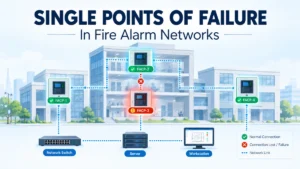
Business Benefit: Cloud CCTV eliminates single points of failure. Even if on-site equipment is tampered with, your footage is safe in the cloud.
3. Edge Computing Cameras
USE CASES: LOW-BANDWIDTH SITES · INDUSTRIAL · REMOTE LOCATIONS
Edge computing cameras process data locally right on the device itself rather than sending all footage to a central server. This means faster analysis, lower bandwidth consumption and reduced dependency on a stable internet connection.
For factories in industrial estates on the outskirts of Greater Noida or Ghaziabad, where internet connectivity can be unreliable, edge cameras are a game-changer. The camera makes intelligent decisions, detecting intrusions or safety violations on its own and sending only relevant alerts or clips to the central system.
Edge computing is particularly valuable in environments where real-time response matters most and where sending large volumes of video to the cloud isn’t practical or cost-effective.
#4. Facial Recognition & Access Control Integration
USE CASES: CORPORATE OFFICES · DATA CENTERS · HIGH-SECURITY FACILITIES
Facial recognition technology has matured significantly and is now being integrated directly into CCTV systems for access control at corporate offices, data centres, server rooms and high-security manufacturing areas across India.
Instead of swipe cards or PINs that can be lost or shared, your face becomes your credential. The system recognises authorised personnel and automatically logs every entry and exit. If an unknown face approaches a restricted area, the system raises an alert instantly.
For HR and security managers in large Delhi NCR offices or industrial complexes, this integration provides both stronger security and a detailed digital audit trail essential for compliance, incident investigation and employee accountability.
Compliance Note: Businesses deploying facial recognition should ensure their systems comply with India’s evolving data protection framework under the Digital Personal Data Protection Act (DPDPA) 2023.
5. Remote Monitoring via Mobile Apps
USE CASES: BUSINESS OWNERS · SECURITY MANAGERS · MULTI-SITE OPERATIONS
In 2026, if your CCTV system can’t be accessed from your smartphone, it’s already outdated. Remote monitoring through dedicated mobile apps has become a standard feature and one of the most valued by Indian business owners.
A factory owner travelling to Mumbai can check live camera feeds from their Noida plant in real time. A warehouse manager can review footage of a late-night delivery without driving to the site. A retail owner can watch their store during the festival sale season from anywhere in the world.
Modern apps offer live streaming, two-way audio, push notifications for motion alerts, instant playback of specific time windows and even the ability to remotely control PTZ (Pan-Tilt-Zoom) cameras. This level of control puts security in the palm of your hand, literally.
6. Cybersecurity in Surveillance Systems
USE CASES: ALL BUSINESSES · HIGH PRIORITY 2026
Here’s a trend that doesn’t get enough attention: your CCTV system itself can be hacked. As cameras go online and connect to cloud platforms, they become potential entry points for cybercriminals.
In 2026, cybersecurity for surveillance systems is no longer optional; it’s a critical business requirement. This means ensuring cameras have encrypted data transmission, regular firmware updates, strong password policies, network segmentation and choosing vendors who prioritise security certifications.
For businesses in Noida’s IT-heavy sectors or corporate parks in Delhi NCR, a compromised camera system can mean exposure of sensitive business operations, employee data, or confidential client information. Smart businesses are investing in cyber-hardened surveillance infrastructure alongside physical security.
Pro Tip: When evaluating CCTV vendors, always ask: Does this camera support end-to-end encryption? When was the last firmware security update? Is the device on any vulnerability watchlist?
7. 4K & Ultra HD Cameras Becoming the New Standard
USE CASES: RETAIL · SHOWROOMS · PARKING · PERIMETER
Full HD (1080p) was the benchmark just a few years ago. In 2026, 4K Ultra HD cameras are rapidly becoming the standard for commercial deployments in India, and their prices have dropped to a level where the upgrade is entirely justified.
In a retail showroom, a 4K camera can capture a clear image of a customer’s face, read a license plate in a parking area, or zoom into a shelf to verify product placement, all from a single camera covering a wide area. This reduces the number of cameras needed while dramatically improving footage quality.
For logistics companies in Ghaziabad with large loading dock areas, 4K cameras mean every vehicle number, every employee action and every consignment movement is captured with forensic-level clarity.
8. Smart Motion Detection & Intelligent Alerts
USE CASES: NIGHT SECURITY · WAREHOUSES · PERIMETER
Old motion detection triggered alerts every time a leaf blew past a camera. Modern smart motion detection is far more sophisticated. It distinguishes between a human, a vehicle, an animal and environmental movement and only alerts you when it genuinely matters.
In 2026, intelligent alert systems can be customised with virtual tripwires, zone-based detection and time-of-day rules. A warehouse in Greater Noida can set its system to alert security only when a person enters a restricted loading zone after 10 PM, ignoring all other movement during operational hours.
These systems dramatically reduce alert fatigue and ensure that when an alert fires, it demands and deserves immediate attention.
9. Integration with IoT & Smart Buildings
USE CASES: CORPORATE OFFICES · SMART FACILITIES · INDUSTRIAL
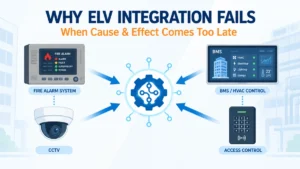
Modern CCTV doesn’t operate in isolation. In 2026, forward-thinking businesses are integrating their surveillance systems with the broader ecosystem of smart building technology, access control, fire alarms, HVAC controls, visitor management and IoT sensors.
Imagine this: A fire sensor triggers in a Delhi NCR corporate office. The moment the alarm fires, CCTV cameras automatically switch to record at maximum quality, access control doors unlock for safe evacuation and the security dashboard displays all camera feeds simultaneously. The entire building responds as a coordinated system.
For factories in Noida’s industrial belt, IoT-integrated cameras can monitor machine health indicators alongside visual feeds, combining operational intelligence with security surveillance in a single unified platform.
10. Solar-Powered & Energy-Efficient CCTV
USE CASES: OUTDOOR · PERIMETER · CONSTRUCTION SITES · REMOTE AREAS
As India pushes toward sustainability and businesses face rising electricity costs, solar-powered CCTV systems are emerging as a practical, cost-effective solution, especially for outdoor and remote deployments.
For construction sites in Greater Noida, agricultural warehouse perimeters, or remote factory boundaries where running power cables is expensive and impractical, solar-powered cameras offer continuous surveillance without ongoing electricity costs.
Combined with efficient battery storage and low-power AI processing chips, today’s solar CCTV systems can run 24/7 with minimal maintenance. They’re not just environmentally responsible, they’re financially smart, with payback periods measured in months rather than years.
Sustainability Win: Solar CCTV deployments can reduce surveillance-related electricity consumption by up to 80% compared to conventional wired outdoor camera installations.
How These Trends Are Impacting Businesses in Noida & Delhi NCR
These aren’t abstract technologies. They’re being deployed today across Delhi NCR’s diverse business landscape. Here’s how different business types in the region are benefiting:
| Factories in Noida / Greater Noida | AI cameras monitor safety compliance on production floors, edge devices handle real-time alerts in low-connectivity zones, and cloud storage ensures footage is never lost due to on-site tampering or equipment failure. |
| Warehouses & Logistics Hubs | Video analytics track footfall patterns and dwell times, cloud CCTV unifies multi-store monitoring, and AI-based alerts flag suspicious behaviour at checkout counters or display areas. |
| Retail Chains & Showrooms | Video analytics track footfall patterns and dwell times, cloud CCTV unifies multi-store monitoring, and AI-based alerts flag suspicious behavior at checkout counters or display areas. |
| Corporate Offices & Business Parks | Facial recognition replaces legacy access cards, IoT integration ties cameras into building management systems, and cyber-hardened infrastructure protects sensitive executive areas and server rooms. |
Whether your business is in Sector 63, Noida, Kasna Industrial Area in Greater Noida, or a commercial tower in Gurgaon, upgrading to smart surveillance in 2026 is one of the highest-ROI security investments you can make.
What to Consider Before Upgrading Your CCTV System in 2026
Knowing the trends is one thing; making the right purchasing decision for your specific business is another. Here are the key factors every Indian business should evaluate:
- Scalability: Can the system grow with your business? Choose platforms that allow easy addition of cameras, storage, and features without a complete overhaul.
- Storage Planning: 4K footage consumes significantly more storage than HD. Evaluate cloud, on-premise NVR/DVR and hybrid options. Factor in retention period requirements (30 days, 90 days, etc.).
- Bandwidth & Connectivity: For cloud and remote monitoring features, assess your site’s internet bandwidth. Edge computing cameras can partially offset this requirement.
- Compliance & Certifications: For government contracts or regulated industries, look for BIS certification or STQC compliance. Ensure data handling practices align with India’s DPDPA framework.
- Vendor Support & Warranty: After-sales service is critical. Choose vendors with proven local presence in Delhi NCR, certified installation teams and clear AMC (Annual Maintenance Contract) offerings.
- Total Cost of Ownership: Look beyond the upfront camera cost. Factor in storage, cloud subscriptions, installation, maintenance and potential upgrades over a 3-5 year horizon.
- Integration Capability: If you plan to integrate CCTV with access control or building management systems, verify API compatibility and integration support before purchasing.
The Future of Business Security Is Intelligent
“In 2026, businesses that treat CCTV as a passive recording tool are leaving enormous security value and competitive advantage on the table.”
The ten trends we’ve covered from AI video analytics and cloud surveillance to edge computing, facial recognition and solar-powered cameras represent a fundamental shift in how commercial security works. This isn’t an incremental improvement. It’s a complete reimagining of what surveillance can do for your business.
For factory owners in Noida’s industrial estates, warehouse managers in Ghaziabad, retail operators expanding across Delhi NCR, and corporate facility managers overseeing high-value assets, the question in 2026 is not whether to upgrade your CCTV, but how quickly and smartly you can do it.
Security threats are evolving. Cybercriminals, physical intruders and internal risks are becoming more sophisticated. Your surveillance infrastructure needs to keep pace. The good news is that the technology has never been more accessible, more capable, or more cost-effective for Indian businesses.
Invest in smart surveillance now, and you won’t just protect your business. You’ll run it better.
Read Also: Cloud NVR vs Traditional NVR – What’s Better in 2026?
Read Also: Best STQC-Compliant CCTV Cameras for Commercial Use in India