Over 65% of Indian businesses that upgraded to AI-powered surveillance in the last two years report a measurable reduction in security incidents. In 2026, CCTV is no longer just about recording footage; it’s about real-time intelligence, predictive action and business-grade decision-making.
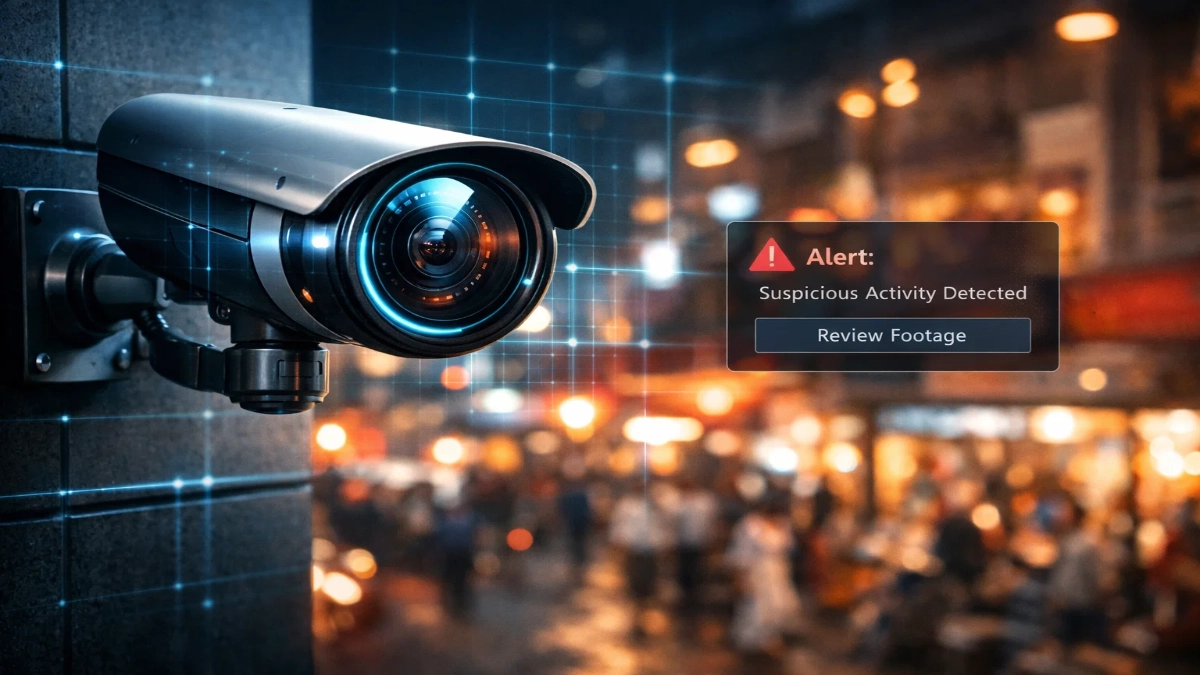
The surveillance landscape in India is shifting fast. What used to be a passive wall of cameras has evolved into a networked, AI-driven ecosystem that can detect suspicious behaviour, track inventory anomalies, monitor employee safety compliance and send instant alerts to a manager’s mobile, all simultaneously.
For business owners, IT heads and security decision-makers, understanding the top CCTV technology trends in 2026 isn’t optional. It’s a competitive and operational necessity.
Top CCTV Trends in 2026 at a Glance
Here’s a quick snapshot of where smart surveillance is heading this year:
- AI-Powered Video Analytics: Cameras that detect behaviour, not just record it.
- Cloud-Based CCTV & Remote Monitoring: Access live and recorded footage from anywhere.
- Edge Computing in Surveillance: On-device processing for faster, low-latency alerts.
- Facial Recognition with Privacy Controls: Identity verification with consent-first frameworks.
- IoT + Access Control Integration: Surveillance that communicates across your entire security stack.
- 4K/8MP Ultra HD Cameras: Crystal-clear footage for forensic-grade evidence.
- Advanced Night Vision (ColorVu & Beyond): Full-colour monitoring even in near-zero light.
- Predictive Security & Anomaly Detection: Proactive alerts before incidents escalate.
- Mobile-First Surveillance Dashboards: Complete control from any smartphone.
- Cybersecurity for CCTV Networks: Protecting the cameras that protect your business.
1. AI-Powered Video Analytics & Behaviour Detection
What It Is
AI video analytics goes far beyond motion detection. Modern systems can identify specific human behaviours, such as loitering, crowd formation, perimeter breaches, object abandonment, or even emotional distress cues and trigger automated alerts in real time.
Why It Matters in 2026
Manual monitoring of dozens of camera feeds is simply not scalable. With AI, a single operator can effectively oversee hundreds of cameras because the system flags only what matters.
In India’s rapidly expanding retail and industrial sectors, this translates to fewer security personnel handling more ground, without compromising response time.
India Business Scenario
A mid-size electronics retail chain in Bengaluru deployed AI video analytics across 12 stores. Within three months, the system identified a pattern of coordinated shoplifting, two individuals working in tandem and flagged it before staff noticed. The result: a 40% drop in shrinkage at pilot locations.
2. Cloud-Based CCTV & Remote Monitoring
What It Is
Cloud CCTV stores footage on secure remote servers and allows authorised users to view live feeds, access recordings, and manage camera settings from any device with an internet connection.
Why It Matters in 2026
The post-pandemic shift to decentralised management has permanently changed how business owners want to oversee operations. A logistics company owner in Delhi shouldn’t need to be physically present at a warehouse in Pune to know what’s happening on the floor.
Cloud-based solutions also eliminate the vulnerability of on-site DVR/NVR theft, a surprisingly common method criminals use to erase evidence.
India Business Scenario
A restaurant chain with 30+ outlets across Tier 1 and Tier 2 Indian cities moved to a cloud CCTV model. The operations head now reviews suspicious incidents flagged by the system from a single dashboard, without visiting each location. Staff accountability improved measurably within the first quarter.
3. Edge Computing in Surveillance
What It Is
Edge computing means the camera itself or a local edge device processes video data on-site rather than sending everything to a central server or cloud. Only relevant clips, alerts or metadata are transmitted upstream.
Why It Matters in 2026
Bandwidth is expensive, especially in multi-camera industrial setups. Edge computing dramatically reduces data transmission costs, speeds up response times and ensures surveillance continues even during internet outages.
In a country like India, where internet reliability varies significantly between industrial zones and urban centres, this resilience is a major practical advantage.
India Business Scenario
A garment manufacturing facility in Tiruppur with over 80 cameras switched to edge-enabled smart cameras. Even during the frequent bandwidth fluctuations in the area, the system continued detecting unauthorised zone entries locally and stored alerts for review, with zero downtime in security coverage.
4. Facial Recognition & Privacy-First Systems
What It Is
Facial recognition in business surveillance identifies individuals from camera feeds, flagging known offenders, tracking VIP customer entries, or logging employee attendance without requiring cards or PINs.
Why It Matters in 2026
Adoption is growing, but so is scrutiny. India’s evolving data privacy landscape, including the Digital Personal Data Protection Act (DPDP Act), is pushing vendors toward consent-driven, privacy-first implementations. Businesses adopting facial recognition in 2026 need to balance capability with compliance.
The smartest systems today anonymise data by default, flag recognised individuals without storing biometric templates longer than necessary and maintain audit logs.
India Business Scenario
A corporate office park in Hyderabad uses facial recognition at entry gates, streamlining check-ins for 1,200+ daily employees while maintaining a database of flagged individuals from past security incidents. A privacy audit dashboard lets the security team demonstrate compliance at any time.
5. Smart Integration: IoT + Access Control
What It Is
Modern surveillance doesn’t operate in isolation. IoT-integrated CCTV connects with access control systems, fire alarms, environmental sensors and even point-of-sale (POS) systems to create a unified security ecosystem.
Why It Matters in 2026
When a door access card is used at 2 AM in an area where cameras detect zero human presence, the system raises a flag. When a POS transaction happens with no matching customer on camera, it triggers a review. This cross-system intelligence is only possible when CCTV is connected to your broader operations.
India Business Scenario
A pharmaceutical warehouse in Ahmedabad integrated its CCTV with RFID-based access control and cold storage temperature sensors. Any unauthorised access attempt that also coincides with a temperature anomaly now triggers an immediate multi-channel alert, a scenario that previously went unnoticed for hours.
6. 4K/8MP Ultra HD Surveillance
What It Is
Ultra HD cameras, at 4K (8 megapixels) and above, capture footage with extraordinary clarity. License plate numbers, facial features and product barcodes that were previously unreadable in recordings are now forensically useful.
Why It Matters in 2026
The price of 4K cameras has dropped significantly, making them viable for SMEs, not just enterprise deployments. In a legal or insurance dispute, the quality of footage can be the difference between a resolved claim and a prolonged legal battle.
India Business Scenario
A jewellery showroom in Mumbai switched from 2MP HD cameras to 4K units at key display areas. During a customer dispute over a missing item, the footage, previously unusable for identification, now clearly showed every hand movement on the counter, resolving the case within 24 hours.
7. Dark/Night Vision Advancements: ColorVu & Full-Colour Night Surveillance
What It Is
Traditional night vision produces grainy black-and-white footage. Technologies like Hikvision’s ColorVu and similar innovations from other manufacturers now deliver full-colour, bright, usable footage even in near-zero ambient light, without an infrared glow that alerts intruders.
Why It Matters in 2026
Most thefts and unauthorised entries happen after business hours. Clearer night footage dramatically improves both deterrence and post-incident investigation. For outdoor perimeter security in industrial yards, parking lots, and construction sites, this is a game-changer.
India Business Scenario
A construction material yard on the outskirts of Chennai faced repeated material theft between midnight and 4 AM. After installing full-colour night vision cameras, two incidents were recorded with clear footage of the perpetrators’ faces and their vehicle number plate, leading to a police complaint and recovery.
8. Predictive Security & Anomaly Detection
What It Is
Predictive security uses historical surveillance data and behavioural patterns to anticipate threats before they materialise. If a specific zone always sees increased activity before an incident, the AI learns that pattern and pre-alerts security teams.
Why It Matters in 2026
This represents a fundamental shift from reactive to proactive security. Instead of asking “what happened?” after the fact, businesses can ask “what might happen next?” and act accordingly.
India Business Scenario
A supermarket chain in Kolkata noticed through anomaly detection that a particular checkout area showed an unusual pattern of employee behaviour every Friday evening, correlated with higher-than-average cash discrepancies. The system flagged it, and an internal audit confirmed the pattern was not coincidental.
9. Mobile-First Surveillance Dashboards
What It Is
Mobile-first surveillance platforms allow business owners and security managers to receive real-time alerts, view live camera feeds, review flagged clips and manage system settings from a smartphone, wherever they are.
Why It Matters in 2026
India has over 900 million smartphone users. The expectation is that every critical business function has a mobile interface. Security is no exception. In 2026, surveillance systems without robust mobile apps are considered legacy tools by most IT decision-makers.
India Business Scenario
A textile factory owner in Surat, travelling to a trade fair in Delhi, received a mobile alert at 11 PM, a camera had detected movement near the raw material storage area. She reviewed the footage remotely, confirmed it was a vendor who had delayed delivery, and authorised entry, without a single phone call to on-site staff.
10. Cybersecurity for CCTV Systems
What It Is
IP cameras are network-connected devices, and like all connected devices, they can be hacked, hijacked, or used as entry points into a business network. Cybersecurity for CCTV involves firmware updates, encrypted data transmission, secure authentication and network segmentation.
Why It Matters in 2026
In India, reported incidents of IP camera hijacking have increased as more businesses deploy internet-connected surveillance without corresponding cybersecurity practices. A compromised camera doesn’t just expose footage; it can become a backdoor into your entire IT infrastructure.
India Business Scenario
An e-commerce warehouse in NCR discovered through a routine IT audit that three IP cameras were transmitting data to an unrecognised external server, a clear sign of compromise. All three had factory-default passwords still in place. A network segmentation and firmware update policy was immediately implemented.
Industry Use Cases: How These Trends Apply Across Sectors
Retail Stores
Retail is perhaps the most dynamic environment for smart CCTV. AI video analytics helps detect shoplifting behaviour before it occurs. People-counting cameras track footfall and optimise staff deployment. Heatmapping of customer movement informs store layout decisions. In India’s high-footfall retail environments, from Lulu Malls to local supermarkets, these insights are becoming as important as the security function itself.
Warehouses & Logistics
Warehouses deal with inventory accuracy, unauthorised access and safety compliance. CCTV integrated with WMS (warehouse management systems) can flag discrepancies between what cameras see and what the system records. Edge computing ensures surveillance continuity even in poor-connectivity zones. Night vision and motion detection protect high-value inventory around the clock.
Manufacturing Units
Factory floors have multiple risk vectors: machinery safety compliance, restricted zone enforcement, fire or chemical hazard detection and labour law adherence. AI-powered anomaly detection can identify when workers are not wearing PPE or when someone enters a danger zone without authorisation. In India’s manufacturing hubs, from Pune’s auto belt to Ludhiana’s industrial estates, this capability is rapidly gaining traction.
Offices & Commercial Spaces
Corporate offices and commercial properties need surveillance that is both effective and unobtrusive. Facial recognition streamlines entry management. Mobile dashboards allow facility managers to oversee multi-floor buildings from their phones. Integration with HR systems can flag after-hours access by employees who should not be on premises, reducing both theft and liability exposure.
Benefits of Adopting Modern CCTV in 2026
The business case for upgrading to smart surveillance is increasingly clear:
Theft Prevention: AI-powered detection and predictive analytics address both external theft and internal pilferage, the latter being responsible for a significant share of inventory shrinkage in Indian businesses.
Operational Efficiency: Surveillance data reveals workflow bottlenecks, idle machinery, or understaffed checkout lanes, insights that have nothing to do with security but everything to do with profitability.
Employee Safety: Automatic detection of safety violations, distress signals or dangerous equipment interactions protects workers and helps businesses stay compliant with India’s Factories Act and other safety regulations.
Data-Driven Insights: Modern CCTV systems generate data on footfall, dwell time, peak activity hours, and access patterns that feed into business intelligence dashboards and inform strategic decisions.
Challenges Businesses Should Prepare For
Adoption of advanced CCTV isn’t without friction. Here’s what to plan around:
Data Privacy Concerns: The DPDP Act creates new responsibilities around how biometric and behavioural data is collected, stored, and used. Businesses deploying facial recognition or behavioural analytics need a clear data governance framework.
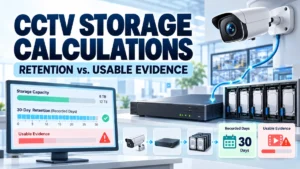
Storage & Bandwidth Costs: 4K footage generates massive data volumes. Cloud storage costs scale accordingly. Businesses need to plan retention policies, tiered storage strategies and bandwidth allocation, especially for multi-location deployments.
Integration Complexity: Connecting CCTV with access control, HR, WMS, or fire systems requires technical expertise and vendor coordination. Poorly integrated systems can create blind spots or false alerts that erode confidence in the technology.
Skill Gaps: Advanced surveillance systems require personnel who can interpret AI alerts, manage dashboards and respond to cyber threats. Investing in system upgrades without training the people who operate them significantly diminishes ROI.
Future Outlook: 2026 to 2030
The direction of travel is unmistakable.
AI and automation will dominate surveillance decision-making. By 2028, most enterprise-grade CCTV systems will operate with minimal human oversight, and humans will intervene only when AI flags something significant.
Smart cities will create interconnected surveillance ecosystems. India’s Smart Cities Mission is accelerating city-wide camera networks that private businesses can potentially tap into for enhanced perimeter security and traffic monitoring.
Privacy-preserving AI will become a selling point. As regulation tightens, vendors who offer anonymisation, on-device processing and transparent data practices will win enterprise contracts over those who don’t.
Drone-integrated surveillance will become mainstream in industrial and logistics contexts. Autonomous drones patrolling large warehouses or factory yards, triggered by CCTV alerts, will move from pilot project to standard practice.
Conclusion: The Time to Act Is Now
The businesses that thrive in 2026 and beyond will be those that treat surveillance not as a compliance checkbox but as a strategic asset.
Smart CCTV delivers security, operational intelligence, regulatory protection and cost savings simultaneously. The technology is more accessible, more affordable and more impactful than ever before in India’s business landscape.
The question for every business owner and security decision-maker isn’t whether to upgrade. It’s how soon and how smart to do it.
Stay informed. Demand more from your surveillance infrastructure. And ensure your business is protected not just by cameras, but by intelligence.
Read Also: CCTV Camera Supplier in Noida for Industrial Use
Read Also: CCTV Camera for Theft Prevention – Best Options for Businesses
People Also Ask: FAQs on CCTV Technology Trends 2026
The future of CCTV lies in AI-driven intelligence, cloud connectivity and predictive analytics. Cameras will increasingly function as autonomous security agents, detecting threats, flagging anomalies and integrating with broader business systems with minimal human oversight required for routine monitoring.
How is AI used in surveillance systems? AI in surveillance enables real-time behaviour detection, facial recognition, crowd analysis, anomaly flagging and predictive threat modelling. Instead of just recording events, AI-powered cameras interpret what they see and trigger automated alerts or responses, transforming surveillance from reactive to proactive.
Video analytics refers to AI-powered software that processes camera footage to extract meaningful data — counting people, detecting behaviours, identifying objects, or tracking movement patterns. It turns raw video into actionable intelligence, enabling faster security responses and valuable business insights.
Edge computing processes video data locally — on the camera or a nearby device — rather than transmitting everything to a central server. This reduces bandwidth usage, lowers latency for real-time alerts, and ensures surveillance continues even during internet outages, making it ideal for remote or bandwidth-constrained locations.
India’s Digital Personal Data Protection (DPDP) Act mandates lawful data processing, defined retention periods, and data subject rights. Businesses using facial recognition or behavioural analytics must obtain appropriate consent, implement data minimisation practices and maintain audit logs. Non-compliance exposes businesses to regulatory penalties.