Fire alarm systems are often viewed as mandatory safety infrastructure rather than strategic investments. However, in modern commercial, industrial and high-occupancy projects, the conversation has shifted. Decision-makers now evaluate fire alarm systems based on Return on Investment (ROI), not just compliance.
GST Addressable Fire Alarm Systems have emerged as a preferred choice for consultants, developers and facility owners because they deliver measurable financial, operational and risk-reduction returns over the system lifecycle.
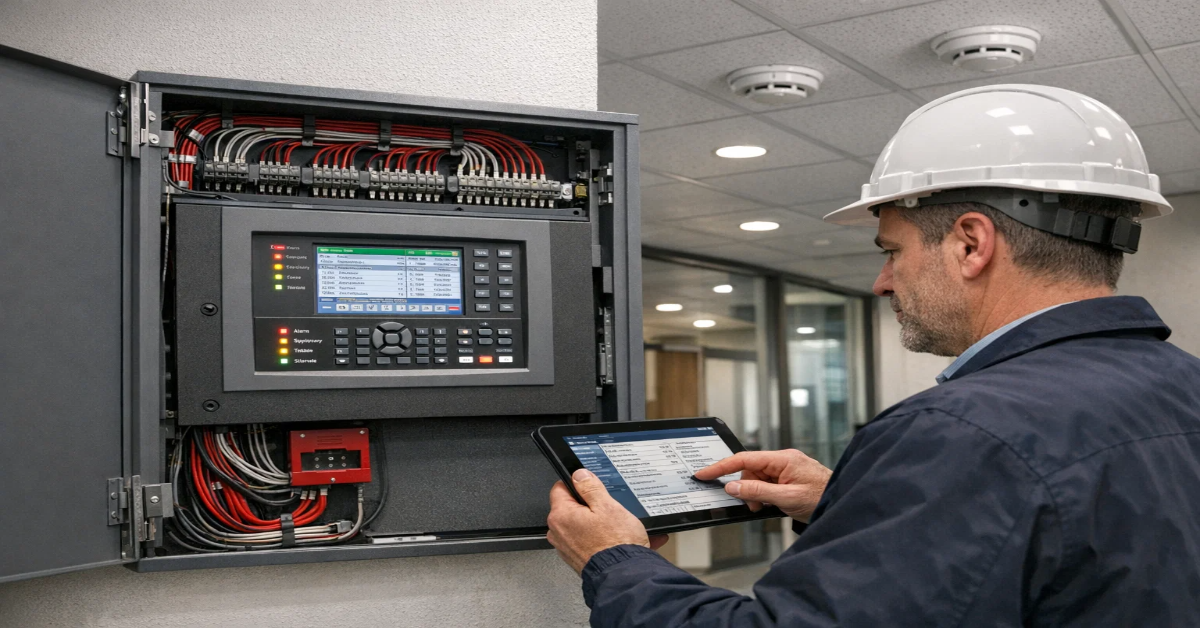
This article provides a detailed ROI analysis of GST addressable fire alarm systems, helping stakeholders understand how these systems generate long-term value beyond initial installation.
Understanding ROI in Fire Alarm Systems
ROI in fire detection does not work like traditional revenue-generating assets. Instead, it focuses on cost avoidance, operational efficiency, asset protection and risk mitigation over time.
A strong ROI fire alarm system delivers value through:
- Reduced installation and cabling costs
- Lower maintenance and false alarm expenses
- Minimised downtime and business disruption
- Extended system life and scalability
- Lower insurance premiums and compliance risk
- Improved safety outcomes and asset protection
GST addressable systems perform strongly across all these dimensions.
What Makes GST Addressable Fire Alarm Systems ROI-Driven
GST (Gulf Security Technology) addressable fire alarm systems use intelligent devices that communicate digitally with the control panel. Each detector, module and sounder has a unique address, allowing precise monitoring, control, and diagnostics.
This intelligence directly translates into financial efficiency and long-term cost savings.
Key ROI-enabling characteristics include:
- Loop-based architecture supporting high device density
- Precise location identification for alarms and faults
- Advanced diagnostics and self-monitoring
- Low power consumption per device
- Backwards and forward compatibility across generations
- Compliance with Indian and international fire standards
Initial Investment vs Long-Term Value
Installation Cost Optimisation
While addressable systems may appear more expensive than conventional systems at first glance, GST systems reduce overall project cost through optimised design.
- Single-loop wiring replaces multiple radial circuits
- Higher device capacity per loop reduces panels and cables
- Integrated modules reduce external interfaces
- Compact panels lower space and infrastructure requirements
For large projects such as hospitals, IT parks, airports or manufacturing plants, these savings significantly offset initial equipment costs.
Reduced Cabling and Infrastructure Costs
Cabling is one of the highest hidden costs in fire alarm installations. GST addressable systems drastically reduce this burden.
- Less copper usage due to loop topology
- Simplified routing and faster installation
- Lower conduit, tray and labour requirements
- Reduced chances of wiring errors
Over large buildings, this translates into substantial CAPEX savings, improving ROI from day one.
Lower Commissioning and Testing Costs
GST systems simplify commissioning through:
- Auto device addressing
- Built-in loop diagnostics
- Graphical programming tools
- Clear fault identification
This reduces:
- Engineering man-hours
- Commissioning delays
- Rework costs
- Project handover time
Faster commissioning means earlier occupancy and revenue generation, especially critical for commercial developments.
Operational ROI Through Reduced False Alarms
False alarms are one of the biggest cost drains in fire safety operations. They cause:
- Business interruptions
- Evacuation downtime
- Penalty costs in regulated buildings
- Reduced trust in safety systems
GST addressable detectors use intelligent algorithms and multi-criteria sensing to distinguish real fire events from environmental disturbances.
This results in:
- Fewer nuisance alarms
- Higher system credibility
- Reduced evacuation losses
- Lower maintenance callouts
Over years of operation, false alarm reduction alone delivers significant ROI.
Maintenance Cost Savings Over System Life
Predictive Maintenance Capability
GST addressable systems continuously monitor device health. The system identifies:
- Dirty detectors
- Wiring degradation
- Communication issues
- Power anomalies
This allows maintenance teams to act before failures occur, preventing emergency breakdowns.
Reduced Maintenance Frequency
- Targeted maintenance replaces blanket servicing
- No need to physically inspect every device
- Fault location reduces troubleshooting time
Facility owners save on:
- Annual maintenance contracts
- Spare inventory
- Service downtime
Scalability and Expansion ROI
Buildings evolve. Tenants change. Floor layouts expand. Conventional systems struggle with such changes.
GST addressable systems offer:
- Easy loop extensions
- Software-based configuration updates
- Support for additional devices without panel replacement
This protects the initial investment and eliminates the need for costly system overhauls, delivering strong long-term ROI.
Business Continuity and Downtime Reduction
Fire incidents cause more damage through downtime than through fire itself.
GST systems improve response speed by:
- Pinpointing the exact alarm location
- Enabling faster firefighting response
- Reducing investigation time
Faster containment means:
- Lower property damage
- Reduced operational downtime
- Protection of business reputation
For data centres, manufacturing plants and hospitals, this operational ROI is critical.
Insurance and Compliance Advantages
Insurers favour intelligent addressable fire systems because they reduce risk exposure.
GST systems help organisations:
- Meet national fire norms
- Comply with NBC, local fire authority and global standards
- Demonstrate proactive risk management
This often results in:
- Lower insurance premiums
- Faster claim settlements
- Reduced compliance penalties
These indirect financial benefits significantly improve ROI.
Lifecycle Longevity and Investment Protection
GST designs its addressable systems for long service life.
- Backward compatibility ensures older devices integrate with newer panels
- Modular design supports gradual upgrades
- Robust hardware withstands harsh environments
Instead of replacing the entire system every decade, organisations can extend system life, spreading costs and maximising ROI.
ROI Comparison: Addressable vs Conventional Systems
When evaluated over a 10–15 year lifecycle, GST addressable systems consistently outperform conventional systems in:
- Total cost of ownership
- Maintenance expenditure
- System adaptability
- Operational reliability
- Compliance sustainability
What appears cost-effective initially often becomes expensive over time. GST systems reverse this trend.
ROI for Different Project Types
Commercial Buildings
- Reduced false alarms
- Lower tenant disruption
- Scalable tenant fit-outs
Hospitals
- Zonal accuracy improves patient safety
- Minimal evacuation disruptions
- Compliance with healthcare regulations
Industrial Facilities
- Early detection reduces asset loss
- High immunity to dust and heat
- Lower downtime costs
Data Centres
- Pinpoint detection prevents catastrophic losses
- Fast response protects uptime
- High ROI due to business continuity
Environmental and Energy Efficiency ROI
GST addressable devices consume less power per loop, resulting in:
- Smaller power supplies
- Lower battery capacity requirements
- Reduced energy consumption
This improves sustainability metrics and reduces operational costs over time.
ROI in Indian and Emerging Markets
In cost-sensitive markets like India, ROI matters more than brand visibility. GST addressable fire alarm systems succeed because they balance:
- Competitive pricing
- High performance
- Local support availability
- Global compliance standards
This makes them suitable for both domestic and international projects.
Final ROI Verdict
GST Addressable Fire Alarm Systems are not just safety devices; they are strategic infrastructure investments. Their ROI comes from reduced costs, enhanced operational efficiency, improved safety outcomes and long-term adaptability.
For consultants, developers, facility managers and asset owners looking beyond upfront pricing, GST addressable systems provide measurable, defensible and sustainable returns throughout the building lifecycle.
Read Also: GST Fire Alarm System Design vs Cost Optimisation Strategy
Read Also: Why Consultants Specify GST Fire Alarm Systems in Large Projects