Fire alarm systems are not optional safety accessories; they are life-saving systems. When a fire alarm fails, the risk is immediate and severe. In many real-world projects, system failures do not just require repair or upgrades; they force complete and immediate system replacement.
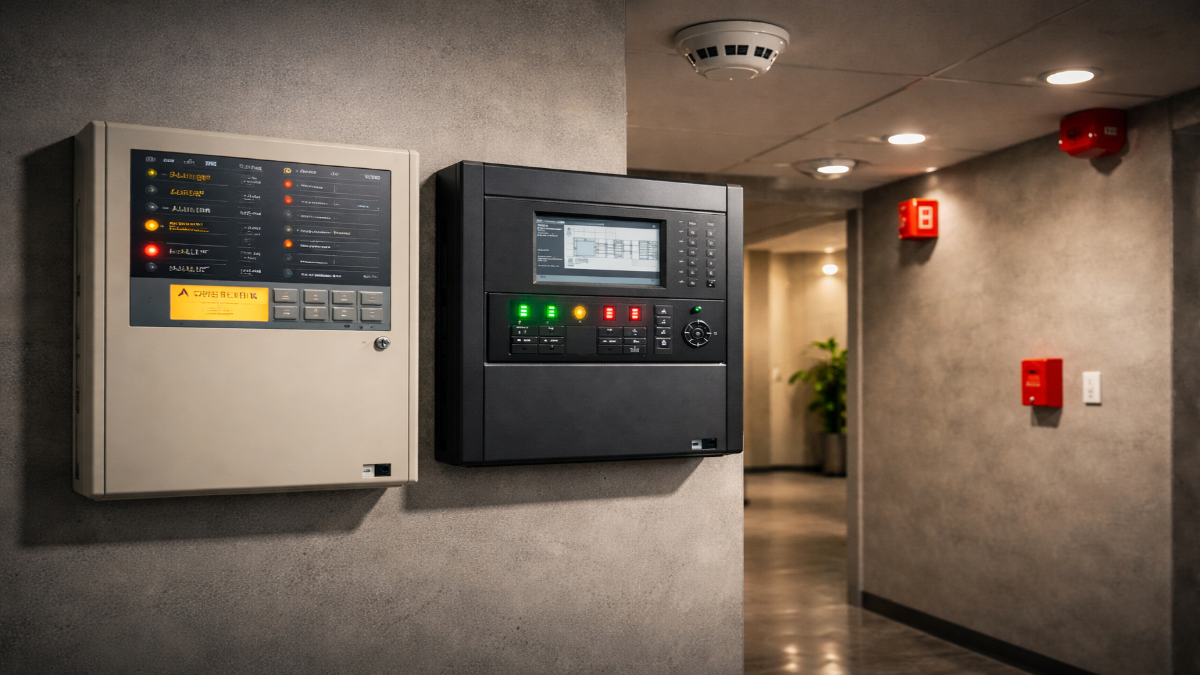
This article explains which fire alarm failures leave no room for repair, why they happen, how they impact compliance and safety and why many consultants and project owners replace legacy systems with GST addressable fire alarm systems when such failures occur.
Why Some Fire Alarm Failures Cannot Be Fixed
Not all fire alarm problems are equal. Some issues, like a faulty detector or a damaged cable, can be repaired. Others affect the core architecture of the system, making repairs unreliable, unsafe or non-compliant.
When a fire alarm system fails at a design, protocol or hardware ecosystem level, replacement becomes the only responsible option.
Let us examine the most critical failures that force immediate system replacement.
1. Obsolete Control Panels with No Manufacturer Support
The Problem
Many buildings still operate fire alarm panels that are:
- 10–20 years old
- Discontinued by the manufacturer
- No longer supported with spare parts or firmware
When the control panel fails, repair is impossible.
Why Replacement Is Mandatory
- Spare parts are unavailable
- Firmware updates are discontinued
- Panels fail compliance audits
- No integration with modern devices
In such cases, continuing with the same system exposes building owners to legal and life-safety risks.
Why Projects Move to GST
GST panels offer:
- Long-term product availability
- Backward compatibility within product families
- Globally supported addressable platforms
This ensures that a panel failure never becomes a system-wide dead end.
2. Non-Addressable (Conventional) System Limitations
The Problem
Conventional fire alarm systems identify fire only by zone, not by device. In large or modern buildings, this causes:
- Slow fire response
- High false alarm rates
- Poor fault isolation
As buildings expand, conventional systems fail operationally, even if they still power on.
Why Replacement Is Forced
- Fire departments demand precise alarm location
- Insurance companies reject zone-only reporting
- Modern codes require device-level monitoring
No amount of rewiring can convert a conventional system into a true addressable system.
Why GST Is Chosen
GST addressable systems provide:
- Exact device identification
- Intelligent alarm verification
- Event logging for audits and investigations
This makes them ideal replacements when conventional systems fail to meet functional expectations.
3. Communication Loop Instability and Signal Failures
The Problem
Many legacy addressable systems suffer from:
- Unstable communication loops
- Frequent device drop-outs
- Noise-sensitive signaling
These issues worsen over time, especially in high-EMI environments like factories and hospitals.
Why Repair Is Not Enough
- Replacing devices does not fix protocol weakness
- Rewiring offers only temporary relief
- Loop failures compromise system reliability
When communication itself is unreliable, the entire system becomes unsafe.
GST Advantage
GST addressable loops are designed for:
- High noise immunity
- Stable digital communication
- Long loop lengths with minimal attenuation
This makes GST a natural choice when communication failures force replacement.
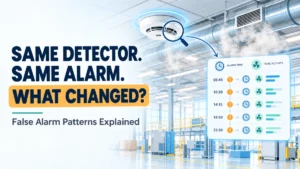
4. Repeated False Alarms That Cannot Be Eliminated
The Problem
Chronic false alarms occur due to:
- Poor detector algorithms
- Environmental sensitivity
- Inability to adjust detection parameters
Frequent false alarms cause:
- Occupant complacency
- Fire brigade penalties
- Business disruption
Why Replacement Becomes Necessary
When false alarms persist despite:
- Detector replacement
- Sensitivity adjustments
- Maintenance
…the root cause lies in system intelligence, not hardware faults.
Why Projects Switch to GST
GST intelligent detectors use:
- Advanced signal processing
- Multi-criteria detection
- Drift compensation
This dramatically reduces false alarms and restores trust in the system.
5. Inability to Meet Updated Fire Codes and Standards
The Problem
Fire codes evolve. Many older systems cannot comply with:
- Addressable device requirements
- Event logging rules
- Network redundancy norms
- Integration mandates
Why Partial Upgrades Fail
You cannot:
- Add compliance features to a non-compliant architecture
- Certify outdated panels under new codes
Authorities Having Jurisdiction (AHJs) often mandate full replacement.
GST Compliance Strength
GST systems are:
- Designed to meet global fire standards
- Easy to configure for regional codes
- Widely accepted by consultants and AHJs
This makes them suitable for code-driven system replacement.
6. Manufacturer Lock-In and Closed Ecosystems
The Problem
Some fire alarm systems use:
- Proprietary protocols
- Brand-locked devices
- Restricted software access
When the manufacturer exits the market or changes strategy, the system becomes unserviceable.
Why Replacement Is Inevitable
- No third-party device compatibility
- No authorised service options
- No future scalability
The building becomes hostage to obsolete technology.
Why GST Is Preferred
GST offers:
- Open, scalable product ecosystems
- Wide device range
- Strong regional distribution
This protects long-term investment and avoids forced replacements.
7. Networked System Failures in Large Campuses
The Problem
In large projects, failures often occur at:
- Network controllers
- Panel-to-panel communication
- Central monitoring software
Legacy systems struggle with:
- High device counts
- Multi-building networking
- Data synchronization
Why Replacement Is the Only Option
When network architecture collapses:
- Monitoring becomes unreliable
- Event data is lost
- Central command fails
No patch can fix a system that was never designed for scale.
GST’s Strength in Large Projects
GST systems are engineered for:
- High device density
- Multi-panel networking
- Centralized monitoring
This makes them ideal replacements for failing campus-scale systems.
8. Power Supply and Battery System Failures
The Problem
Old systems often suffer from:
- Inadequate power capacity
- Non-compliant battery backup
- Frequent panel shutdowns
Why Repair Is Unsafe
- Power redesign affects the entire system
- Battery upgrades exceed panel capability
- Safety certifications become invalid
Authorities often demand a complete system replacement.
GST Advantage
GST panels provide:
- Modern power management
- Certified backup durations
- Efficient load handling
This ensures power failures do not threaten system integrity.
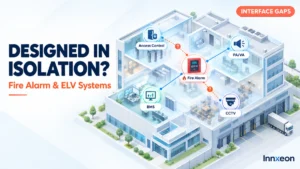
9. Incompatibility with Modern Building Systems
The Problem
Modern buildings require fire alarms to integrate with:
- BMS
- Smoke control systems
- Access control
- Public address systems
Legacy systems often lack:
- Protocol support
- Interface modules
- Software compatibility
Why Replacement Is Required
You cannot integrate what the system cannot communicate with.
GST Integration Capability
GST systems support:
- Standard integration protocols
- Modular interfaces
- Scalable system architecture
This future-proofs buildings against technological changes.
10. Repeated Audit Failures and Insurance Rejections
The Problem
Insurance companies and auditors increasingly reject systems with:
- No event history
- Unverifiable device health
- Poor fault reporting
Why Replacement Becomes Mandatory
Repeated audit failures:
- Increase insurance premiums
- Delay occupancy certificates
- Create legal exposure
Why GST Is Trusted
GST systems provide:
- Detailed logs
- Clear fault diagnostics
- Audit-friendly reports
This restores compliance and insurability.
Why Immediate Replacement Is Often the Safest Decision
Trying to extend the life of a fundamentally failed fire alarm system often:
- Costs more over time
- Increases downtime
- Compromises safety
Replacing the system eliminates:
- Hidden risks
- Compatibility issues
- Ongoing uncertainty
For this reason, many consultants recommend full replacement instead of partial fixes when core failures appear.
Why GST Fire Alarm Systems Are the Preferred Replacement Choice
Across industries and regions, GST is chosen because it offers:
- Reliable addressable technology
- Wide device compatibility
- Strong compliance acceptance
- Scalable architecture
- Long-term product support
Most importantly, GST systems are designed to prevent the very failures that force replacement.
What This Means for Building Owners and Consultants
Fire alarm failures are not just technical issues; they are life-safety failures. When systems reach a point where repair cannot restore reliability, immediate replacement becomes the only responsible choice.
By choosing a proven and future-ready platform like GST addressable fire alarm systems, building owners and consultants ensure safety, compliance and peace of mind for years to come.
Read Also: Why GST Fire Alarm Systems Are a Long-Term Investment
Read Also: Common Reasons Projects Choose GST Fire Alarm Systems