In modern buildings, fire safety is no longer limited to detecting a single incident. Large infrastructures such as hospitals, airports, IT parks, manufacturing plants, malls and high-rise residential complexes face multiple alarm events, sometimes simultaneously, sometimes cascading across zones. In these situations, the performance of the fire alarm system directly impacts evacuation speed, emergency response and overall life safety.
This is where GST addressable systems clearly outperform traditional solutions.
GST (Gulf Security Technology) has earned global recognition for designing intelligent, resilient and scalable fire alarm technologies that maintain accuracy and stability even when multiple alarms trigger at the same time.
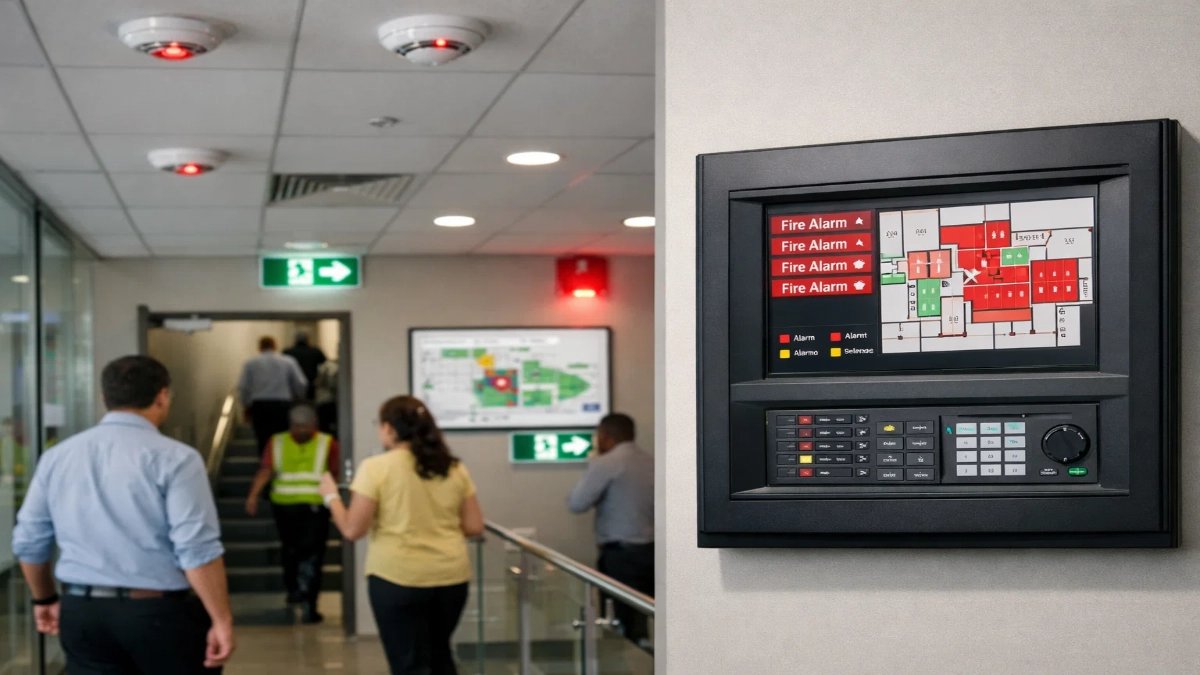
This article explains why GST addressable systems perform better during multiple alarm events, how they differ from conventional solutions and why system designers, consultants and facility managers increasingly prefer GST for complex projects.
Understanding Multiple Alarm Events in Real-World Buildings
Multiple alarm events occur when more than one fire or fault condition is triggered simultaneously or in rapid succession. This is common in:
- Large floor plates with interconnected zones
- Buildings with high occupant density
- Industrial environments with heat, smoke, and dust variations
- Mission-critical facilities operating 24/7
During such scenarios, a fire alarm system must:
- Accurately identify each alarm source
- Process signals without delay
- Avoid false alarms or system crashes
- Provide clear, actionable information
Many traditional systems struggle under this load. GST addressable fire alarm systems are specifically engineered to handle it efficiently.
What Makes GST Addressable Systems Different?
An addressable fire alarm panel assigns a unique digital address to every connected device, detectors, call points, modules and sounders. GST builds advanced intelligence into both the panel and field devices, enabling precise communication even during peak alarm activity.
In contrast, a conventional fire alarm panel works on zone-based logic, which limits information accuracy when multiple alarms occur.
Key Reasons GST Addressable Systems Excel During Multiple Alarm Events
1. Individual Device Identification Without Confusion
During multiple alarms, clarity is critical. GST addressable systems instantly identify:
- Exact detector location
- Device type triggering the alarm
- Time and sequence of activation
Because each device has its own address, the system never “guesses.” Even if ten addressable detectors activate simultaneously, the panel processes each event independently and displays precise information.
This eliminates the uncertainty often seen in conventional detectors, where an entire zone goes into alarm without pinpoint accuracy.
2. High-Speed Data Processing Under Heavy Load
GST addressable panels are designed with high-speed processors and optimised loop communication protocols. This allows the system to:
- Handle thousands of devices per loop
- Process multiple alarm inputs in milliseconds
- Maintain response consistency during peak events
Even during widespread incidents, the GST fire alarm system remains responsive and stable, ensuring alarms, notifications and control actions occur without lag.
3. Intelligent Loop Isolation and Fault Management
One major reason GST systems perform better during multiple alarm events is intelligent fault isolation.
If a short circuit or device fault occurs during an emergency:
- GST loop isolators automatically isolate the affected section
- The rest of the loop continues operating normally
- Alarm signals from unaffected devices remain active
This ensures that multiple alarm events do not compromise the entire system, a common limitation in conventional fire alarm panel designs.
4. Smart Alarm Prioritisation and Event Sequencing
GST addressable systems use advanced algorithms to manage alarm priorities. When multiple events occur, the panel:
- Distinguishes between fire alarms, faults and supervisory signals
- Displays alarms in logical sequence
- Prevents critical fire alarms from being masked by minor faults
This intelligent prioritisation allows emergency teams to respond faster and more accurately, especially in complex environments.
5. Enhanced Communication With Addressable Detectors
GST’s addressable detectors continuously communicate with the panel, not just during alarms, but also during normal operation. This constant data exchange allows the system to:
- Detect environmental changes early
- Differentiate between real fires and transient conditions
- Reduce nuisance alarms during multi-event scenarios
Unlike conventional detectors, which only signal alarm or normal status, GST addressable detectors provide richer diagnostic data, improving decision-making during emergencies.
6. Reduced False Alarms During Simultaneous Events
False alarms during multiple alarm conditions can create panic and delay real emergency responses. GST minimises this risk by using:
- Multi-criteria detection technology
- Adaptive sensitivity adjustment
- Intelligent confirmation logic
As a result, GST addressable systems remain reliable and trustworthy, even when multiple sensors activate in challenging environments.
7. Seamless Integration With Emergency Control Systems
During multiple alarm events, fire alarms must do more than sound sirens. GST systems integrate smoothly with:
- Smoke management systems
- Fire suppression systems
- Public address and voice evacuation systems
- Building Management Systems (BMS)
Each alarm event triggers predefined, intelligent responses, ensuring coordinated safety actions across the building.
Addressable vs Conventional Systems During Multiple Alarms
Limitations of Conventional Fire Alarm Panels
A conventional fire alarm panel groups devices into zones. When multiple alarms occur:
- The panel identifies only the zone, not the exact device
- Simultaneous alarms can overlap or cause confusion
- Faults may disable entire zones
- Troubleshooting becomes time-consuming
These limitations make conventional systems less suitable for large or complex buildings.
Why GST Addressable Systems Are Better Suited
GST addressable solutions overcome these challenges by offering:
- Device-level accuracy
- Real-time event tracking
- Continuous loop communication
- Scalability for future expansion
This makes them ideal for facilities where multiple alarm events are likely or expected.
Real-World Applications Where GST Addressable Systems Excel
Hospitals and Healthcare Facilities
Hospitals experience frequent multi-alarm situations due to:
- Medical equipment
- Different environmental conditions
- High occupancy levels
GST addressable systems ensure alarms are accurate, localised and non-disruptive, allowing staff to respond without unnecessary panic.
Airports and Transportation Hubs
Large terminals can trigger multiple alarms across zones. GST systems provide:
- Clear alarm differentiation
- Fast response across vast areas
- Minimal disruption to operations
Industrial and Manufacturing Facilities
Dust, heat and machinery can create complex alarm scenarios. GST addressable detectors adapt intelligently, ensuring reliable fire detection without false triggers.
Commercial High-Rise Buildings
With multiple tenants and interconnected floors, simultaneous alarms are common. GST systems provide scalable protection with centralised control, even during peak emergency events.
Maintenance and Diagnostics During Multiple Alarm Conditions
GST addressable systems also simplify post-event analysis by offering:
- Detailed event logs
- Alarm history with timestamps
- Device-level diagnostics
This allows facility managers to quickly restore normal operations and improve future safety planning.
Why Consultants and Specifiers Prefer GST
Fire consultants and project specifiers often recommend GST because:
- Systems comply with international standards
- Performance remains consistent under stress
- Products are scalable and future-ready
- Global support and proven reliability
These qualities make GST a preferred brand in tender-based and mission-critical projects worldwide.
Final Thoughts
Multiple alarm events are no longer rare; they are a reality in today’s complex buildings. Systems that fail under pressure put lives and assets at risk.
GST addressable systems consistently perform better during multiple alarm events because they combine:
- Intelligent device-level communication
- High-speed processing
- Advanced fault isolation
- Reliable addressable detectors
- Seamless system integration
When compared to conventional fire alarm panels and conventional detectors, GST’s addressable solutions clearly stand out as safer, smarter and more dependable.
For projects where performance during emergencies truly matters, GST addressable fire alarm systems are not just an option; they are a strategic choice.