In any fire alarm system, the design and capability of the control panel play a crucial role in reliability, scalability and performance. When environments require high device connectivity, such as large commercial buildings, airports, data centres or industrial facilities, choosing the right panel becomes critical. In this context, GST panels stand out for their ability to handle high device density more efficiently and intelligently than conventional fire alarm panels.
This article explains how GST panels achieve this, why they outperform traditional systems and how their advanced architecture ensures faster detection, better monitoring and easier management in complex installations.
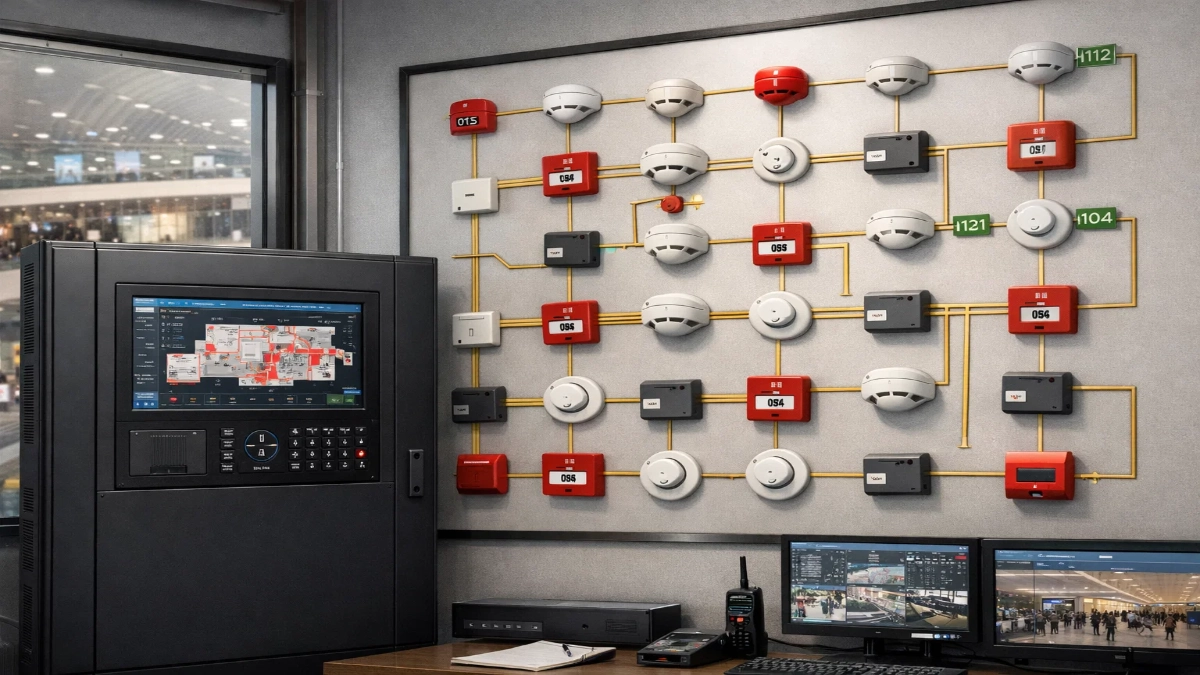
We also compare GST panels with a conventional fire alarm panel and highlight key features like addressable fire alarm panel technology and addressable detectors.
What Is Device Density in Fire Alarm Systems?
Device density refers to the number of fire alarm devices, such as detectors, notification appliances, modules and sounders, that a control panel can support within a given area or loop. Higher device density means a panel can manage more devices on its network without losing performance or reliability.
In modern buildings, especially those with large areas or complex safety needs, high device density is essential. Traditional systems often struggle when too many devices are connected. That’s where GST’s advanced design delivers significant advantages.
Conventional Fire Alarm Panel vs. GST Panels: Basic Differences
Before we dive into how GST panels handle high device density, let’s briefly understand how they differ from conventional fire alarm panel designs:
| Feature | Conventional Panel | GST Panel |
|---|---|---|
| Device Identification | Limited zone-based detection | Individual device ID |
| Scalability | Lower | High |
| Data Accuracy | Average | High |
| False Alarm Control | Basic | Advanced |
| Device Load per Loop | Limited | High |
| Monitoring Capabilities | Zone-level | Device-level (Addressable) |
Conventional fire alarm panels divide an installation into zones. Each zone monitors multiple devices collectively. When an alarm triggers, the panel identifies the zone but not the specific device. This works well in small installations. However, as the device count increases, this method becomes inefficient.
In contrast, GST panels (especially those with addressable fire alarm panel technology) assign a unique ID to every device. This enables precise monitoring and control, which is vital for high-density environments.
Addressable Technology: The Heart of High Device Density
What Are Addressable Systems?
In an addressable system, each detector and module is uniquely identifiable. Instead of reporting a collective zone alarm, an addressable detector sends specific information about its status, such as location and fault type, to the panel.
This capability transforms fire alarm systems from basic warning mechanisms into intelligent safety networks.
How Addressable Detectors Improve Device Density
- Precise Device Identification
When 100+ devices are connected, precision becomes crucial. GST’s addressable detectors send exact location data. The panel then pinpoints the exact device that triggered the signal, reducing response time and confusion. - Efficient Loop Usage
Addressable loops allow many devices to be placed on a single circuit. GST panels can support hundreds of devices per loop without signal interference or overload. - Improved Data Management
With every device providing status updates, the panel maintains a real-time view of the system. This is critical when handling a high number of interconnected devices.
GST’s Loop Architecture: Designed for Scalability
GST panels use an advanced loop design that supports more devices per loop compared to conventional designs. This design offers three key benefits:
1. Higher Device Capacity
GST loops can handle more addressable detectors and modules without degrading performance. This allows large buildings to be protected with fewer loops, reducing installation costs and complexity.
2. Faster Communication
GST employs efficient communication protocols that ensure rapid data exchange between the panel and connected devices. Even during heavy traffic when many devices send signals simultaneously, the panel processes all data quickly.
3. Flexibility in Expansion
As buildings grow or requirements change, GST panels can be expanded easily. Adding new devices does not require a major system redesign. This adaptability is crucial in modern commercial and industrial environments.
Intelligent Algorithms for High Device Loads
GST panels use intelligent algorithms to manage high device density. These algorithms support:
Smart Polling
Instead of constantly querying every device, GST panels use optimised polling schedules to check device status effectively. This reduces network congestion and ensures quick detection without unnecessary communication.
Fault Isolation
When devices malfunction or communication errors occur, GST panels isolate the problem without affecting the entire system. This ensures uninterrupted protection even when handling many devices.
Event Prioritization
In high-density systems, multiple events can occur simultaneously. GST panels prioritise life safety alarms over maintenance and supervisory signals. This helps emergency responders act faster.
Better False Alarm Control
High device density can sometimes increase false alarms if the panel can’t process signals intelligently. GST panels reduce false alarms using:
Advanced Signal Analysis
Each addressable detector sends detailed information such as heat levels, smoke density and environmental data. GST panels analyse these signals against defined thresholds to reduce unnecessary alarms.
Drift Compensation
Over time, detector sensitivity can change due to dust, humidity, or ageing. GST panels use drift compensation to adjust sensitivity dynamically, ensuring accurate detection and lower false alarm rates.
Multi-Parameter Evaluation
GST detectors monitor more than one parameter (like heat + smoke). This multi-parameter approach helps distinguish real threats from harmless environmental changes.
Enhanced Diagnostics and Monitoring
Handling many devices increases the importance of diagnostic visibility. GST panels provide powerful monitoring tools:
Real-Time Device Status
Each device reports its status continuously. The panel displays real-time health information, including device faults, communication status and maintenance needs.
Historical Event Logs
GST panels record events with timestamps. This historical data helps technicians analyse trends, troubleshoot issues and improve system reliability.
Remote Access and Reporting
Many GST systems support network connectivity. Authorised personnel can view system status, generate reports and perform remote diagnostics, making maintenance easier in high-device environments.
Simplified Installation and Maintenance
When working with high device density, installation complexity can become a challenge. GST panels simplify this through:
Auto-Addressing
Some GST panels support auto-addressing, reducing manual configuration time. This is especially useful when hundreds of devices must be configured.
Modular Design
GST panels often use modular architecture. Individual modules can be replaced or added without affecting the entire system.
Clear Maintenance Alerts
Instead of vague zone warnings, GST panels provide precise alerts like “Device 114 – Low Sensitivity” or “Module 25 – Communication Fault.” This makes repairs faster and reduces downtime.
Scalability for Modern Building Needs
Today’s buildings are dynamic. They evolve with expansions, repurposing of areas and changing safety regulations. GST panels support scalability through:
Flexible Loop Expansion
More loops can be added without replacing the entire panel. This makes GST systems future-proof.
Device Memory and Configuration Storage
GST panels store device configuration and settings. This means upgrades or replacements can be done without reprogramming from scratch.
Integration with Other Systems
GST fire alarm systems can integrate with building management systems (BMS), elevators, HVAC and access control. This makes safety management more coordinated, especially in high-density environments.
Cost Efficiency in High-Density Setups
While advanced technology sometimes comes with higher upfront costs, GST panels are cost-effective in the long run:
Reduced Wiring Costs
Fewer loops and intelligent addressing reduce wiring needs. This saves material and labour costs.
Lower Maintenance Costs
Precise diagnostics reduce unnecessary technician visits. System health can be monitored remotely, lowering operational expenses.
Avoidance of False Alarm Penalties
Many jurisdictions penalise businesses for repeated false alarms. GST’s advanced false alarm management helps avoid these penalties and disruptions.
Real-World Applications Where GST Excels
GST panels perform exceptionally in environments such as:
- Airports and Transit Hubs: Large areas with high device count demand precise monitoring and fast responses.
- Shopping Malls and Retail Complexes: Various zones and occupancy levels require scalable systems.
- Industrial Facilities: Environmental conditions and complex layouts need intelligent detection.
- Data Centres: High density of equipment and sensitive infrastructure requires accurate detection and fast diagnostics.
- Hospitals and Educational Campuses: Safety for occupants and seamless operation are priorities.
Why GST Panels Are Better for High Device Density
When device counts grow, conventional designs struggle with limited scalability, rough zone reporting and higher false alarms. In contrast, GST panels handle high device density effectively because they offer:
- Unique identification of each device through an advanced addressable fire alarm panel architecture
- Smart communication protocols that reduce network load
- Intelligent algorithms for precise detection and event prioritisation
- Detailed diagnostics and remote monitoring
- Ease of installation and scalable expansion
Whether for a small installation or a large high-rise building with hundreds of devices, choosing a GST panel ensures reliability, accuracy and long-term value.
Read Also: Power Management and Redundancy Strategies in the GST-IFP8 Panel
Read Also: Scaling a Multi-Building Fire Alarm Network Using GST Panels