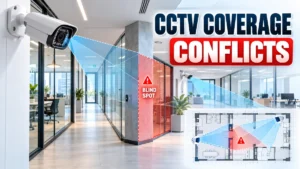
Security cameras have become one of the most essential tools for protecting modern businesses. From retail stores and offices to warehouses and industrial plants, CCTV systems help prevent theft, monitor operations, improve employee safety and provide critical evidence during incidents.
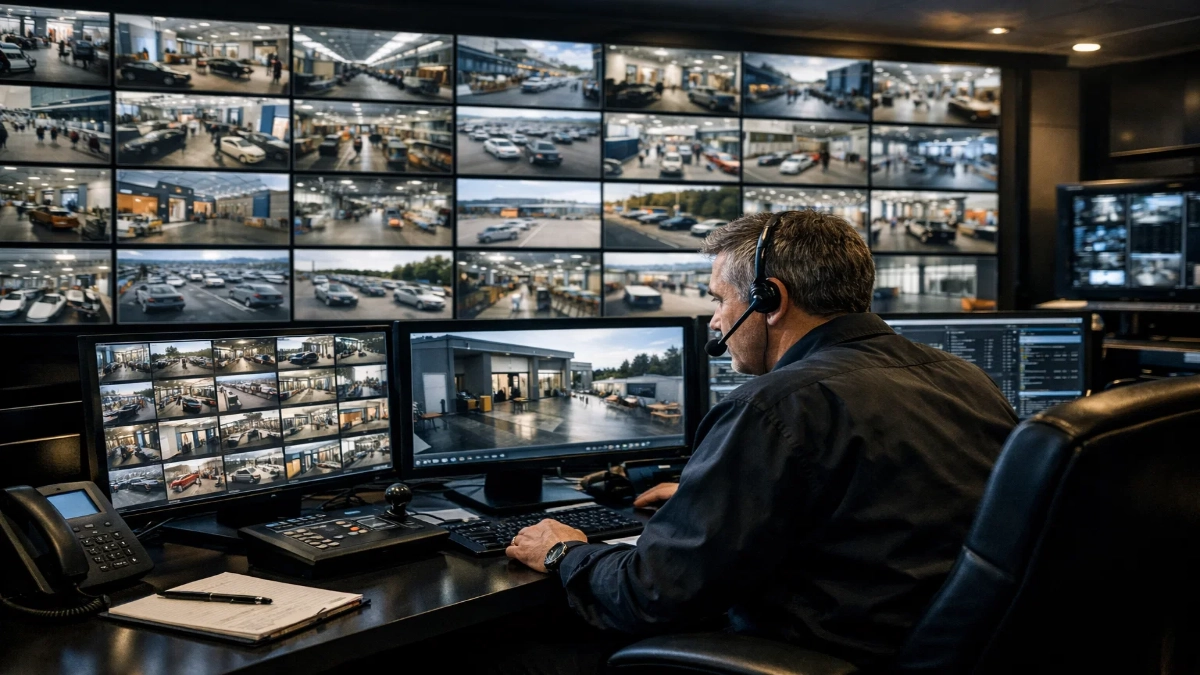
However, installing CCTV cameras is not simply about mounting a few devices on walls. Many organisations invest heavily in cameras but still end up with ineffective surveillance systems because of poor planning, incorrect installation or improper system design.
In real-world projects, security failures rarely happen because cameras stop working. Instead, they occur because the system was poorly designed from the beginning.
In this guide, we will explore 10 common mistakes businesses make while installing CCTV cameras, why these mistakes cause major security gaps and how organisations can design surveillance systems that actually deliver reliable protection.
Why Proper CCTV Planning Matters
A CCTV system is not just a collection of cameras. It is a complete security ecosystem consisting of:
- Cameras and lenses
- Recording devices (NVR/DVR)
- Storage systems
- Network infrastructure
- Monitoring software
- Power backup systems
When these elements are designed correctly, businesses gain clear visibility, reliable recordings and actionable security insights. But when planning is rushed or based purely on cost, the system becomes unreliable.
Poor installations often lead to:
- Blind spots in critical areas
- Low-quality footage that cannot identify faces or license plates
- Frequent system downtime
- Storage failures or lost recordings
- Cybersecurity vulnerabilities
Understanding the common mistakes below helps organisations avoid these issues and build future-proof surveillance systems.
1. Installing Cameras Without a Proper Security Assessment
One of the most common mistakes businesses make is installing cameras without conducting a security risk assessment.
Many companies simply install cameras at entrances and assume the premises are fully protected. In reality, different facilities require different surveillance strategies.
Why is this a problem
Without proper analysis, critical areas may remain unmonitored. These often include:
- Loading docks
- Cash handling zones
- Warehouse inventory areas
- Emergency exits
- Parking lots
- Perimeter boundaries
This creates security blind spots, which criminals often exploit.
Best practice
Before installing CCTV cameras, conduct a site security audit that identifies:
- High-risk zones
- Access control points
- Critical assets
- Employee movement areas
- Visitor pathways
A proper assessment ensures the system provides complete coverage instead of random camera placement.
2. Choosing the Wrong Type of CCTV Camera
Not all CCTV cameras serve the same purpose. Yet many businesses install standard indoor cameras everywhere, even in locations that require specialised devices.
Common camera types include
- Dome cameras
- Bullet cameras
- PTZ cameras
- Thermal cameras
- Low-light cameras
- Varifocal lens cameras
Each type is designed for specific environments.
Example
A warehouse with poor lighting needs low-light or infrared cameras, while large outdoor areas benefit from PTZ cameras that can zoom and rotate.
Best practice
Always match the camera technology to the surveillance requirement. This improves detection capability and ensures better image clarity.
3. Poor Camera Placement and Positioning
Even high-end cameras cannot deliver useful footage if they are installed incorrectly.
Poor camera positioning often results in:
- Glare from sunlight
- Backlighting issues
- Blocked views
- Limited field of vision
For example, placing a camera directly facing a bright window can make faces impossible to identify.
Common placement errors
- Cameras are installed too high
- Cameras facing strong light sources
- Cameras blocked by structures or objects
- Cameras covering too wide an area
Best practice
Install cameras at optimal heights and angles that allow clear facial recognition and license plate capture.
Security engineers typically design camera placement based on:
- Viewing angles
- Target distance
- Lighting conditions
- Field-of-view calculations
This ensures clear, usable footage rather than blurry recordings.
4. Ignoring Lighting Conditions
Lighting plays a crucial role in CCTV performance. Unfortunately, many businesses underestimate its importance.
A camera installed in a poorly lit environment may produce:
- Grainy images
- Motion blur
- Unusable night footage
Example
Parking areas and building perimeters often become dark zones at night, making it difficult for cameras to capture clear images.
Best practice
Businesses should combine CCTV with proper lighting design, including:
- Infrared illumination
- Motion-based lighting
- Low-light camera technology
This ensures the system remains effective 24 hours a day.
5. Underestimating Storage Requirements
Many organisations install CCTV systems without calculating how much video storage they actually need.
High-resolution cameras generate massive amounts of data, especially when recording continuously.
Storage problems businesses face
- Recording overwrites too quickly
- Critical footage gets deleted automatically
- System runs out of storage
Best practice
Calculate storage requirements based on:
- Number of cameras
- Video resolution
- Frame rate
- Recording duration (30–90 days recommended)
Proper planning ensures important footage remains available when investigations are required.
6. Weak Network Infrastructure
Modern CCTV systems rely heavily on IP networks.
If the network infrastructure is weak, the surveillance system will suffer from:
- Video lag
- Frame drops
- Connectivity failures
- Loss of camera feeds
Common network mistakes
- Using low-quality cables
- Overloading switches
- Ignoring bandwidth calculations
Best practice
Security engineers should design a dedicated surveillance network that includes:
- High-bandwidth switches
- Structured cabling
- Network redundancy
- Proper bandwidth allocation
This ensures stable video transmission and uninterrupted monitoring.
7. Not Securing the CCTV System from Cyber Threats
As CCTV systems become more connected, they also become targets for cyberattacks.
Hackers can exploit poorly secured cameras to:
- Access video feeds
- Disable surveillance systems
- Use devices as entry points into corporate networks
Common security mistakes
- Default passwords
- Outdated firmware
- Open network ports
Best practice
Organisations should implement cybersecurity controls such as:
- Strong authentication
- Firmware updates
- Encrypted communication
- Network segmentation
Cybersecurity is now a critical component of modern surveillance systems.
8. Ignoring Power Backup Systems
Many businesses overlook power backup while installing CCTV systems.
When a power failure occurs:
- Cameras shut down
- Recordings stop
- Security visibility is lost
Ironically, many theft incidents happen during power outages.
Best practice
Every CCTV system should include:
- UPS backup systems
- Redundant power supplies
- Surge protection
These measures ensure the system remains operational during emergencies.
9. Skipping Professional Installation and Calibration
Improper installation can severely reduce CCTV performance.
Even small mistakes, such as incorrect lens adjustments or loose connectors, can lead to:
- Blurry footage
- Signal interference
- Camera failures
Best practice
Professional system integrators ensure proper:
- Camera alignment
- Lens calibration
- Network configuration
- Recording setup
This ensures the surveillance system performs exactly as designed.
10. Not Planning for Future Expansion
Many organisations install CCTV systems that only meet current needs.
However, businesses grow, facilities expand and security requirements evolve.
If the system cannot scale, companies must replace the entire infrastructure, which becomes expensive.
Best practice
Choose systems that support:
- Additional cameras
- Cloud storage integration
- AI-based video analytics
- Smart security platforms
Scalable systems allow businesses to upgrade security without replacing existing equipment.
How Businesses Can Build a Reliable CCTV System
To avoid these mistakes, organisations should follow a structured CCTV design approach:
- Conduct a full security assessment
- Select the correct camera technologies
- Design camera placement carefully
- Evaluate lighting conditions
- Plan adequate storage capacity
- Strengthen network infrastructure
- Implement cybersecurity measures
- Provide reliable power backup
- Use professional installation services
- Design systems with future scalability
Following this framework ensures the CCTV system delivers real security value rather than just visual monitoring.
The Future of Business Surveillance Systems
CCTV technology is evolving rapidly. Modern surveillance solutions now integrate:
- AI-powered video analytics
- Facial recognition
- Behavior detection
- Smart alerts and automation
These technologies transform CCTV from a passive recording tool into an intelligent security system.
Businesses that design surveillance systems properly today will be able to leverage these advanced capabilities in the future.
Note: CCTV cameras are powerful security tools, but their effectiveness depends entirely on how well the system is designed and installed.
Many businesses unknowingly make critical mistakes during installation, from poor camera placement to weak network infrastructure. These errors reduce surveillance effectiveness and create dangerous security gaps.
By understanding the 10 common mistakes discussed in this article, organisations can design CCTV systems that provide:
- Clear and reliable footage
- Continuous monitoring
- Strong cybersecurity protection
- Long-term scalability
A well-designed CCTV system does more than record events. It becomes a proactive security solution that protects assets, employees and operations.
When businesses invest in proper planning and professional system design, their surveillance infrastructure becomes a powerful layer of protection for years to come.
Read Also: Importance of Redundancy and Fault Tolerance in Fire Alarm Systems
Read Also: How to Choose the Right Power Backup System For Fire Safety?