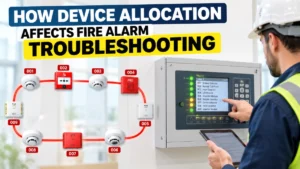
Imagine a fire alarm going off at 2 AM in a 20-storey hospital. Emergency teams rush to the scene, but the alarm covers an entire floor zone. They don’t know which room triggered it. Every second counts, yet they are searching blindly.
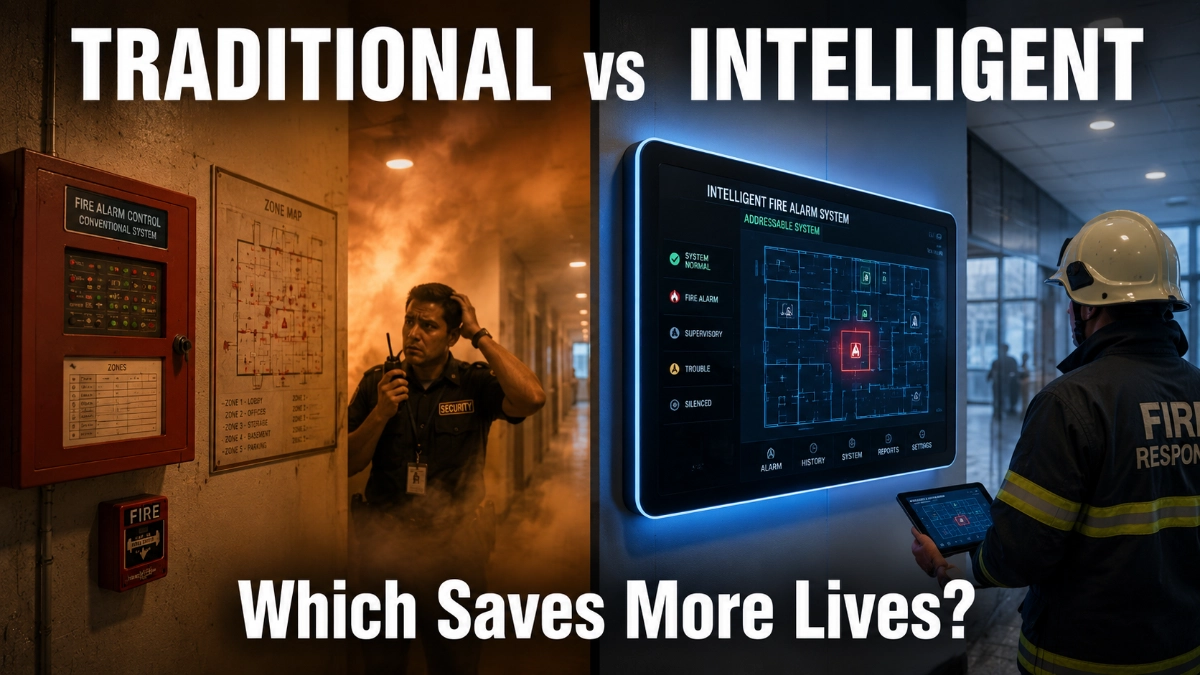
This is a real challenge many facility managers face today. The type of fire detection system you choose can mean the difference between a controlled response and a chaotic evacuation.
This article compares intelligent and traditional fire detection systems,, breaking down how each works, where each fits best, and which delivers stronger fire safety in modern buildings.
Quick Answer: What is the difference?
Traditional fire detection systems use zone-based wiring to signal that a fire event occurred somewhere in a zone. Intelligent (addressable) systems assign a unique address to every detector and device, enabling pinpoint identification of the exact device that was triggered, reducing false alarms, speeding response times, and supporting remote diagnostics.
What Is Traditional Fire Detection?
Definition
A traditional (or conventional) fire detection system uses simple wired loops called zones to connect multiple detectors and call points. When a device activates, the control panel identifies the zone, but not the specific device.
How It Works
Detectors on each zone loop send a signal to a conventional fire alarm panel when triggered. The panel then sounds an alarm and indicates which zone is affected. Finding the exact source requires a physical check of every device in that zone.
Components
- Conventional fire alarm panel
- Smoke and heat detectors (zone-wired)
- Manual call points
- Alarm sounders and strobes
- Zone wiring
Advantages
- Lower upfront cost
- Simpler installation and commissioning
- Adequate for small, straightforward buildings
- Widely available and easy to maintain locally
Limitations
- Cannot identify the exact triggered device
- Higher false alarm rates
- Limited scalability for complex buildings
- No remote monitoring capability
- More difficult troubleshooting
What Is Intelligent Fire Detection?
Definition
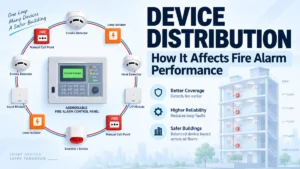
An intelligent fire detection system, also called an addressable fire alarm system, assigns a unique digital address to every detector, module, and device on the network. The control panel communicates continuously with each device, collecting real-time data.
How It Works
Each addressable detector constantly monitors its environment and reports precise readings to the panel. The panel analyses data from multiple criteria: smoke density, temperature rate-of-rise, and carbon monoxide levels, before triggering an alarm. This multi-factor analysis drastically reduces false activations.
Key Technologies
- Multi-criteria detection algorithms
- Addressable loop communication (SLC loop)
- Self-diagnostic capability
- Advanced event logging and reporting
- Remote monitoring integration
GST intelligent fire detection technology is a strong example of this approach. GST fire alarm systems use advanced addressable protocols, allowing each device to communicate bidirectionally with the control panel, enabling diagnostics, status checks, and precise event reporting across large, complex sites.
Advantages
- Exact device location identified instantly
- Significantly fewer false alarms
- Remote monitoring and diagnostics supported
- Self-testing reduces the routine maintenance burden
- Scalable to thousands of devices on one network
Limitations
- Higher initial installation cost
- Requires skilled commissioning
- More complex system design
Key Differences: Intelligent vs Traditional Fire Detection
The table below summarises the core differences to help you compare both systems at a glance.
| Feature | Traditional Fire Detection | Intelligent Fire Detection |
| Detection Accuracy | Zone-based; pinpoints area, not device | Device-level pinpointing; exact location |
| False Alarm Rate | Higher — less discrimination | Lower — multi-criteria analysis |
| Maintenance | Manual inspection required | Self-diagnostics; remote alerts |
| Device ID | No individual ID | Unique address per device |
| Scalability | Limited | Highly scalable |
| Installation | Simpler, less wiring | More planning; advanced commissioning |
| Cost (Initial) | Lower | Higher upfront |
| Lifecycle Cost | Higher (more manual work) | Lower (predictive maintenance) |
| Reporting | Basic panel alerts | Detailed event logs and analytics |
| Remote Monitoring | Limited or none | Full remote access supported |
| Best Suited For | Small buildings, tight budgets | Hospitals, hotels, campuses, high-rises |
Why False Alarm Reduction Matters
False alarms are far more than an inconvenience. In commercial and industrial environments, a single false alarm can halt production, disrupt hundreds of occupants, and cost thousands in emergency response fees.
Repeated false alarms also erode occupant confidence. Over time, staff begin to ignore alarms, a dangerous habit that can prove fatal in a real emergency.
Compliance is another concern. Regulatory bodies in many regions monitor excessive false alarm rates. Facilities with poor records may face formal warnings, fines, or mandated system upgrades.
Intelligent fire detection systems reduce false alarms through multi-criteria analysis. Rather than acting on a single threshold trigger, the system evaluates several environmental factors simultaneously before raising an alert, making the alarm far more reliable.
How Intelligent Detection Improves Emergency Response
Speed and accuracy determine outcomes in fire emergencies. Intelligent systems deliver both.
- Exact device location: Responders know the precise room or zone immediately.
- Faster evacuation: Targeted alerts guide occupants away from actual danger zones.
- Quicker troubleshooting: Engineers can remotely diagnose faults before attending the site.
- Better incident management: Detailed event logs support post-incident review and insurance claims.
A GST addressable fire alarm panel, for instance, can display the exact device address, type, and status on-screen the moment an event occurs, giving emergency coordinators a clear, real-time picture of the situation.
Best Applications by System Type
Traditional Fire Detection — Best For
- Small offices (under 500 sq m)
- Retail stores with simple layouts
- Small warehouses and storage units
- Budget-sensitive projects with low occupancy risk
Intelligent Fire Detection — Best For
- Hospitals and healthcare facilities
- Hotels and hospitality venues
- Data centres and server rooms
- Manufacturing facilities with complex risk profiles
- High-rise residential and commercial buildings
- Educational campuses with multiple buildings
- Large shopping complexes and airports
GST addressable systems are widely deployed across hospitals, hotels, and industrial campuses in India and internationally, providing reliable protection at scale.
Cost vs Long-Term Value
Intelligent systems cost more upfront, no question. But the total cost of ownership tells a different story.
Traditional systems require more manual inspections and have higher rates of false alarms, each triggering emergency callouts that carry real costs. Intelligent systems support predictive maintenance, meaning faults are flagged before they cause failures or unwanted activations.
Key Insight: Over a 10-year lifecycle, the operational savings from reduced false alarms, remote diagnostics, and lower maintenance visits typically offset the higher initial investment of intelligent systems, especially in large or high-risk buildings.
5 Common Myths About Intelligent Fire Detection
Myth 1: Intelligent systems are only for large buildings
False. Intelligent systems scale down effectively. Even medium-sized buildings benefit from precise device identification and reduced false alarms.
Myth 2: They are too complicated to maintain
False. Self-diagnostics and remote monitoring make intelligent systems easier to maintain than traditional ones, which require full manual walkthroughs for fault-finding.
Myth 3: Traditional systems are ‘good enough’ for compliance
Partially false. Traditional systems may meet minimum standards, but evolving fire safety regulations increasingly favour addressable systems for commercial occupancies.
Myth 4: Upgrading is too disruptive
False. Many intelligent systems allow phased upgrades, replacing devices zone by zone while keeping the existing infrastructure partially active.
Myth 5: Intelligent detectors are less reliable
False. Intelligent addressable detectors undergo continuous self-testing and communicate faults immediately, making them more reliable than conventional detectors that may fail silently.
Expert Recommendations: Choosing the Right System
Use these guidelines to match your building with the right fire detection approach:
- Small buildings under 500 sq m, single-storey, low risk: A conventional fire alarm panel is sufficient and cost-effective.
- Medium buildings with multiple zones or mixed use: Consider a hybrid addressable system that offers device-level identification without full intelligent infrastructure costs.
- Large, complex, or high-occupancy buildings: Intelligent fire detection is essential. Prioritise systems with remote monitoring, multi-criteria detection, and advanced diagnostics.
- High-risk environments (hospitals, data centres, manufacturing): Opt for fully intelligent addressable systems. Look for proven platforms like GST fire alarm systems with certifications from recognised bodies.
- Future expansion planned: Always choose addressable adding devices to a conventional zone system is far more disruptive and costly.
Conclusion
Traditional fire detection systems remain a practical and cost-effective solution for smaller, simpler buildings. They are reliable, widely understood, and sufficient where occupancy risk is low.
However, for any building that demands precision, scalability, and reduced false alarms, intelligent fire detection is the clear winner. Addressable systems deliver device-level identification, advanced diagnostics, and remote monitoring capabilities that traditional systems simply cannot match.
GST intelligent fire detection technology represents the modern standard in addressable fire safety trusted across hospitals, hotels, data centres, and large commercial developments worldwide.
The right system depends on your building size, occupancy, risk profile, and growth plans. When in doubt, the additional investment in intelligent fire detection pays for itself in safety, efficiency, and peace of mind.
5 Key Takeaways
- Traditional systems detect by zone; intelligent systems detect by exact device.
- Intelligent fire detection significantly reduces false alarms through multi-criteria analysis.
- Addressable systems support remote monitoring, self-diagnostics, and predictive maintenance.
- The long-term operational savings of intelligent systems often justify the higher upfront cost.
- For hospitals, hotels, campuses, and high-rises, intelligent fire detection is the recommended standard.
Read Also: A Step-by-Step Fire Risk Assessment Framework for Industrial Buildings
Read Also: Fire Detection Considerations for E-Commerce Fulfilment Centres