
CCTV Storage Calculations That Fail in Practice: Recording Days vs. Usable Evidence

A CCTV system may promise 30 days of recording, but does that guarantee 30 days of usable evidence? Not necessarily. A storage calculation can look correct on paper and still fail in practice. Engineers may estimate disk capacity using the number of cameras, average bitrate, and retention period. However, real-world performance also depends on scene […]
From Video Recording to Searchable Evidence: The Role of CCTV Metadata

Introduction Modern CCTV systems can record thousands of hours of video every day. However, when an incident occurs, security teams often face a different challenge: finding the exact footage that explains what happened. An investigator may need to identify when a vehicle entered a warehouse, when a person accessed a restricted area, or when a […]
CCTV Cybersecurity Beyond Passwords: Cameras as Connected Network Endpoints

Networked CCTV cameras do more than capture video. They communicate with switches, NVRs, video management systems (VMS), cloud platforms, and remote monitoring applications. This connectivity makes modern surveillance more flexible, but it also introduces cybersecurity risks that engineers must address. A strong password alone cannot protect a CCTV system from every threat. An outdated camera […]
A Camera Can Be Working Perfectly and Still Fail Its Security Objective

An IP camera can deliver clear video, maintain a stable network connection, and record footage continuously while still failing to meet the security objective it was installed for. Consider a warehouse where a camera records every vehicle entering a loading bay. The footage looks sharp, and the recording system reports no errors. However, when a […]
How Security Zones Should Influence Commercial CCTV Design
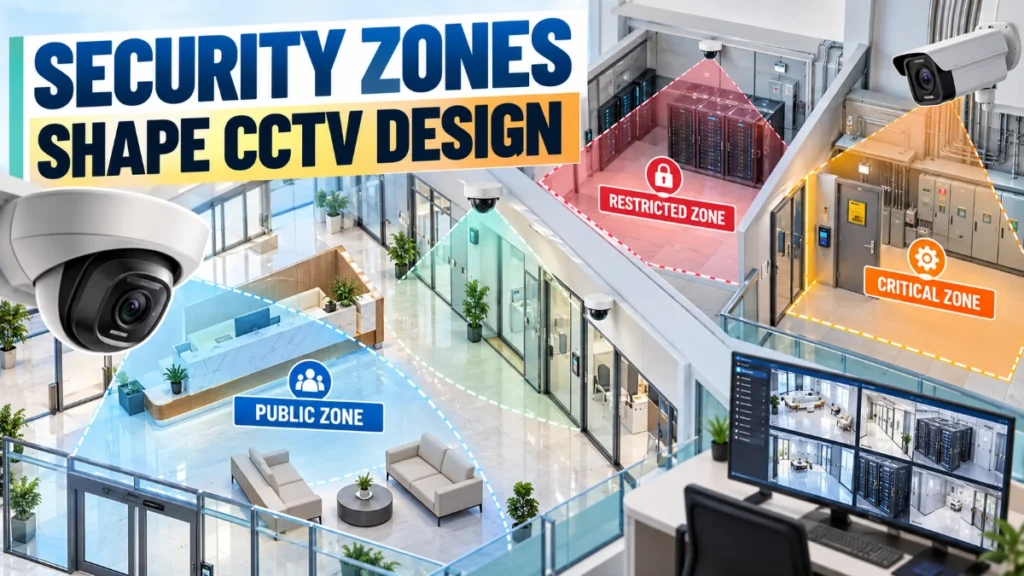
A commercial CCTV system should not treat every part of a building the same way. A reception area, server room, loading bay, employee entrance and restricted control room have different security requirements. They also have different risks, traffic patterns, lighting conditions and surveillance objectives. Yet many CCTV designs start with a simple question: How many […]
How Security and Facility Teams Can Have Different CCTV Requirements

A CCTV system may serve the same building, but not everyone who uses it needs the same information. A security team may want cameras that help detect suspicious activity, verify incidents, monitor restricted areas and support investigations. A facility team, on the other hand, may use CCTV to understand building operations, investigate equipment issues, monitor […]
How Too Many CCTV Feeds Can Reduce Operator Attention

A modern CCTV control room can display dozens or even hundreds of camera feeds. More cameras can improve physical coverage, but they do not automatically improve security. In fact, when too many feeds compete for an operator’s attention, the surveillance system can become harder to monitor effectively. This is a human-factors problem as much as […]
How Commercial Building Layouts Create CCTV Coverage Conflicts

A CCTV camera can have excellent image quality and still fail to provide effective security coverage. The problem is often not the camera. It is the building layout. Columns, glass partitions, shelving, staircases, lift lobbies, ceiling structures, doors, signage, machinery and changing floor layouts can all create blind spots or obstruct important viewing angles. In […]
How Firmware, Network and Configuration Changes Can Affect CCTV Reliability
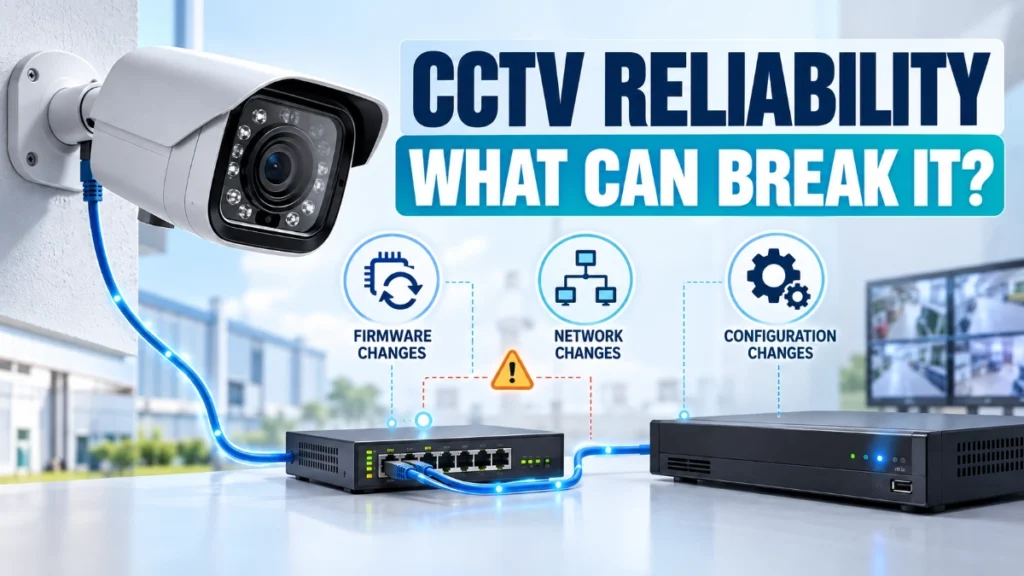
A CCTV system can work reliably for years and still develop unexpected problems after a firmware update, network change, or configuration adjustment. The cameras may remain powered on. The NVR may still be accessible. Network switches may show normal link status. Yet operators can experience video loss, delayed live feeds, recording gaps, camera disconnections, or […]
NVR Capacity vs Actual CCTV Storage Demand: What Engineers Should Check

Choosing an NVR based only on its advertised hard-drive capacity can lead to a common CCTV design mistake: the recorder may have enough physical storage, but not enough storage for the required retention period and recording quality. For engineers, the real question is not simply “How many TB does the NVR support?” It is: How […]
How VLAN Segmentation Can Improve Enterprise CCTV Architecture

Enterprise CCTV systems are no longer isolated video networks. Modern surveillance environments often connect hundreds of IP cameras, NVRs, video management systems, workstations, analytics servers, access-control systems, and other IT infrastructure. As the number of connected devices increases, network architecture becomes just as important as camera resolution or storage capacity. One practical way to improve […]
Detection, Recognition and Identification: How Should Engineers Specify CCTV?

When engineers specify CCTV, one of the most common mistakes is starting with camera resolution. “Should we use a 4MP or 8MP camera?” That sounds like a straightforward question, but resolution alone does not determine whether a surveillance system will actually deliver useful evidence. A better starting point is the operational requirement. Does the camera […]
