For decades, safety performance has been measured after the fact. Injury rates, lost workdays, and incident reports tell organisations what already went wrong, but they say very little about what is happening right now on the plant floor, in the warehouse, or inside a building’s mechanical systems.
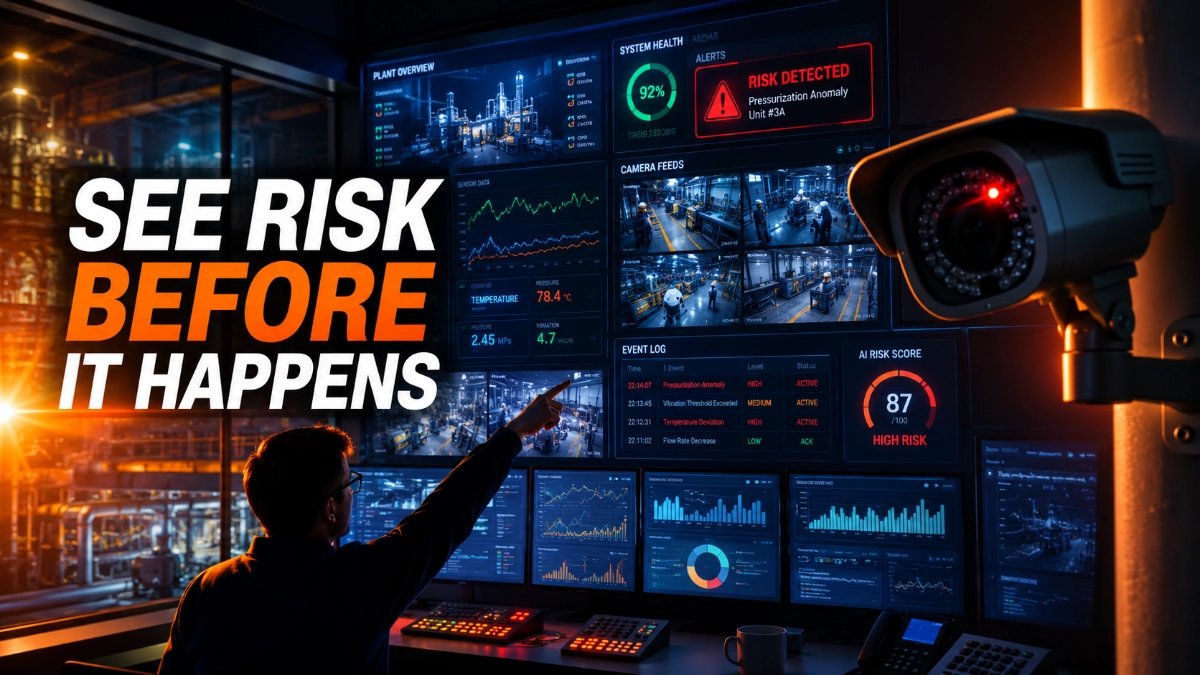
As facilities grow more complex, spanning multiple buildings, production lines and connected assets, the gap between collecting data and actually understanding it has widened. A new way of thinking about safety is closing that gap: operational visibility.
Operational visibility is the real-time ability to see, understand, and act on conditions across an organisation’s physical and digital systems. Instead of waiting for an incident report, safety and operations teams now use live data to spot risk before it escalates. That shift is changing how engineers, facility managers, and compliance leaders define a safe operation not as a clean record of the past, but as a continuously observable present.
What Is Operational Visibility?
Operational visibility is the degree to which an organisation can observe, in real time, the status, performance, and risk conditions of its people, assets, processes, and environment.
In practice, it depends on a few core components: connected sensors that track equipment and environmental conditions, life-safety systems that report status continuously rather than only during inspections, video and access monitoring that flag unusual activity, and centralised dashboards that pull all of these streams into one operational picture.
The clearest way to understand the concept is to compare it with traditional reporting. A monthly safety report might reveal that a conveyor motor overheated three times last quarter. An operational visibility platform flags that same overheating pattern as it develops, while there is still time to intervene. Traditional reporting answers what happened; operational visibility answers what is happening.
Why Organisations Are Rethinking Safety Measurement
Safety programs have long been built around audits, inspections, and post-incident reviews. These remain useful, but they are inherently backwards-looking, and that limitation is becoming harder to ignore.
Many hazards develop gradually rather than appearing suddenly: a sensor drifting out of calibration, a fire door propped open during a shift change, an HVAC system straining under unusual load. None of these triggers a reportable incident on its own, yet each represents real exposure.
Compounding the problem, even organisations that collect abundant data often lack a unified view of it. Fire panels, access control, video, and equipment monitoring frequently sit in separate systems, which makes it difficult for any one person to see the full risk picture at the moment it matters most.
How Operational Visibility Improves Safety Outcomes
Faster incident detection
Connected sensors and monitoring platforms can identify abnormal conditions, such as smoke, gas concentration, and unusual vibration, within seconds, rather than waiting for a person to notice and report it.
Early risk identification
Trend data across equipment and environmental sensors reveals patterns long before they cause a failure, allowing teams to intervene proactively rather than reactively.
Better emergency response
When an alarm activates, an integrated visibility platform can immediately show responders where the event originated, who is nearby, and which evacuation routes remain clear.
Improved compliance monitoring
Continuous data capture makes it easier to demonstrate, in real time, that fire systems, emergency lighting, and safety equipment are operating within required parameters, rather than relying solely on periodic inspection logs.
Reduced downtime
Visibility into equipment health lets maintenance teams address developing issues during planned windows, instead of responding to unplanned shutdowns that can themselves introduce safety risk.
Taken together, these outcomes share a common thread: visibility shortens the distance between a risk emerging and a risk being addressed.
| EXPERT INSIGHT: The facilities with the strongest safety records are rarely the ones with the most equipment. They are the ones who can see what their existing equipment and data are already telling them. Visibility turns scattered signals into a single, actionable picture, which is precisely what proactive safety management requires. A perspective widely shared among connected safety and building-technology analysts. |
Technologies Driving Operational Visibility
A growing ecosystem of connected technologies is what makes real-time visibility possible across modern facilities.
- IoT sensors: Distributed devices that continuously monitor temperature, vibration, gas concentration, and equipment status.
- Fire alarm systems: Increasingly networked rather than standalone, feeding status and alarm data into broader monitoring platforms.
- Building management systems (BMS): Centralise HVAC, lighting, and energy data, often serving as the backbone for facility-wide visibility.
- Video surveillance systems: Modern platforms have moved well beyond passive recording. Camera systems such as Impact by Honeywell CCTV now incorporate analytics that detect unusual movement, unauthorised access, or congestion in real time, sending alerts directly to safety teams instead of footage that is reviewed only after the fact. Organisations deploying these systems at scale often work with an established Impact by Honeywell CCTV Distributor in India to ensure correct placement, calibration, and long-term support.
- AI-powered analytics: Apply pattern recognition across combined data streams to flag anomalies a human reviewer might miss.
- Edge computing: Processes data closer to its source, reducing the delay between detection and alert.
- Digital twins: Virtual models of a facility that let teams visualise real-time conditions spatially, rather than as raw numbers.
- Predictive maintenance platforms: Combine sensor data and historical performance to forecast failures before they occur.
Together, these technologies form the connected infrastructure behind modern operational visibility, and the value comes from how well they are integrated, not simply how many are deployed.
Operational Visibility in Industrial Facilities
Manufacturing
Production lines benefit from visibility into machine health, emission levels, and worker proximity to hazardous zones, reducing both equipment failure and personal injury risk.
Warehouses
High-density storage and constant material movement make visibility into forklift traffic, occupancy, and fire suppression status especially valuable.
Energy facilities
Visibility into pressure, temperature, and containment systems supports both safety and regulatory reporting in environments where failure margins are narrow.
Critical infrastructure
Water treatment plants, data centres, and transportation hubs increasingly rely on integrated monitoring to guard against operational failure and security threats alike, since an undetected issue can have consequences that extend well beyond the facility itself.
Across every sector, the underlying need is the same: a unified, real-time view of conditions that would otherwise stay isolated in separate systems.
The Link Between Visibility, Compliance, and Risk Reduction
Regulatory frameworks increasingly expect organisations to demonstrate ongoing control over safety conditions, not just periodic compliance. Continuous monitoring data supports that shift directly, providing a time-stamped record that safety systems were functioning as required, not only at the moment of an audit.
This same data also strengthens risk reduction. When safety and compliance teams can see conditions as they develop, they can prioritise corrective action based on actual exposure rather than guesswork. Compliance becomes a natural byproduct of good visibility, rather than a separate administrative task layered on top of daily operations.
Leading Indicators vs. Lagging Indicators
Safety metrics are traditionally divided into two categories. Lagging indicators measure outcomes after they occur, such as injuries or downtime hours. Leading indicators measure conditions that precede those outcomes, such as sensor alerts or near-miss reports. Operational visibility strengthens leading indicators by making real-time conditions measurable rather than anecdotal.
| Aspect | Leading Indicators | Lagging Indicators |
| Definition | Predictive signals of emerging risk | Retrospective measures of past outcomes |
| Examples | Sensor alerts, equipment health scores, near-miss reports | Injury rates, incident counts, and downtime hours |
| Data Source | Real-time monitoring systems | Post-event reports and audits |
| Primary Value | Enables prevention | Enables analysis and accountability |
| Best Used For | Ongoing, day-to-day risk management | Trend analysis and regulatory reporting |
Real-World Examples of Visibility-Driven Safety Improvements
A manufacturing plant that connects vibration sensors to critical machinery can detect bearing wear weeks before failure, scheduling repair during a planned shutdown instead of an unplanned one.
A logistics hub that integrates access control with video analytics can identify when a loading dock door has remained open beyond a safe threshold, prompting an automatic alert rather than relying on a worker noticing.
A commercial building that links its fire alarm system to a centralised dashboard can confirm, continuously, that every detector and sprinkler zone is reporting normally, closing the gap between scheduled inspections.
These examples share a pattern: visibility does not eliminate risk on its own, but it gives teams the lead time needed to respond before risk becomes an incident.
Challenges Organizations Face
Data silos
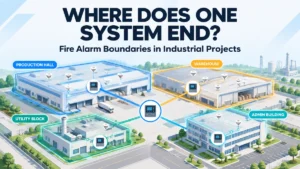
Many facilities still operate fire, security, and building systems independently, each producing data that never reaches a shared view.
Integration issues
Connecting legacy equipment to modern monitoring platforms can be technically demanding and costly, particularly in older facilities.
Alert fatigue
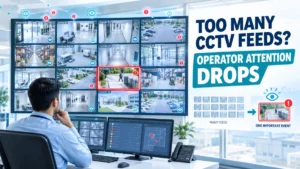
When systems generate too many low-priority notifications, teams may begin disregarding alerts altogether, undermining the value of visibility itself.
Legacy systems
Equipment installed decades ago was rarely designed with connectivity in mind, often requiring retrofits or phased replacement strategies.
Overcoming these challenges generally requires a deliberate integration strategy, not simply the addition of more sensors.
Future Trends Shaping Operational Visibility
AI-assisted decision making
Analytics platforms are moving from simply flagging anomalies toward recommending specific corrective actions, helping smaller safety teams manage larger volumes of data.
Autonomous monitoring
Drones and mobile sensor platforms are beginning to supplement fixed infrastructure, extending visibility into areas that are difficult or hazardous to monitor continuously.
Predictive safety management
Combining historical and real-time data allows organisations to estimate the likelihood of future incidents under specific conditions, shifting safety planning from reactive to anticipatory.
Connected safety ecosystems
Rather than remaining isolated tools, fire, security, building, and equipment systems are converging into single platforms built around shared visibility, not just shared data storage.
Conclusion
Operational visibility is not a replacement for established safety practices; it is the connective layer that makes those practices more effective. By giving teams a real-time view of conditions across people, equipment, and environment, organisations can shift from documenting what went wrong to preventing it in the first place.
As connected systems become more affordable and more standard across industrial and commercial environments, visibility is likely to move from a competitive advantage to a baseline expectation. Over the next decade, the organisations that treat visibility as a core safety metric, not simply an IT upgrade, will be the ones best positioned to manage risk before it becomes a headline.
Key Takeaways
- Operational visibility is the real-time ability to observe risk conditions across a facility, not just record them after the fact.
- It strengthens leading indicators, giving teams time to act before an incident occurs.
- IoT sensors, fire systems, building management platforms, video analytics, and AI form the technical backbone of modern visibility.
- Visibility supports continuous compliance, not only point-in-time audits.
- Data silos, legacy systems, and alert fatigue remain the biggest barriers to adoption.
What Safety Leaders Should Do Next
Engineers, facility managers, and compliance professionals can begin strengthening operational visibility without committing to a full system overhaul.
- Audit existing systems to identify where safety-relevant data already exists but remains unconnected.
- Prioritise integration over addition, connecting current fire, security, and BMS platforms often delivers faster value than purchasing new sensors.
- Establish alert thresholds carefully to avoid fatigue, focusing on signals that genuinely warrant action.
- Pilot one high-value use case, such as equipment health monitoring, before scaling visibility initiatives facility-wide.
- Treat visibility as a safety metric in its own right, tracked and reported alongside traditional incident data.
Read Also: Why Industrial Surveillance Needs a Strategy, Not Just Cameras
Read Also: Could CCTV Systems Predict Incidents Before They Happen?