Fire detection technology has undergone a remarkable transformation over the past decade. From basic smoke detectors and conventional alarm panels to addressable fire alarm panels that can pinpoint individual device faults, the industry has steadily moved toward greater precision, speed, and connectivity. But that progress is about to accelerate dramatically.
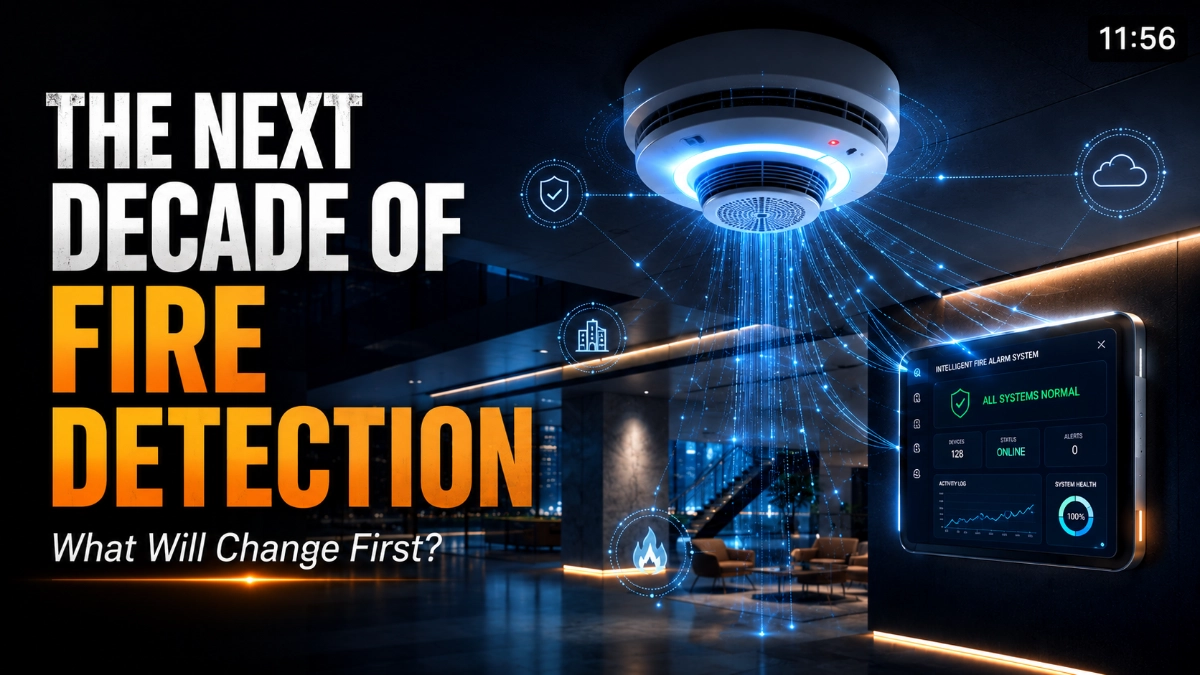
Over the next ten years, several converging forces, such as artificial intelligence, cloud computing, the Internet of Things, and smart building infrastructure, will fundamentally reshape how fires are detected, managed, and prevented. For facility managers, safety officers, and fire protection professionals, understanding these shifts is not just useful; it is essential.
This article explores the most significant changes ahead, the industries that will benefit most, and what organisations can do today to stay ahead of the curve.
Why Traditional Fire Detection Is No Longer Enough
Conventional fire detection systems that rely on zone-based conventional fire alarm panels have served buildings reliably for decades. However, they were designed for a simpler era. Today’s commercial and industrial environments are far more complex, dynamic, and high-stakes.
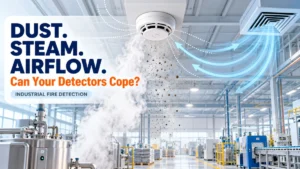
The most persistent problem with traditional systems is false alarms. Studies consistently show that the vast majority of fire alarm activations are false, triggered by dust, steam, cooking fumes, or maintenance work. Each false alarm wastes emergency resources, disrupts operations, and erodes trust in the system itself.
Beyond false alarms, conventional systems offer limited diagnostic capability. When a fault occurs, the system typically tells you only which zone is affected, not which specific device. Technicians must physically inspect every detector in that zone, wasting time during emergencies and scheduled maintenance alike.
As buildings grow more complex, incorporating atriums, data halls, clean rooms, and high-bay warehouses, the limitations of conventional detectors become increasingly costly. Modern environments demand faster, smarter, and more targeted detection.
The Rise of Intelligent Fire Detection Systems
Intelligent addressable systems represent the most significant leap forward in fire detection over the past two decades. Unlike conventional systems, an addressable fire alarm panel communicates with each device individually. Every addressable detector has a unique address, allowing the control panel to identify exactly which unit has triggered an alarm or developed a fault.
This device-level visibility transforms both emergency response and maintenance. Instead of investigating an entire zone, a technician goes directly to the affected device. Response times improve, and downtime is reduced. In large facilities such as hospitals, hotels, and data centres, this precision can be the difference between a minor incident and a major disruption.
Modern intelligent systems from manufacturers like GST fire alarm systems also enable drift compensation, automatically adjusting detector sensitivity as it accumulates dust over time, reducing false alarms without sacrificing safety. This kind of built-in intelligence makes GST fire alarm systems a preferred choice in demanding commercial and industrial applications.
The real-world applications are broad:
- Hospitals: Addressable detectors ensure rapid, room-specific identification in patient-critical environments.
- Data centres: Precision detection protects irreplaceable infrastructure with minimal disruption.
- Factories and warehouses: Device-level monitoring manages the unique challenges of industrial environments.
- Hotels and educational institutions: Faster, more accurate response protects large numbers of occupants.
Artificial Intelligence and Machine Learning in Fire Detection
Artificial intelligence is set to be one of the most disruptive forces in fire safety over the coming decade. AI-powered fire detection systems can analyse data from multiple sensors simultaneously, including smoke, heat, carbon monoxide, flame, and cross-reference that data against known patterns to determine whether a genuine fire risk exists.
The immediate benefit is a dramatic reduction in false alarms. Rather than triggering an alert the moment a smoke particle is detected, an AI-enabled system evaluates the full context. Is this a brief cooking-related event? A maintenance activity? Or a genuine developing fire? By distinguishing between these scenarios, AI fire alarm technology prevents unnecessary evacuations while ensuring real threats receive immediate attention.
Looking further ahead, machine learning models will enable predictive risk analysis. By continuously monitoring detector readings, environmental conditions, and historical incident data, smart detectors will identify elevated risk conditions before a fire starts. This shifts fire protection from a reactive discipline to a proactive one.
AI also supports faster, more intelligent emergency response. Integrated analytics can determine the most likely fire origin, calculate optimal evacuation routes in real time, and relay structured information directly to responding fire services, reducing the time to effective intervention.
Cloud-Connected Fire Alarm Systems
Cloud connectivity is transforming fire alarm management for multi-site organisations. Cloud fire monitoring platforms allow safety managers to oversee multiple buildings from a single dashboard, receiving real-time alerts, diagnostic reports, and compliance data regardless of location.
For a business operating across dozens of sites, retail branches, hospital trusts, hotel groups, or campus facilities, this centralised visibility is invaluable. Engineers can triage faults remotely before dispatching technicians, reducing unnecessary call-outs and cutting maintenance costs.
Cloud-managed safety systems also simplify compliance. Inspection logs, maintenance records, and alarm event histories are automatically captured and stored, creating an auditable digital trail that satisfies regulatory requirements without manual paperwork.
Integration with facility management platforms adds further value. Fire alarm data can feed directly into building management systems, triggering automated responses such as activating smoke extraction, unlocking emergency exits, or alerting security personnel, all without human intervention.
Smart Buildings and Integrated Life Safety Ecosystems
The smart building revolution is creating entirely new possibilities for fire safety. When fire alarm systems operate in isolation, their effectiveness is inherently limited. But when integrated with CCTV, access control systems, building management systems (BMS), and IoT-enabled devices, they become part of a coordinated life safety ecosystem.
Consider the possibilities: a fire detection event automatically triggers door release mechanisms, activates visual alarms in areas with high noise levels, captures CCTV footage of the affected zone, and sends structured alerts to the building management centre, all within seconds of the initial detection.
For occupant safety, these integrations are transformative. Automated emergency workflows reduce the dependency on manual responses, ensuring consistent and immediate action regardless of time of day or staffing levels. Evacuation guidance can be dynamically adjusted based on real-time fire progression data.
The future of building safety technology lies in these interconnected ecosystems where every system shares data, every event triggers coordinated responses, and every building continuously learns from its operational history.
What Will Change First? Key Predictions for the Next 10 Years
Based on current technology trajectories and industry investment patterns, here are the ten changes most likely to arrive first:
- Smarter detectors: Multi-sensor devices combining smoke, heat, CO, and humidity inputs will become standard, dramatically improving detection accuracy.
- Predictive maintenance: AI-driven analytics will identify detectors approaching end-of-life or developing faults before they fail, eliminating reactive maintenance.
- AI-assisted alarm verification: Machine learning systems will verify alarms in real time, substantially reducing false activations across commercial and industrial sites.
- Remote diagnostics: Cloud-connected systems will enable engineers to diagnose most faults remotely, reducing site visits and accelerating fault resolution.
- Wireless detection growth: Battery-powered wireless detectors will become increasingly viable for retrofit projects, historic buildings, and temporary installations.
- Cloud-managed safety systems: Centralised platforms managing fire safety across multiple sites will become the norm for facilities and property management organisations.
- Digital compliance reporting: Automated, tamper-proof digital records will replace paper-based inspection and maintenance logs, simplifying regulatory compliance.
- Faster emergency communication: Direct, structured data feeds from fire alarm systems to emergency services will reduce response times and improve situational awareness.
- Data-driven fire risk management: Aggregated data from connected fire detection systems will feed into broader risk management frameworks, enabling evidence-based investment decisions.
- Greater adoption of intelligent addressable systems: As costs decrease and complexity grows, addressable fire alarm panels will replace conventional systems across a wider range of building types and sizes.
The table below summarises the key differences between conventional and intelligent addressable systems:
| Feature | Conventional System | Intelligent Addressable System |
| Fault identification | Zone-level only | Individual device level |
| False alarm management | Limited | Advanced drift compensation & AI filtering |
| Remote monitoring | Not supported | Full cloud connectivity |
| Maintenance efficiency | Manual zone inspection | Remote diagnostics & predictive alerts |
| Integration capability | Minimal | BMS, CCTV, access control, IoT |
| Scalability | Limited | Highly scalable |
| Compliance reporting | Paper-based | Automated digital records |
Industries That Will Benefit Most
While every sector stands to gain from next-generation fire detection, several industries face particular pressure to modernise:
Manufacturing: Complex machinery, high-value stock, and significant business interruption risk make precise, rapid detection essential. Predictive maintenance capabilities reduce costly unplanned downtime.
Warehousing and Logistics: Large open-plan spaces with dense storage and rapid inventory turnover demand systems that can detect fires early, even in hard-to-reach locations.
Healthcare: Patient safety, 24-hour operations, and zero-tolerance for disruption make intelligent addressable systems and AI-assisted verification critical.
Hospitality: Hotels must balance rapid emergency response with minimal disruption to guests. Smart, integrated systems achieve both objectives.
Education: Schools and universities managing multiple buildings benefit enormously from centralised cloud monitoring and automated compliance reporting.
Commercial Offices: Open-plan, mixed-use spaces with varying occupancy demand, flexible, scalable fire protection that adapts to changing layouts.
Data Centres: Protecting irreplaceable data infrastructure requires precision detection, minimal false alarms, and integrated suppression system connectivity.
Infrastructure Projects: Tunnels, transport hubs, and public buildings present unique detection challenges that only intelligent, multi-sensor systems can reliably address.
How Businesses Can Prepare Today
Waiting for technology to mature before acting is a high-risk strategy. The most effective approach is a phased modernisation programme that builds toward a fully connected, intelligent fire safety infrastructure over time.
Start with a thorough audit of your existing fire detection systems. Identify ageing conventional panels and detectors, assess current false alarm rates, and evaluate your compliance reporting burden. This baseline assessment will identify your highest-priority upgrade opportunities.
When selecting new equipment, prioritise scalability. A GST fire alarm system distributor in India can advise on intelligent addressable platforms that integrate with existing infrastructure while providing a clear upgrade path toward AI-enabled detection and cloud monitoring. Choosing open-protocol systems avoids vendor lock-in and preserves future flexibility.
Invest in staff training alongside technology upgrades. The best system delivers limited value if the people operating it lack the skills to interpret alerts, manage integrations, and respond appropriately. Ongoing training is as important as the hardware itself.
Finally, engage with certified fire protection professionals who understand both current standards and emerging technologies. Future-proof fire safety planning requires expertise that spans engineering, compliance, and digital systems integration.
Key Takeaways
- Conventional fire alarm panels are increasingly inadequate for modern commercial and industrial environments.
- Intelligent addressable systems offer device-level precision, faster fault identification, and significantly improved maintenance efficiency.
- AI and machine learning will reduce false alarms and enable predictive risk management within the next decade.
- Cloud-connected fire alarm systems make multi-site management and digital compliance reporting practical and cost-effective.
- Smart building integration transforms fire detection from a standalone system into a coordinated life safety ecosystem.
- Businesses should begin phased modernisation now, prioritising scalable, open-protocol systems with clear upgrade paths.
Conclusion
The next decade will bring the most significant transformation in fire detection technology since the introduction of addressable systems. Artificial intelligence, cloud connectivity, smart building integration, and predictive analytics are converging to create fire safety systems that are faster, smarter, and more reliable than anything previously available.
For organisations that rely on conventional fire alarm panels and outdated detection infrastructure, the window for proactive modernisation is open now. Waiting for a fire incident or a regulatory failure to prompt action is an unnecessary risk.
Intelligent, addressable, cloud-connected fire detection systems are not a distant aspiration. They are available today, deployable in phases, and proven across the most demanding commercial and industrial environments. The question is not whether your organisation will eventually need to make this transition; it is how soon you choose to begin.
Working with experienced fire protection professionals and selecting scalable, future-proof platforms such as those offered through established GST fire alarm system distributors in India ensures your investment supports both today’s compliance requirements and tomorrow’s safety standards.
Read Also: Key Factors That Influence Fire Alarm System Performance in Industrial Environments
Read Also: Standalone Fire Detection vs Integrated Fire Safety Infrastructure: A Complete Comparison