Modern buildings are becoming smarter, safer and more technologically advanced. From high-rise commercial towers to large manufacturing plants, safety systems are now integrated with intelligent technologies that provide faster response and better control. Among these innovations, addressable fire alarm technology has become the preferred choice for modern infrastructure.
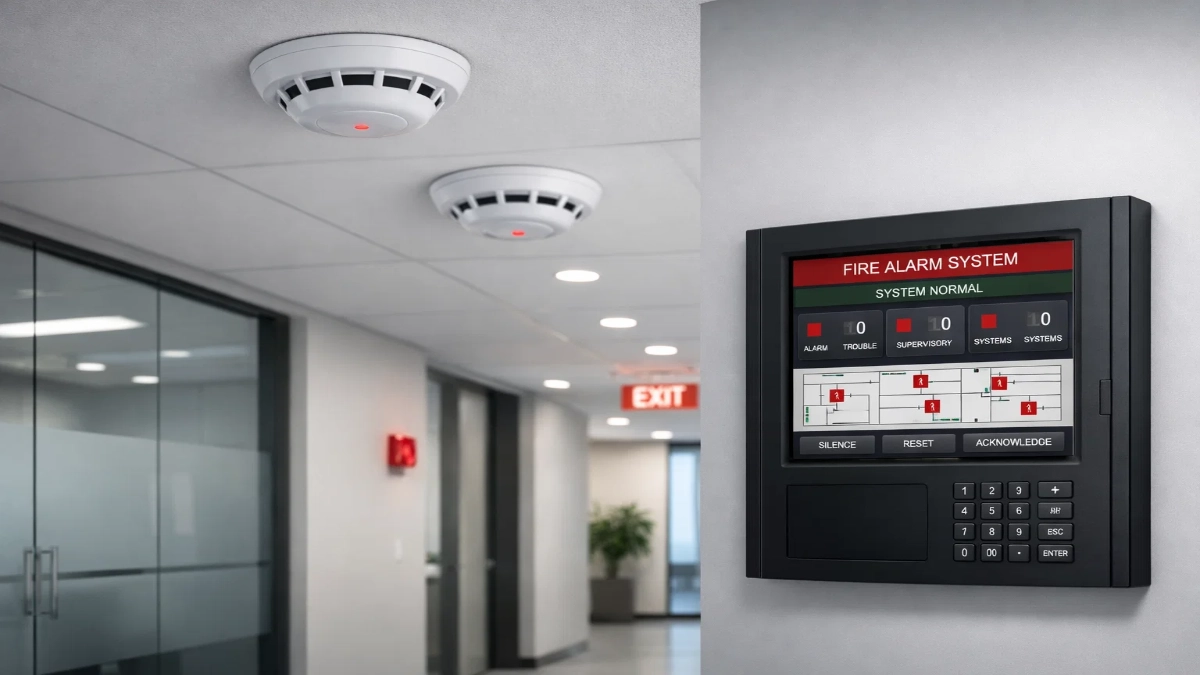
Traditional fire alarm systems served buildings for decades, but today’s complex environments require more accurate detection, quicker response and easier system management. Addressable fire alarm systems meet these demands by offering advanced monitoring, precise location identification and seamless integration with building management systems.
As industries, commercial facilities and smart buildings expand, engineers and facility managers increasingly rely on addressable systems to enhance safety and operational efficiency. This article explains why modern buildings prefer addressable fire alarm technology and how it transforms fire safety in today’s infrastructure.
Understanding Addressable Fire Alarm Technology
Addressable fire alarm technology is a smart fire detection system where every device, such as smoke detectors, heat detectors and manual call points, has a unique digital address.
This means the system can identify the exact location of a triggered device within seconds.
Unlike conventional systems that only indicate a general zone, addressable systems provide pinpoint accuracy, allowing building operators to respond immediately to the specific area where a fire risk is detected.
Key Components of an Addressable System
A typical addressable fire alarm system includes:
- Addressable fire alarm control panel
- Addressable smoke and heat detectors
- Manual call points
- Sounders and strobes
- Loop wiring network
- Monitoring software or integration with BMS
All these components communicate with the control panel using digital signals. The panel continuously monitors each device, ensuring that the system remains fully operational at all times.
Why Modern Buildings Are Moving Toward Addressable Fire Alarm Systems
Buildings today are more complex than ever. Large office complexes, data centres, hospitals and industrial facilities require highly reliable fire detection systems.
Addressable fire alarm technology solves many of the limitations found in conventional systems.
Let’s explore the key reasons behind its growing adoption.
1. Precise Fire Location Identification
One of the biggest advantages of addressable fire alarm technology is accurate device-level identification.
When a detector activates, the control panel displays the exact device address and location, such as:
- Floor number
- Room number
- Specific zone or corridor
This precision allows emergency teams and building operators to locate the problem instantly.
Why this matters
In large buildings, finding the source of a fire using conventional systems can take valuable time. Addressable systems eliminate guesswork and speed up emergency response.
A faster response can:
- Reduce fire damage
- Protect building occupants
- Improve evacuation efficiency
- Prevent operational downtime
For engineers and safety managers, this level of accuracy significantly improves incident management and building safety protocols.
2. Faster Response and Improved Fire Safety
Modern buildings demand rapid-fire detection and response mechanisms.
Addressable systems constantly communicate with every device in the network. The control panel scans each device multiple times per second, ensuring real-time monitoring.
Benefits of faster response
- Early fire detection
- Immediate alarm activation
- Quick identification of affected areas
- Faster evacuation procedures
In facilities such as manufacturing plants or warehouses, even a small delay can lead to major losses. Addressable technology ensures that alarms trigger instantly when abnormal conditions appear.
This proactive safety approach helps organisations maintain compliance with fire safety standards while protecting both people and assets.
3. Reduced False Alarms
False alarms can disrupt operations, cause panic among occupants and reduce trust in safety systems.
Addressable fire alarm systems help minimise these problems through intelligent detection technology.
Modern addressable detectors use advanced algorithms to analyse environmental conditions, such as:
- Smoke patterns
- Heat levels
- Air quality changes
Instead of reacting to minor disturbances like dust or steam, these systems evaluate data before triggering an alarm.
Advantages of intelligent detection
- Fewer false alarms
- Increased system reliability
- Reduced operational interruptions
- Improved trust in safety systems
This feature is particularly valuable in environments like industrial plants, hotels and hospitals, where unnecessary alarms can create serious disruptions.
4. Easy Maintenance and System Diagnostics
Maintenance is a critical part of any fire safety system. Addressable fire alarm technology simplifies maintenance through automated diagnostics and monitoring features.
Each device regularly reports its operational status to the control panel.
If a detector becomes faulty, dirty, or disconnected, the system immediately notifies maintenance teams.
Maintenance advantages
- Quick identification of faulty devices
- Reduced troubleshooting time
- Lower maintenance costs
- Improved system uptime
Engineers can also run system diagnostics remotely using monitoring software, making it easier to maintain large installations.
This capability is extremely useful in multi-building campuses, airports, hospitals and large industrial facilities.
5. Scalability for Large and Complex Buildings
Modern buildings continue to expand in size and complexity. Addressable systems are designed to handle this growth.
Unlike conventional systems, which require separate wiring for each zone, addressable systems use a loop wiring architecture.
This allows hundreds of devices to connect on a single communication loop.
Why scalability matters
Large buildings often include:
- Multiple floors
- Large warehouses
- Server rooms and data centres
- Mechanical and electrical rooms
Addressable systems make it easier to expand fire safety coverage without major wiring changes.
Facility managers can add new devices to the loop without redesigning the entire system. This flexibility makes addressable technology ideal for future-ready infrastructure.
6. Integration with Smart Building Systems
Smart buildings rely on integrated technologies that communicate with each other.
Addressable fire alarm systems can integrate with several building systems, including:
- Building Management Systems (BMS)
- HVAC systems
- Access control systems
- Public address systems
- Emergency lighting
When a fire is detected, the integrated system can automatically trigger multiple safety responses.
For example:
- Elevators move to safe floors
- HVAC systems shut down to prevent smoke spread
- Emergency lighting activates
- Access doors unlock for evacuation
This level of automation greatly enhances overall building safety and emergency coordination.
7. Improved Compliance with Fire Safety Standards
Regulatory compliance is a major concern for building owners and facility managers.
Addressable fire alarm systems help organisations meet modern fire safety regulations more effectively.
Many fire safety standards require:
- Accurate detection
- Reliable monitoring
- Regular maintenance records
- Rapid emergency response
Addressable systems provide detailed system logs, event history and device-level reporting.
These features make it easier to:
- Conduct fire safety audits
- Maintain compliance documentation
- Demonstrate system reliability to authorities
As a result, many modern commercial and industrial buildings choose addressable technology to meet stricter safety regulations and insurance requirements.
8. Cost Efficiency in the Long Term
Although addressable fire alarm systems may have a higher initial cost compared to conventional systems, they often prove more cost-effective over time.
Long-term financial benefits
- Reduced wiring requirements
- Lower maintenance costs
- Faster troubleshooting
- Less downtime during emergencies
Addressable systems also reduce the risk of large-scale damage by enabling faster response to fire incidents.
For industrial operations, preventing a single major fire incident can save millions in potential losses.
This makes addressable fire alarm technology a smart investment for modern infrastructure.
Industries That Prefer Addressable Fire Alarm Systems
Addressable technology is widely used across many sectors due to its reliability and advanced features.
Common industries using addressable fire alarm systems
- Manufacturing facilities
- Warehouses and logistics centers
- Commercial office buildings
- Hospitals and healthcare facilities
- Airports and transportation hubs
- Hotels and hospitality buildings
- Educational institutions
- Data centers
In these environments, safety systems must operate with high precision and reliability, making addressable technology the ideal solution.
The Future of Addressable Fire Alarm Technology
Fire safety technology continues to evolve as buildings become more connected and data-driven.
Future developments may include:
- AI-powered fire detection
- Cloud-based monitoring systems
- Predictive maintenance analytics
- IoT-connected safety devices
- Remote diagnostics and automation
These innovations will make addressable fire alarm systems even more intelligent and efficient.
As smart cities and intelligent infrastructure expand worldwide, addressable fire alarm technology will play a central role in protecting buildings and communities.
Note: Modern buildings require advanced fire safety systems that deliver speed, accuracy and reliability. Addressable fire alarm technology meets these requirements by providing precise device identification, intelligent detection and seamless system integration.
From improving emergency response to reducing maintenance complexity, addressable systems offer clear advantages over traditional fire alarm technologies.
For engineers, facility managers, and building owners, adopting addressable fire alarm systems ensures a future-ready approach to fire safety. As buildings grow smarter and more complex, intelligent fire detection will remain essential for protecting people, assets and operations.
Read Also: 6 Advantages of Addressable GST Fire Alarm Technology
Read Also: What Makes GST Fire Alarm Systems Popular in Industrial Facilities?