CCTV used to mean one thing: a camera quietly recording footage so someone could review it after something went wrong. That model is changing fast. Today’s surveillance systems are increasingly designed to flag risks before they fully unfold, not just document them afterwards.
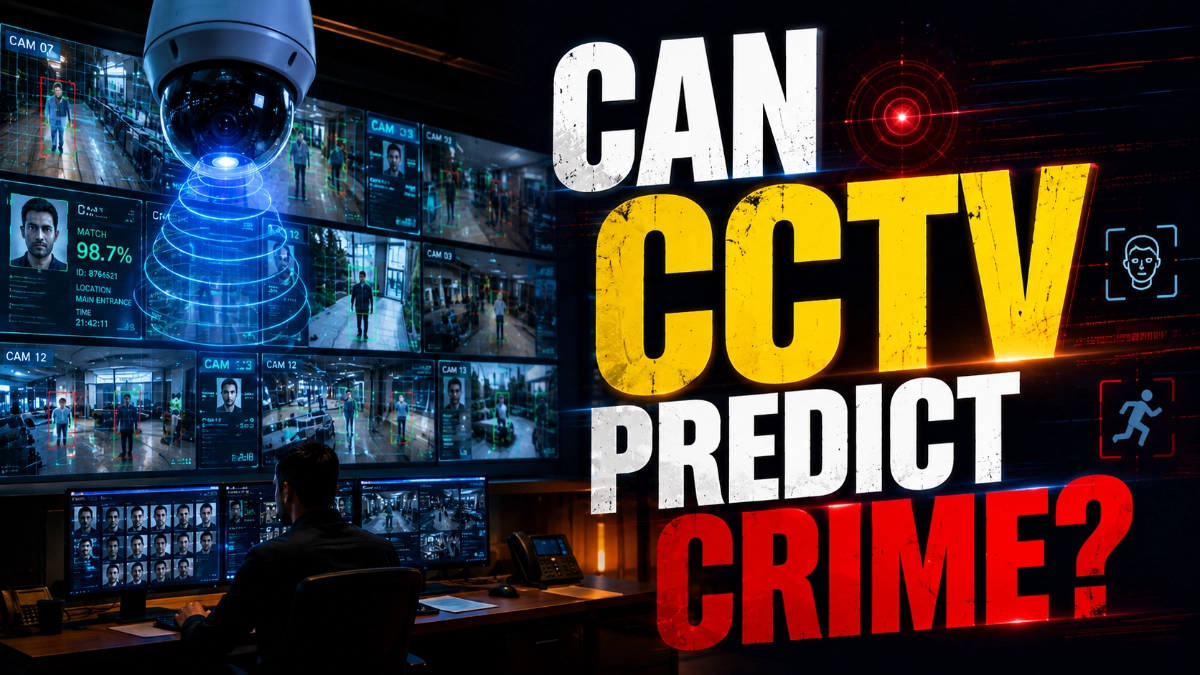
Picture a warehouse loading dock late on a Friday evening. A person lingers near a fenced storage area for several minutes, walking back and forth along the perimeter, glancing toward the gate. Nothing dramatic happens on the surface. But an AI-enabled camera system flags the behaviour as unusual loitering near a high-value zone, alerts the on-duty security officer, and the officer checks the area before any incident occurs. No break-in. No theft. Just a quiet, uneventful night that almost wasn’t.
This is the world predictive surveillance is moving toward. It is not about cameras reading minds or stopping crime like a movie villain. It is about software recognising patterns, comparing them against what normal activity looks like, and giving people the information they need to act early.
What Does “Predictive Surveillance” Mean?
Predictive surveillance refers to the use of artificial intelligence (AI), video analytics, and sensor data to identify patterns that may indicate a developing risk, before that risk becomes an actual incident.
Quick definition: Predictive surveillance is the practice of analysing live or recorded video data to detect early warning signs of unusual, risky, or unsafe behaviour, allowing teams to respond proactively rather than reactively.
Traditional CCTV answers the question, “What happened?” Predictive surveillance tries to answer a different question: “What is likely to happen next, based on what is happening right now?”
Importantly, this is pattern recognition based on probability, not certainty. A system might flag a situation as higher risk because it resembles conditions that have preceded incidents before. It does not guarantee an incident will occur, and it should never be treated as proof of intent.
How Modern CCTV Systems Have Evolved
Traditional Monitoring
For decades, CCTV was essentially a recording tool. Cameras captured footage, stored it on tapes or hard drives, and a person reviewed that footage only after an incident was reported. The system was passive by design.
Video Analytics
The first major shift came with video analytics: software that could detect motion, count objects, or recognise when something crossed a defined line. This reduced the need for constant human monitoring, but the logic was still fairly rigid and rule-based.
AI-Powered Surveillance
AI changed the equation. Instead of relying only on fixed rules, AI-powered systems can learn what “normal” looks like for a specific location and time, then flag deviations from that baseline. A busy lobby at 9 a.m. looks very different from the same lobby at 2 a.m., and modern systems understand that distinction.
Machine Learning Applications
Machine learning allows systems to improve over time. As more data is collected, models refine their understanding of typical patterns versus genuine anomalies, which helps reduce false alerts as the system matures.
Behavioral Analysis
This is where prediction becomes most visible. Behavioural analysis examines how people and vehicles move, interact, and linger, rather than merely whether they are present. It is the layer that allows a system to say, “This pattern of movement is unusual for this location.”
Can CCTV Really Predict Incidents?
The honest answer is: CCTV systems can identify early warning signs and elevated-risk patterns, but they do not predict the future with certainty. Think of it less like a crystal ball and more like a highly attentive colleague who never gets tired and never stops watching.
Suspicious Behaviour Detection
AI models can be trained to recognise behaviours statistically associated with higher risk, such as someone repeatedly checking their surroundings near a cash counter, or a person testing multiple door handles along a corridor.
Crowd Anomaly Detection
In spaces such as stadiums, transit stations, and shopping malls, systems can monitor crowd density and flow. A sudden change, such as a crowd surging toward an exit or unusual clustering in one area, can trigger an alert long before the situation becomes dangerous.
Loitering Recognition
Loitering detection flags when someone remains in a defined area for longer than expected, particularly near sensitive zones like server rooms, cash offices, or perimeter fences.
Perimeter Breach Prediction
Rather than waiting for someone to climb a fence, systems can detect approach patterns, such as a person moving along a perimeter line in a way that suggests they are looking for a weak point.
Vehicle Movement Analysis
In parking facilities and logistics yards, analytics can flag vehicles circling repeatedly, parking in restricted zones, or approaching loading areas at unusual speeds or times.
Workplace Safety Monitoring
On factory floors, cameras can detect when a worker enters a zone without required protective equipment, or when someone is present in a machine’s operating radius while it is active, allowing supervisors to intervene before an accident occurs.
Did you know? According to industry estimates, a large share of workplace safety incidents are preceded by at least one observable near-miss or unsafe behaviour pattern. Catching these patterns early is one of the strongest cases for predictive monitoring.
Technologies Making Predictive Surveillance Possible
Artificial Intelligence
AI provides the decision-making layer, interpreting what the cameras see and deciding whether it warrants attention.
Computer Vision
Computer vision is the technology that allows software to identify objects, people, and movement within video frames, the foundational “eyes” of the system.
Deep Learning
Deep learning models, particularly neural networks trained on large volumes of video data, allow systems to recognise subtle and complex patterns that simple rule-based programming would miss.
Edge Analytics
Edge analytics processes video data directly on or near the camera, rather than sending everything to a central server. This reduces latency, meaning alerts can be generated in near real time, and it can also reduce bandwidth and storage costs.
Video Metadata Processing
Every video frame can generate metadata, such as object type, direction, speed, and time stamps. Analysing this metadata at scale allows systems to spot trends across days, weeks, or multiple locations, not just single moments.
Real-World Industries Benefiting from Predictive CCTV
Manufacturing Plants
Predictive monitoring helps identify unsafe behaviours near heavy machinery, restricted zones, and high-traffic walkways, supporting both safety compliance and loss prevention.
Warehouses
Large warehouses use behavioural analytics to monitor staff movement patterns, detect unauthorised access to high-value storage areas, and flag unusual activity during off-hours.
Commercial Buildings
Office towers and retail spaces use crowd analytics and access monitoring to manage everything from queue management to early detection of unauthorised entry attempts.
Smart Cities
City-wide camera networks can analyse traffic flow, pedestrian density, and public space usage, helping municipal teams respond to congestion or safety concerns more quickly.
Airports
Airports use behavioural and crowd analytics across terminals, security checkpoints, and baggage areas, where even small delays in detecting unusual activity can have a significant operational impact.
Transportation Hubs
Train and bus stations benefit from platform edge monitoring, crowd density alerts, and unattended object detection, all of which support faster, safer responses.
Educational Campuses
Schools and universities use perimeter monitoring and access analytics to help administrators identify unauthorised visitors or unusual after-hours activity around buildings.
In India, this shift is visible across sectors as organisations upgrade from basic recording setups to analytics-driven platforms. Solutions such as Impact by Honeywell CCTV are increasingly deployed by businesses looking to add intelligent analytics to their existing security infrastructure, and many organisations work with an established Impact by Honeywell CCTV distributor in India to plan and implement these upgrades.
Benefits of Predictive CCTV Systems
Operational Benefits
- Reduces the workload on human monitoring teams by filtering out routine, non-relevant footage
- Helps allocate security staff more efficiently based on real-time risk indicators
- Provides data-driven insights for facility planning, such as identifying high-traffic bottlenecks
Security Benefits
- Enables earlier intervention before incidents escalate
- Improves response times by sending targeted alerts rather than relying on someone noticing an issue on a screen
- Creates a documented pattern of activity that can support investigations
Safety Benefits
- Identifies unsafe behaviours near machinery or hazardous zones in real time
- Supports compliance with workplace safety standards through continuous monitoring
- Helps reduce repeat incidents by highlighting recurring risk patterns
Limitations and Challenges
False Alarms
No system is perfect. Predictive analytics can generate false positives, especially in environments with unpredictable activity, such as crowded public spaces. Tuning systems to the specific environment is essential to keep alert volumes manageable.
Privacy Concerns
Behavioural monitoring raises legitimate privacy questions. Organisations need clear policies on what is monitored, how long footage is retained, and who can access it, along with compliance with local data protection regulations.
Data Quality
Predictive systems are only as good as the data they are trained on. Poor camera placement, low resolution, or inconsistent lighting can all reduce accuracy, regardless of how advanced the underlying AI is.
Ethical Considerations
There is an important difference between flagging unusual behaviour for human review and making automated judgments about a person’s intent. Responsible deployments keep humans in the decision-making loop, particularly for anything with serious consequences.
Human Oversight Requirements
Predictive CCTV is a support tool, not a replacement for trained personnel. Alerts still need to be reviewed and acted upon by people who understand the context of the specific location.
Reader takeaway: Predictive surveillance works best as a force multiplier for security teams, not as an autonomous decision-maker. The technology highlights where attention is needed; people decide what to do about it.
The Future of AI-Powered Surveillance
Over the next decade, expect predictive surveillance to become more integrated, more efficient, and more context-aware.
- Multi-sensor fusion: Combining video with audio, access control, and IoT sensor data for a fuller picture of an environment.
- On-device intelligence: More processing happens directly on cameras, reducing reliance on cloud infrastructure and improving response speed.
- Predictive maintenance: Using camera and sensor data to anticipate equipment issues before they cause downtime or safety hazards.
- Privacy-by-design analytics: Systems that analyse patterns and movement without storing or identifying personal data unless specifically required.
- Cross-site pattern recognition: Organisations with multiple locations using aggregated, anonymised data to identify trends across their entire portfolio.
The direction is clear: surveillance systems are becoming decision-support tools that work alongside people, rather than passive recorders that wait to be reviewed.
Expert Perspective: What Organisations Should Consider
For organisations exploring AI-enabled surveillance, a few practical principles consistently separate successful deployments from disappointing ones.
- Start with clear objectives: Define what specific risks or behaviours matter most for your site before choosing technology.
- Prioritise camera placement and quality: Even the best AI cannot compensate for poor coverage or low-resolution footage.
- Plan for tuning time: Expect an adjustment period where the system learns what “normal” looks like for your environment.
- Keep people in the loop: Design workflows where alerts go to trained staff who can verify and respond appropriately.
- Address privacy from day one: Build clear policies on data retention, access, and usage before deployment, not after.
Working with experienced integrators matters as much as the technology itself. A knowledgeable distributor or implementation partner can help match analytics capabilities to the actual risks a facility faces, rather than over-engineering a system with features that go unused.
Conclusion: A Balanced Verdict
So, could CCTV systems predict incidents before they happen? The realistic answer is: they can identify early warning signs and elevated-risk patterns with increasing accuracy, but they cannot guarantee outcomes or read intentions with certainty.
What predictive surveillance genuinely offers is a shift from reactive to proactive security. Instead of reviewing footage after an incident to understand what went wrong, organisations can receive alerts while there is still time to act.
Businesses considering these systems should approach them as decision-support tools, not replacements for human judgment. With the right camera coverage, thoughtful tuning, clear privacy policies, and trained staff to act on alerts, predictive CCTV can meaningfully reduce risk, improve safety outcomes, and make security operations more efficient.
The technology is not about predicting the future with certainty. It is about giving people a head start.
Read Also: How AI Is Changing the Role of CCTV Cameras in Industrial Facilities
Read Also: Cloud-Based Surveillance vs On-Premise CCTV Systems: Pros, Cons, and Use Cases