A fire alarm system can be fully operational today and still be poorly prepared for tomorrow. As buildings expand, devices age, technologies change, and support requirements evolve, the system that once met a project’s needs can gradually become harder to maintain. For large, networked, multi-panel installations, this gap between “working” and “well-managed” widens every year.
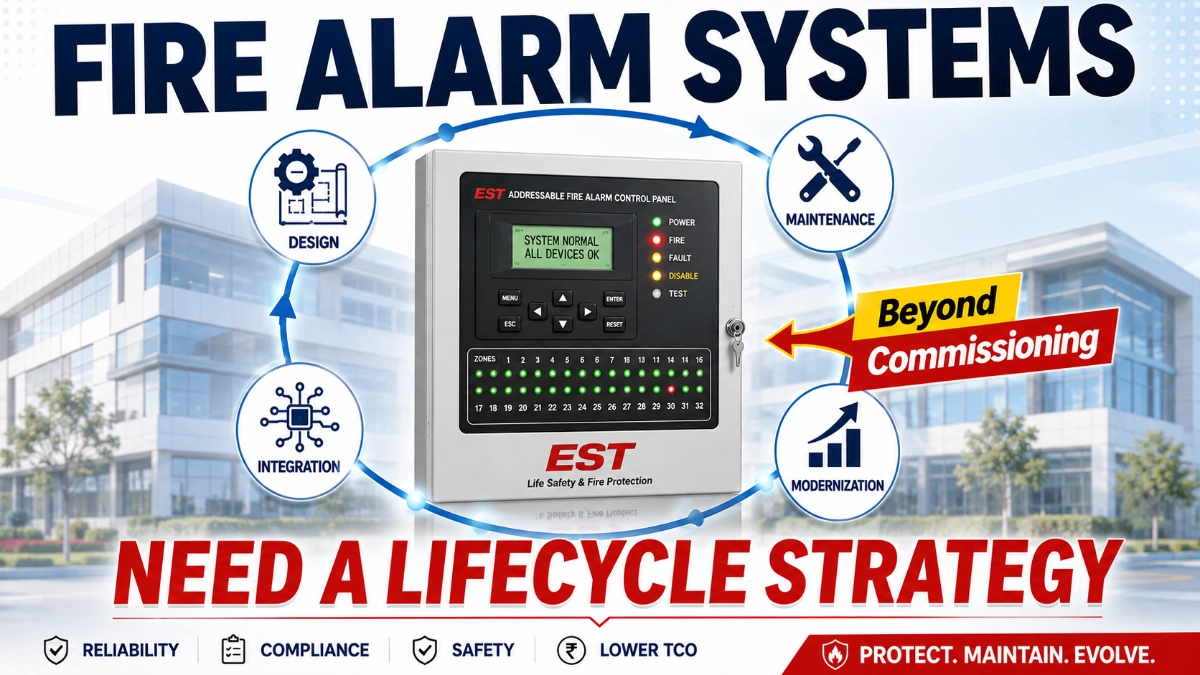
Most fire alarm projects are treated as finished once commissioning is signed off. The panel is programmed, devices are tested, and handover documents are filed away. But a large fire alarm system routinely stays in service for fifteen, twenty, or more years, far longer than the design and installation phase itself. During that time, buildings expand, components reach end-of-life, technicians change employers, and documentation drifts out of sync with reality.
This article looks at fire alarm systems as long-term life-safety assets rather than one-time purchases, walking through the full lifecycle from planning through replacement.
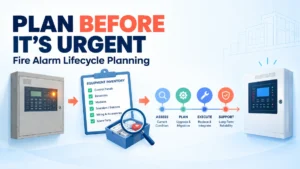
Why does every large fire alarm system need a lifecycle strategy? It helps organisations manage the system from design through operation, maintenance, expansion, modernisation, and replacement. It addresses device availability, documentation accuracy, spare-parts planning, technology obsolescence, and operator training issues routine maintenance alone does not cover.
What Is a Fire Alarm System Lifecycle Strategy?
A lifecycle strategy is a structured approach to managing a fire alarm system across its entire operational life, not just after installation. It is broader than preventive maintenance, which focuses on keeping existing equipment functioning as designed.
Lifecycle management also covers documentation, expansion, integration, modernisation, and eventual replacement or migration. Installation and commissioning confirm the system works on day one. Lifecycle planning asks whether it will still be manageable and supportable ten or fifteen years later, a question that ideally starts during design.
The 7 Stages of a Large Fire Alarm System Lifecycle
1. Planning and Design: Panel selection, loop capacity, topology, and integration points should reflect current risk and code requirements plus reasonable future scalability.
2. Installation: Wiring quality, device labelling, and configuration accuracy set the foundation for every future service visit.
3. Commissioning: Functional and integration testing confirm performance and generate baseline documentation.
4. Operation: Day-to-day reliability depends on trained operators who understand alarm response and fault interpretation.
5. Maintenance: Preventive maintenance, inspection, testing, and timely device replacement keep the system performing as designed.
6. Modernisation and Expansion: Building changes and evolving integration needs require the system to adapt without compromising existing protection.
7. Replacement or Migration: Eventually, components become unsupported. Planned, phased migration replaces reactive, emergency replacement.
Why Large Fire Alarm Systems Are More Difficult to Manage Over Time
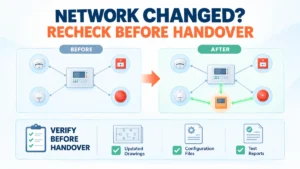
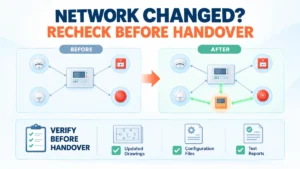
Complexity compounds with scale. A system with multiple networked panels, distributed loops, third-party integrations, and a large cause-and-effect matrix has far more interdependent variables than a single-panel installation. A change in one part a new device, a firmware update, a modified cause-and-effect sequence can affect zones or reporting elsewhere in the network. Without a lifecycle approach, this complexity accumulates quietly until a fault becomes hard to diagnose or a modification hard to validate safely.
Why Documentation Is One of the Most Important Lifecycle Assets
As-built drawings, device schedules, loop and network diagrams, cause-and-effect matrices, programming records, and maintenance history are not paperwork; they are part of the fire alarm asset itself.
If the system changes but the documentation does not, the organisation gradually loses visibility into its own fire alarm infrastructure. Outdated drawings slow troubleshooting and raise the risk of unintended changes during modernisation.
Spare Parts and Device Availability: The Often-Ignored Lifecycle Problem
Large fire alarm systems depend on detectors, modules, notification appliances, power supplies, batteries, and network hardware. Some eventually become discontinued or harder to source, extending downtime during a fault.
Spare-parts strategy does not mean stocking every component. A more practical approach weighs:
Criticality + Failure Probability + Availability + Replacement Lead Time
Components protecting high-risk areas, with higher failure rates or longer lead times, deserve more deliberate planning than low-risk, easily sourced items.
Technology Obsolescence Can Become a Fire Alarm Risk
Every fire alarm platform eventually reaches a point where panels approach end-of-support, devices are discontinued, or software is no longer maintained. Technical documentation can also become harder to obtain as products age.
Obsolescence itself is not the problem; being unprepared for it is. Organisations that monitor the lifecycle status of critical components can plan modernisation on their own schedule rather than being forced into reactive decisions.
Why Expansion Should Be Considered During Initial Fire Alarm Design
Buildings rarely stay the same. Warehouses add storage bays, plants add production lines, campuses add buildings, and facilities add access-controlled areas or new suppression systems that must interface with the fire alarm system.
Future expansion capacity can influence panel selection, loop capacity, and network architecture. This doesn’t mean every project needs significant spare capacity from day one; the margin depends on growth outlook and budget. But ignoring the question at the design stage often makes later expansion more disruptive.
How Maintenance Should Influence Fire Alarm System Design
Maintainability is a design consideration, not an afterthought. Device accessibility, clear labelling, diagnostic capability, and fault-reporting granularity all affect how efficiently a system can be serviced.
A system that is difficult to maintain is difficult to keep reliable. Designing with the maintenance team in mind accessible mounting, logical addressing, clear as-built records pays off every time a technician responds to a fault years after handover.
What Happens When a Fire Alarm Platform Becomes Obsolete?
When a platform reaches the end of its practical support life, facilities generally have several paths: continued supported maintenance, targeted component replacement, partial modernisation, phased migration, or complete replacement. The right path depends on existing condition, manufacturer support, compatibility, expansion needs, risk, and budget.
EST3, EST4 and the Importance of Long-Term Platform Planning
EST3 and EST4 are examples of addressable platforms facilities may encounter when evaluating current systems or planning modernisation. Deciding whether to continue, modernise within the same family, or migrate should weigh current requirements, scale, networking, and integration. Neither platform is automatically right for every project, and compatibility between legacy and newer components should be verified against manufacturer documentation.
How an EST Fire Alarm System Can Be Evaluated as Part of a Lifecycle Strategy
When facilities assess whether an EST Fire Alarm System fits their long-term needs, the evaluation should go beyond current functionality; building scale, device ecosystem, networking, integration needs, and long-term maintainability all matter and belong inside a broader lifecycle strategy rather than an isolated purchasing decision.
Why EST Detectors and Devices Matter to the Lifecycle Strategy
A fire alarm system’s lifecycle depends on more than the control panel. EST Detectors and Devices: field detectors, modules, and notification appliances each have their own replacement cycles, environmental considerations, and availability profiles. Planning device-level lifecycle management, rather than assuming every existing device can be retained through modernisation, gives a more realistic view of future costs.
The Role of an EST Fire Alarm System Distributor in India in Long-Term Planning
Procurement is part of lifecycle planning too. An established EST Fire Alarm System Distributor in India can potentially support product sourcing, technical coordination, and availability planning as a system ages, helping align procurement with the broader lifecycle strategy, though specific services should be confirmed directly.
Practical Lifecycle Framework
| Lifecycle Stage | Key Question | Important Consideration |
|---|---|---|
| Design | Will the architecture meet current requirements? | Scalability and maintainability |
| Installation | Was the system installed correctly? | Documentation and labelling |
| Commissioning | Does the system perform as intended? | Functional and integration testing |
| Operation | Can users operate it effectively? | Training and response |
| Maintenance | Can it be kept reliable? | Inspection, testing and spares |
| Expansion | Can it adapt to building changes? | Capacity and compatibility |
| Modernization | Can ageing components be replaced? | Obsolescence and migration |
| Replacement | What comes next? | Lifecycle and future requirements |
Real-World Examples
- Industrial Plant Expansion: A production facility adds a manufacturing area years after installation. Lifecycle planning helps evaluate whether existing loop capacity and cause-and-effect logic can absorb the added detection without a full overhaul.
- Large Warehouse: A warehouse sees repeated device replacements by different contractors. Without updated documentation and a spare-parts plan, technicians struggle to trace circuits, and outages take longer than necessary.
- Multi-Building Campus: Several buildings share interconnected panels. As one platform nears obsolescence, manufacturer support and phased modernisation become central to protecting the campus without disrupting occupied buildings.
Common Lifecycle Management Mistakes
- Treating commissioning as the end of the project.
- Ignoring documentation updates after modifications.
- Waiting for obsolete components to fail instead of monitoring status.
- Not planning spare parts for critical components.
- Ignoring future building expansion during design.
- Failing to track modifications made by different contractors.
- Treating maintenance as purely reactive, not scheduled.
- Ignoring technician training as staff change.
- Forgetting third-party interfaces when planning upgrades.
- Starting modernisation only after components become unavailable.
Expert Insights
- “The most reliable time to plan modernisation is before the existing system becomes impossible to support.”
- “Documentation is part of the fire alarm asset, not paperwork added after installation.”
- “A system’s lifecycle should be considered when selecting its initial architecture, not years later.”
- “Maintenance strategy should influence design decisions, not follow them.”
- “Obsolescence becomes a project risk only when organisations wait until components fail.”
Key Takeaways
- Treat the fire alarm system as a long-term asset, not a one-time purchase.
- Begin lifecycle planning during design, not after commissioning.
- Keep documentation updated with every change.
- Base spare-parts planning on criticality, failure probability, and lead time.
- Monitor the support status of critical components before they fail.
- Account for realistic future expansion when selecting architecture.
- Let maintainability influence design, including accessibility and labelling.
- Plan modernisation and migration proactively, in phases where possible.
Read Also: Why Fire Alarm System Scalability Is Often Misunderstood by Project Teams
Read Also: Why Fire Alarm System Modernisation Is Not Just About Replacing the Panel