A facility changes its production layout, and a smoke detector ends up in the wrong place. The job looks simple: move one device a few meters. But the engineer reviewing the request soon has more questions. Does the new location suit the environment? Does the device’s identification still match the drawings? Is it referenced in any cause-and-effect relationship? Can maintenance teams still reach it? And does the previously completed testing still describe the installed system?
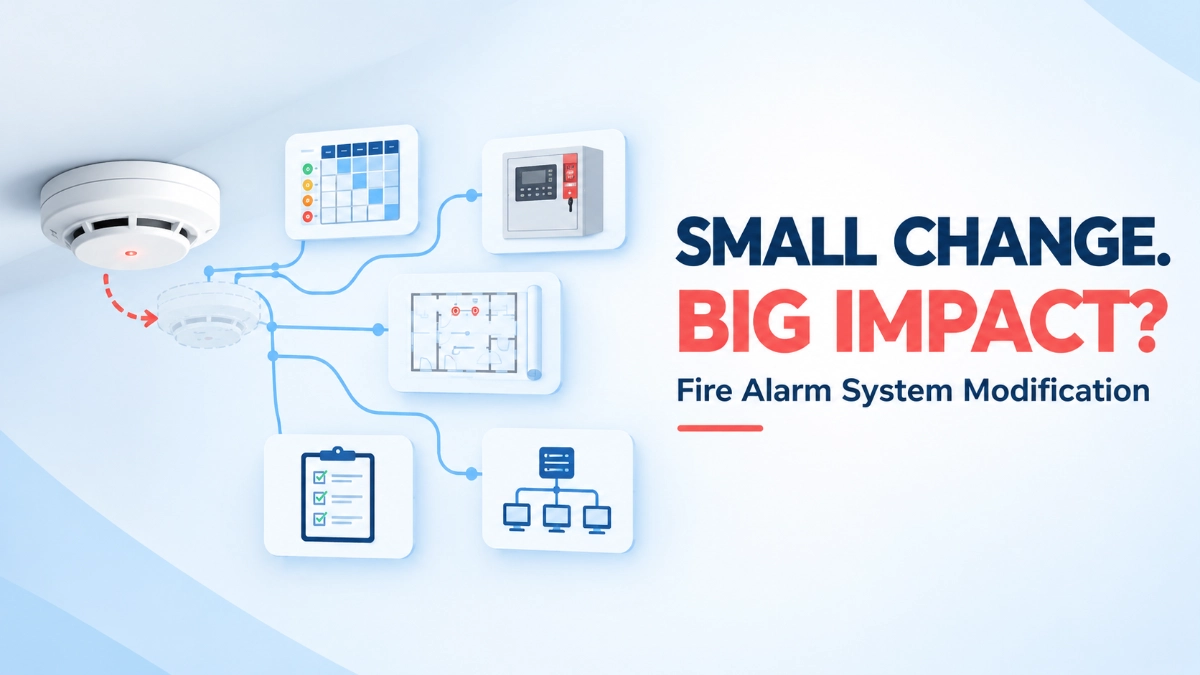
This scenario is hypothetical, but it shows a pattern familiar to anyone who has handled a fire alarm system modification. The physical work may be small. The verification and documentation work depends on what the change affects.
A small fire alarm modification can create a bigger engineering problem because the physical change may affect related device functions, system configuration, cause-and-effect sequences, interfaces with other systems, testing scope, and documentation. The actual impact depends on the installed architecture and the approved design. Engineers should therefore assess the full change, including its functional dependencies and records, rather than judge it by the amount of physical work involved.
Why the Size of a Modification Can Be Misleading
Physical scope describes the work on site: a device moved, added, or re-terminated. Functional impact describes what that work touches in the system: detection coverage, alarm reporting, output actions, interfaces, test status, and records.
Common modifications that deserve a second look include:
- Relocating a detector
- Adding a field device
- Changing a device address or configuration
- Modifying a zone or circuit arrangement
- Updating a cause-and-effect relationship
- Changing an interface with another system
None of these automatically causes a wider problem. A like-for-like replacement in an unchanged environment, with no logic dependencies, may have a very limited impact. The risk appears when nobody checks. A change that is assumed to be isolated but is never assessed is the one most likely to leave an unnoticed gap between the approved design and the installed system.
Five Areas a Small Modification Can Affect
The table below lists areas to investigate. These are potential impacts, not guaranteed consequences.
| Modification area | Possible wider impact | What engineers should verify |
|---|---|---|
| Device location | Detection coverage, environmental suitability, or accessibility | Approved design, actual site conditions, and relevant requirements |
| Device identity or configuration | Device descriptions, event interpretation, or system records | Current configuration and approved device information |
| Cause-and-effect logic | Related alarm responses or interface functions | Approved cause-and-effect documentation and affected sequences |
| System interfaces | Functions involving access control, PA/VA, BMS, or monitoring | Required interface behaviour and responsibility for verification |
| Documentation | Mismatch between installed conditions and records | Drawings, configuration records, change history, and handover documents |
How a Small Change Can Affect the Wider System
Consider the relocated detector from the introduction. Here is how a disciplined review might unfold.
1. Identify the change: The detector moves from one side of a production area to the other because new equipment now occupies its original position. The request records the reason and the proposed new location.
2. Check the approved design: The engineer compares the proposal with the approved drawings, the device schedule, and any design basis that governs detector placement. The new location may suit the revised layout, or it may expose the device to conditions the original design did not consider, such as airflow, heat sources, or obstructed access.
3. Review the system record: The engineer checks how the detector is identified in the panel configuration and whether its address, description, and zone assignment need to change. A description that still names the old location can mislead operators during an event.
4. Check affected functions: The engineer reviews whether the detector participates in any cause-and-effect action, such as an output to another system. If it does, the new location may change which area the action should serve.
5. Verify the revised installation: Testing covers the relocated device and any function the assessment identified as affected.
6. Update records: Drawings, device schedules, configuration records, and test results are revised to match the installed and verified condition.
At no point in this example did the work become large. The assessment did. In many cases, the review will conclude that very little else is affected, and that conclusion has value only because someone actually checked.
Cause-and-Effect: The Dependency Engineers Must Not Overlook
Cause-and-effect documentation defines what the system should do when a given input occurs. A modification can touch it directly, for example by adding an input or changing a zone, or indirectly, for example by relocating a device that an existing sequence relies on.
When assessing a change, engineers should look at:
- Relevant inputs and outputs: Which devices trigger actions, and which outputs does the modified device influence?
- Required alarm responses: What actions does the approved design expect for the affected area?
- Interactions with other systems: Where the design includes interfaces to access control, PA/VA, BMS, or monitoring, who owns verification of each side?
- Existing approved sequences: Does the change alter the conditions under which an approved sequence operates?
- Dependent functions: What else relies on the affected device, zone, or output?
After implementation, the affected functions need verification against the approved documentation. This article does not prescribe a universal response sequence. The approved design, applicable requirements, manufacturer guidance, and project-specific cause-and-effect documentation determine the correct behaviour for each installation.
EST3, EST4, and Configuration-Aware Modifications
On sites using Edwards (EST) platforms, such as EST3 and EST4 installations, the starting point for any modification is the actual installed configuration, not an assumption about how the system was set up.
Before implementing a change, engineers should establish:
- The documented system architecture and how the installed system matches it.
- The devices and functions the change would affect.
- The current configuration records and who holds them.
- The manufacturer procedures that apply to the intended modification.
Platform-specific details, including configuration procedures, capacities, networking functions, and software tools, should come from manufacturer documentation and the project’s own records. Engineers should not assume that a procedure valid on one installation applies unchanged to another, or that platforms are interchangeable. Where the installed configuration is unclear, resolving that uncertainty comes before the modification.
Why Device-Level Changes Need System-Level Context
Adding, removing, relocating, or reconfiguring a field device involves more than checking that the device is mounted and wired correctly. A device is one element of an EST Fire Alarm System, and its role depends on how that system was designed and configured. Reviewing a change at system level means asking what the device does within the whole installation, not only whether it works on its own.
Relevant considerations include:
- Location and suitability: Does the position and environment suit the device type and the approved design?
- Identification and descriptions: Do the address, label, and panel text still describe reality?
- Assignments: Where applicable, do panel, loop, circuit, or zone assignments remain correct?
- Drawings and schedules: Do the approved drawings and device schedules reflect the change?
- Accessibility: Can the device still be inspected, tested, and maintained?
- Affected functions and interfaces: Does any sequence or connected system depend on it?
Product information matters here too. For EST Detectors and Devices, the manufacturer’s installation and configuration documentation should guide the work, and any device changes should appear in the device records that maintenance teams will rely on later.
Retesting After a Modification: What Is Enough?
The right retesting scope follows from an impact assessment, not from habit or convenience. Four levels are worth distinguishing:
- Checking the modified device or component: confirming it operates correctly and communicates as expected.
- Verifying affected functions and dependencies: confirming that the logic, outputs, and indications linked to the device behave as the approved design requires.
- Integrated testing: where interfaces or cause-and-effect relationships are affected, testing the interacting systems together.
- Broader testing: completing any additional testing the approved design, manufacturer instructions, applicable requirements, or project acceptance process requires.
The central point is that neither skipping relevant tests nor automatically retesting everything is a sound substitute for an impact-based assessment. Skipping tests risks leaving an affected function unverified. Retesting everything without justification consumes time, disrupts operations, and can obscure the findings that matter. Engineers cannot reduce mandatory testing requirements through their own assessment. The assessment determines what the change affects, and the applicable requirements determine the minimum that must be done.
Documentation Is Part of the Modification, Not an Afterthought
A modification is not complete when the device works. It is complete when the records describe the installed and verified condition. Incomplete documentation causes trouble later: a technician troubleshooting a fault finds a device that does not match the drawing, an auditor cannot trace a change, or a future expansion builds on information that is out of date.
Records to update, where applicable:
- As-built drawings
- Device schedules and descriptions
- Configuration and change records
- Cause-and-effect documentation
- Test results and any outstanding issues
- Approval and handover records
Small undocumented changes are especially damaging because each one looks harmless. Over time, they accumulate into an installation that no longer matches its paperwork, and every later task becomes slower and less certain.
A Practical Seven-Step Modification Review Framework
- Define: Record what is changing and why.
- Review: Check the approved design, existing configuration, and relevant documentation.
- Assess: Identify affected devices, functions, interfaces, and dependencies.
- Approve: Obtain the required technical and project authorisation before implementation.
- Implement: Make the change using the applicable approved procedures.
- Verify: Complete the testing required by the assessed impact and applicable requirements.
- Document: Update records and close out the change with clear evidence of verification.
Urgent or temporary changes still need discipline. They must follow the facility’s applicable safety, authorisation, impairment-management, and restoration procedures, and the system should be returned to a documented, verified state afterwards.
Common Mistakes That Turn Small Changes Into Bigger Problems
- Treating the change as purely physical work.
- Making changes before reviewing the approved configuration.
- Ignoring related cause-and-effect functions.
- Assuming a normal panel status proves the modification is fully verified.
- Using outdated drawings or device schedules.
- Testing only the changed component when wider functions are affected.
- Failing to document the final installed condition.
- Recommending replacement before determining the actual engineering issue.
Key Takeaways
- Judge a modification by the functions, dependencies, and records it affects, not by the amount of physical work.
- Most small changes have limited impact, but that conclusion should come from an assessment, not an assumption.
- Review the approved design and the installed configuration before any change.
- Check cause-and-effect relationships and interfaces whenever a modified device or zone may participate in them.
- Set the retesting scope by impact, within the limits of applicable requirements.
- Treat documentation as part of the modification and close out every change with accurate records.
When a modification raises product or configuration questions, technical support from a knowledgeable EST Fire Alarm System Distributor in India can help teams obtain the right manufacturer information and coordinate with project stakeholders. That support complements, rather than replaces, the engineering assessment, and a modification does not by itself justify new equipment.
Read Also: What Engineers Miss When Reviewing Fire Alarm Systems One Panel at a Time
Read Also: What Happens When Fire Alarm and ELV Systems Are Designed in Isolation?