An experienced fire alarm engineer leaves a facility. The system keeps running: panels healthy, routine tests uneventful. Months later, a recurring fault appears on one device group, and the building owner proposes a modification in the same area. The new team has drawings and manuals. Nobody can say why a particular interface was configured that way, what earlier projects changed, or how the last similar fault was resolved.
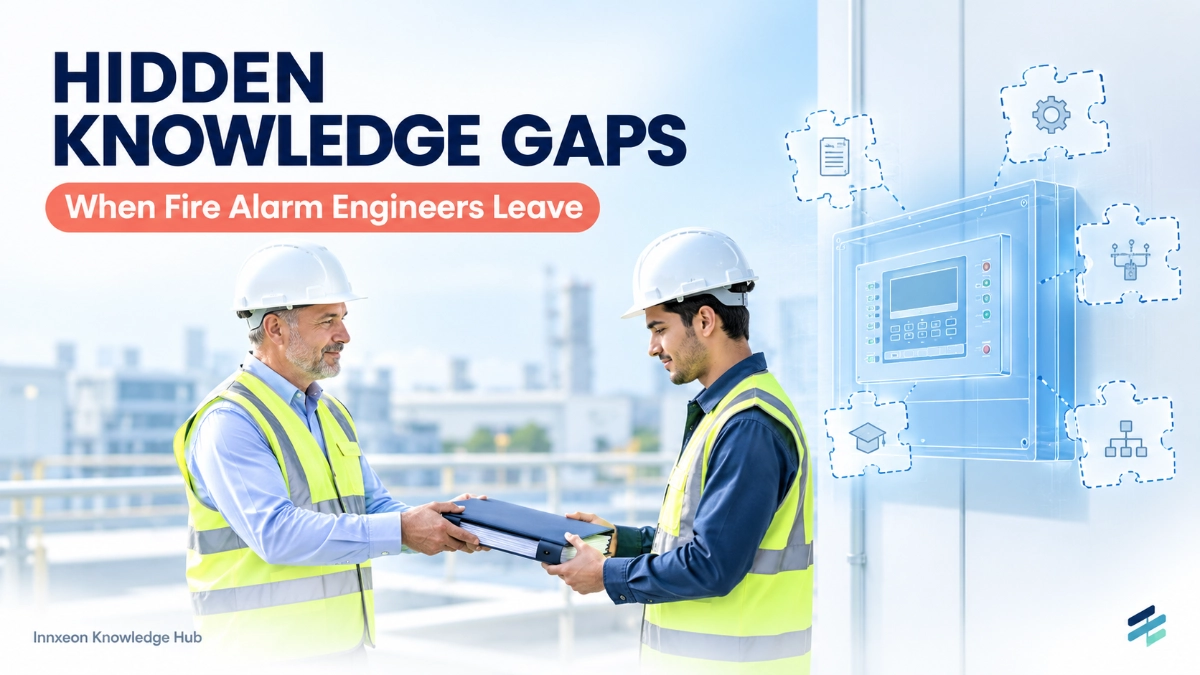
The system still works, but the organisation has lost part of the knowledge needed to manage it correctly. This is the core of fire alarm system knowledge gaps: the hardware persists while understanding of it erodes.
Personnel changes can remove undocumented operational and engineering knowledge about a fire alarm system, including configuration reasoning, modifications, cause-and-effect logic, historical faults, interfaces, device locations, and maintenance practices. The system may keep operating normally, but troubleshooting, maintenance, expansion, and emergency response become slower and less certain when that context is missing. The risk is highest when knowledge sits with one or two people and documentation is outdated or incomplete.
What Is a Fire Alarm System Knowledge Gap?
A fire alarm system knowledge gap is the difference between what an organisation needs to know to operate, maintain, troubleshoot, and modify its system safely, and what it can currently demonstrate it knows.
Three layers are worth separating:
- Documentation: drawings, manuals, and records exist somewhere.
- System knowledge: someone understands how those documents relate to the installed architecture and configuration.
- Current operational knowledge: someone knows the present state, including recent changes, open issues, and site-specific behaviour.
Documentation rarely captures reasoning. A cause-and-effect matrix shows what happens, not why a delay, interlock, or zoning decision was chosen after a past event or client requirement.
Why Personnel Changes Can Expose Hidden Knowledge Gaps
Turnover is a risk factor, not a cause of failure. Many well-run sites lose staff without consequence. It becomes significant when knowledge is undocumented, fragmented, outdated, or concentrated.
Common transition points include:
- Experienced engineers leaving or retiring.
- Internal transfers to other roles or sites.
- New facility managers or FM teams.
- Maintenance contractor changes or a move to outsourced service.
- EPC handover to operations.
- Multiple contractors each looking after part of the system.
Nothing fails on the day someone leaves. The gap surfaces months later, when an unusual event demands knowledge that is no longer available.
The Knowledge That Often Leaves With Experienced Personnel
| Knowledge Area | What Can Be Lost | Potential Engineering Impact |
|---|---|---|
| System architecture | Understanding of how panels and subsystems relate in practice | Wrong assumptions during fault-finding or upgrades |
| Configuration history | Why settings were chosen and when they changed | Changes that undo earlier fixes |
| Cause-and-effect decisions | Rationale behind outputs, delays, and interlocks | Unintended behaviour after edits |
| Device replacement history | Which devices were swapped and why | Repeat replacements without addressing the cause |
| Recurring fault history | Patterns tied to areas, seasons, or activities | Faults treated as new each time |
| Interface behavior | How links to other ELV systems actually behave | Integration surprises |
| Network relationships | Real inter-panel dependencies | Uncertain impact of isolating or modifying nodes |
| Isolation practices | Safe, site-accepted isolation methods | Inconsistent or unsafe isolation |
| Previous modifications | Undrawn changes | Drawings that no longer match the site |
| Expansion assumptions | Spare capacity and provisions intended | Design based on wrong assumptions |
| Site constraints | Access, environment, and operational limits | Impractical maintenance plans |
Why Drawings and Manuals May Not Be Enough
Documentation remains essential. The problem is that it captures a snapshot, while systems keep changing. Older installations, including those based on EST3, can accumulate several rounds of modification over their lifecycle, and each round is a chance for records to drift from reality.
Typical situations include:
- As-built drawings that predate later changes.
- Configuration files not archived, or archived without version context.
- Incomplete modification records.
- Missing original commissioning records.
- Device labels that no longer match documentation.
- Engineering decisions never written down.
Documentation tells a new engineer what exists. Institutional knowledge explains why, and where the paperwork can’t be trusted. The two should complement each other.
When One Engineer Becomes the “System Memory”
Knowledge concentration builds naturally. One person handles most site visits and becomes the reference for questions like:
- Why a specific configuration exists
- Which devices have historical issues
- How a complex interface behaves
- What changed during previous projects
- Which areas need extra maintenance attention
This is an organisational resilience issue, not a criticism of the individual. When that person is unavailable, the organisation must rediscover this knowledge, often during a fault, an audit, or a project deadline.
How Knowledge Gaps Affect Fire Alarm Troubleshooting
Fire alarm troubleshooting follows a sequence:
Observed Fault → Available History → Investigation → Diagnosis → Corrective Action → Verification
The second step is where gaps bite. With good history, an engineer can quickly tell whether a fault is new, recurring, or linked to an earlier modification. Without it, time goes into establishing that context, and the investigation may cover ground previous engineers already eliminated.
Missing history does not mean a fault cannot be resolved. It means the possibilities (environmental, configuration-related, device-related, or modification-related) must be worked through more slowly. No specific symptom should be assumed to have one specific cause.
Personnel Changes and EST3 / EST4 System Knowledge
Personnel transitions are a sound trigger for a structured review of the existing architecture and configuration, whichever platform is installed. On sites with EST4, as with EST3, the review should establish what is actually installed and configured rather than what the original design intended.
Platform specifics, such as capacities, networking behaviour, and compatibility, should be verified against manufacturer documentation and the approved project design. They should not be assumed from general familiarity. For mixed or evolving installations, the review should also record which parts of the system have been changed over time and by whom.
What Knowledge Should Be Preserved Before Personnel Changes?
- Current system architecture and panel inventory
- Device inventory
- Configuration records and programming backups, where applicable
- Cause-and-effect documentation
- Network and interface documentation
- As-built drawings
- Commissioning and testing records
- Modification and maintenance history
- Recurring fault records
- Known limitations
- Spare-device strategy
- Contractor and service contacts
- Responsibilities and escalation paths
How to Build a Fire Alarm Knowledge Handover Process
A handover should validate reality, not just transfer folders. A practical framework:
- Identify critical system knowledge.
- Collect current documentation.
- Validate documentation against the installed system.
- Record historical modifications.
- Capture unresolved issues.
- Document system interfaces.
- Review configuration and cause-and-effect information.
- Conduct a structured technical walkthrough on site.
- Transfer responsibility formally, in writing.
- Schedule a post-handover verification.
Step 3 matters most. On a project involving an EST Fire Alarm System, for example, comparing records with the live installation often reveals discrepancies that no document review would find.
How EST Detectors and Devices Fit Into Knowledge Continuity
Device-level information should stay traceable through maintenance and personnel changes. For each device, records should ideally show:
- Identification and location
- Type
- Maintenance and replacement history
- Accessibility constraints
- Known environmental conditions
When EST Detectors and Devices are replaced or relocated, updating these records at the time prevents later confusion. Model-specific details should always come from manufacturer documentation, not from memory.
Why Knowledge Gaps Become More Dangerous During System Expansion
Expansion, renovation, migration, and integration projects expose missing history quickly. A new engineer may understand the proposed modification perfectly but not the legacy decisions that shaped the existing system.
Before implementing changes, review the existing architecture, prior modifications, spare provisions, and interface behaviour. The question is not only “what are we adding?” but also “what earlier decisions does this change depend on?”
A Practical Fire Alarm Knowledge Audit
| Area | Question to Ask | Evidence to Review |
|---|---|---|
| Architecture | Does the documented topology match the installation? | Architecture drawings, site verification |
| Configuration | Is the current configuration archived and versioned? | Backups, change logs |
| Devices | Can every device be located and identified? | Device schedule, labels |
| Cause-and-effect | Is the logic documented with its rationale? | Approved matrix, commissioning records |
| Interfaces | Are links to other ELV systems described and tested? | Interface documentation, test records |
| Maintenance | Is service history complete and accessible? | Maintenance records |
| Fault history | Are recurring issues recorded? | Fault logs, service reports |
| Modifications | Is every change recorded with its reason? | Modification register |
| Documentation | When was it last validated against the site? | Validation records |
| Future expansion | What spare capacity or provisions were assumed? | Design basis, project files |
Common Mistakes Organisations Make
- Assuming drawings are always current.
- Relying on one engineer’s memory.
- Not documenting configuration changes or the reasons for them.
- Losing old commissioning records.
- Treating contractor handover as sufficient knowledge transfer.
- Ignoring historical recurring faults.
- Updating hardware records but not system documentation.
- Starting a modification without reviewing previous changes.
When existing-system review, technical documentation, or product availability becomes part of the picture, working with an experienced EST Fire Alarm System Distributor in India can support engineering coordination and continuity, provided the review starts from verified site information.
Key Takeaways
- A fire alarm system depends on knowledge as well as hardware.
- Turnover is a risk factor, not an automatic cause of failure.
- Documentation, system knowledge, and current operational knowledge are different things.
- Reasoning behind configuration decisions is the most easily lost knowledge.
- Historical context makes troubleshooting faster and more focused.
- Handover should validate the installed system, not just transfer files.
- Review existing architecture before any expansion or modification.
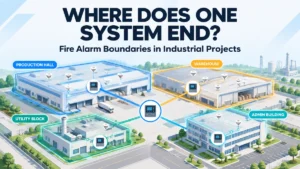
Read Also: Why Fire Alarm System Boundaries Matter in Large Industrial Projects
Read Also: Why Detector Selection and Detector Accessibility Should Be Evaluated Together