Fire safety and surveillance planning have changed dramatically. The old approach installs detectors on a grid, hangs a few cameras, and ticks the compliance box; it no longer protects modern buildings. Smart automation, complex occupancy patterns, and tighter regulatory expectations demand a smarter strategy.
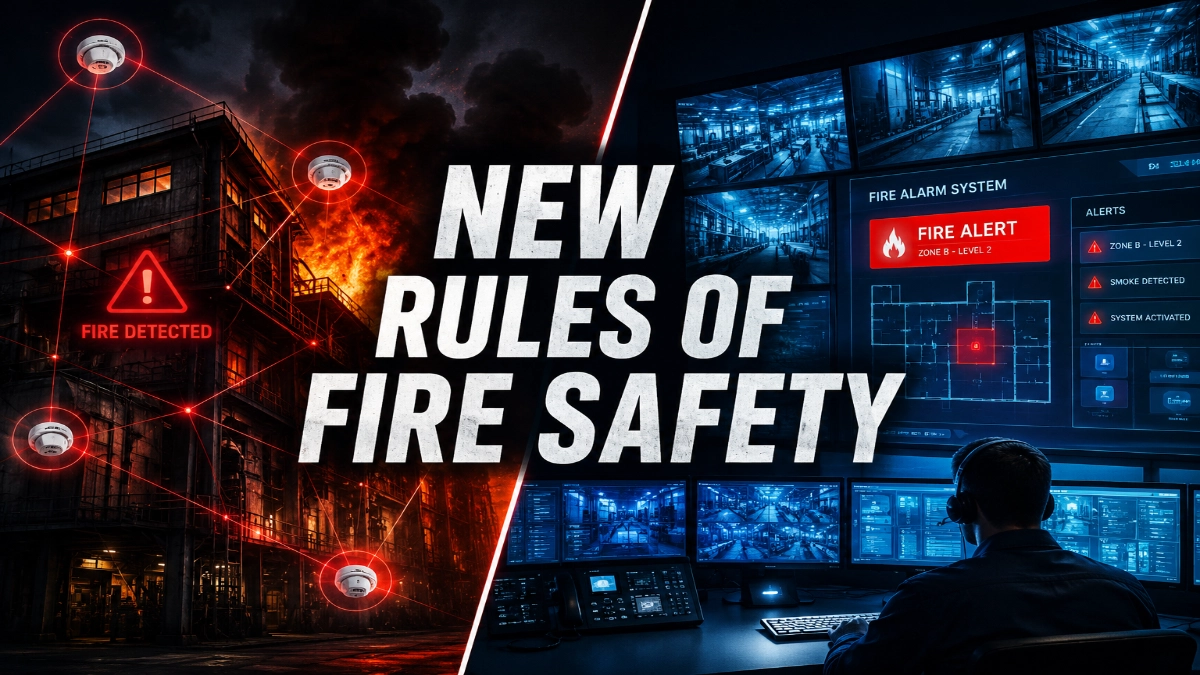
Today, fire detection and surveillance must work as a unified system. When these two disciplines are planned together, organisations detect threats faster, reduce false alarms, accelerate emergency response, and build a documented audit trail that satisfies regulators and insurers alike.
This article sets out the new rules, practical, evidence-based principles that facility managers, safety consultants, and system integrators should apply right now.
Why Traditional Fire Detection Planning Is No Longer Enough
Legacy fire detection systems were designed for simpler buildings. A conventional fire alarm panel divides a building into broad zones. When a detector triggers, the panel identifies a zone but not the exact device. That limitation costs critical minutes during an emergency.
Modern facilities, such as data centres, warehouses, mixed-use developments, and industrial plants, have variable occupancy, high-value assets, and complex air movement that defeat simple threshold-based detectors. A conventional detector programmed for smoke density thresholds developed decades ago will either miss a slow-developing fire or cry wolf during normal operations.
Industry experts recommend moving beyond compliance-minimum design. A risk-based approach maps actual fire hazards, occupancy types, and asset criticality to detector selection and placement, and it must account for how surveillance feeds will be used when an alarm activates.
According to modern fire safety planning principles, the cost of a missed detection or a false alarm evacuation far exceeds the cost of specifying the right system from the start.
The New Rules of Modern Fire Detection Design
Applying these principles from the design stage produces systems that protect lives, assets, and operations.
1. Prioritise Early Detection
Multi-criteria detectors that measure smoke, heat, and carbon monoxide simultaneously identify a genuine fire signature earlier and more reliably than single-sensor devices. Addressable detectors provide device-level identification the moment an alarm activates, sending responders directly to the source rather than searching a zone.
2. Apply Risk-Based Zone Planning
Map the building into risk tiers: high-value server rooms and chemical storage at Tier 1; general office and corridors at Tier 3. Apply higher detector densities, faster alarm verification, and tighter surveillance coverage to higher-risk zones. An addressable fire alarm panel makes this practical: every device reports individually, so thresholds and delays can be tuned zone by zone.
3. Optimise Device Placement
Detector placement must follow ceiling geometry, air supply points, and obstacle layouts, not just a spacing grid. In high-bay warehouses, beam detectors cover wide open spaces. In dusty environments, heat detectors avoid contamination-driven false alarms. A best-practice approach is to model airflow and smoke movement digitally before installation, reducing costly rework.
4. Build for Remote Monitoring and Scalability
Networked monitoring allows a security operations centre to receive real-time panel status from multiple sites. When designing the system, organisations should consider future expansion, adding floors, additional buildings, or integrating new sensor types, so the panel and network backbone can scale without a full replacement.
How Surveillance Systems Strengthen Fire Safety Operations
Cameras do not detect fire, but they transform how quickly and confidently teams respond to a detector activation.
- Visual verification: When an alarm activates, operators immediately view the triggered zone. They confirm a real fire within seconds, preventing the hesitation that delays evacuation calls.
- Reduced false alarms: Visual confirmation before automatic suppression activation prevents unnecessary discharge of gaseous suppression systems, which can be expensive and disruptive to reset.
- Faster emergency response: Sharing a live camera feed with the attending fire service gives commanders a situational picture before they enter the building.
- Remote monitoring: Multi-site operators can visually check an unmanned facility the moment an alarm activates, calling the fire service only when verified.
- Incident documentation: Timestamped footage supports insurance claims, regulatory investigations, and post-incident reviews.
Key Technologies Shaping Modern Fire Detection and Surveillance
| Technology | Practical Value |
| Intelligent Fire Alarm Systems | Multi-criteria detection and alarm cause-and-effect logic reduce false alarms and speed evacuation decisions. |
| Addressable Fire Alarm Panel | Every device reports individually. Maintenance staff reach the exact detector without searching a zone. |
| Networked Monitoring | Centralised dashboards surface real-time status across all sites, enabling rapid multi-site response co-ordination. |
| Video Analytics | Rule-based algorithms detect smoke or flame in camera feeds, providing a second independent confirmation channel. |
| AI-Assisted Detection | Machine learning models distinguish genuine alarm signatures from dust, steam, or cooking smoke, cutting unwanted activations. |
| Cloud-Based Management | Remote configuration, firmware updates, and compliance reporting without on-site engineer visits. |
| Integrated Command & Control | A single platform unifies fire alarm events with camera feeds, access control, and emergency communication. |
Common Planning Mistakes That Increase Risk
Organisations should avoid these recurring errors:
• Poor detector placement: Mounting detectors near air conditioning vents or in structural dead zones creates blind spots. Always model airflow before finalising positions.
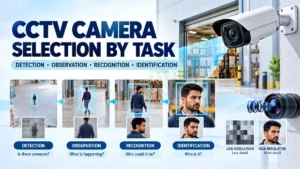
• Inadequate surveillance coverage: Cameras aimed at entrances but not at high-risk plant rooms leave fire events unverified. Map camera coverage against fire risk zones, not just security zones.
• Lack of system integration: Standalone fire alarm and CCTV systems that do not exchange data force operators to manually correlate events, delaying response by minutes.
• Ignoring future scalability: A conventional fire alarm panel with no expansion capacity forces costly full replacement when the building adds a floor or annex. Specify headroom from day one.
• Failure to maintain systems: Detectors accumulate dust; cameras drift out of alignment. Industry experts recommend quarterly functional tests and an annual full-system inspection.
• Compliance-only planning: Designing to the minimum code standard protects against prosecution, not fire. Operational requirements for business continuity, asset protection, and evacuation time demand a higher specification.
Fire Detection and Surveillance Planning Checklist
Before implementation, confirm each item:
- Conduct a site-specific fire risk assessment covering all occupancy types and asset values.
- Define risk tiers and map them to detector type and coverage density.
- Select addressable detectors for buildings above basic size or complexity thresholds.
- Confirm the addressable fire alarm panel has sufficient loop capacity for planned expansion.
- Design surveillance coverage to align with fire risk zones, not solely security requirements.
- Specify integrated alarm management so fire events automatically trigger camera presets.
- Establish a remote monitoring protocol: who receives alerts, what actions are authorised.
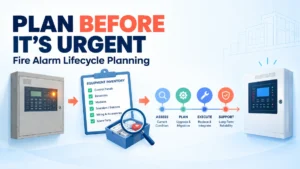
- Create a maintenance schedule: quarterly tests, annual inspection, and firmware review.
- Document all design decisions for regulatory audit and insurance purposes.
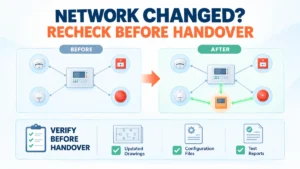
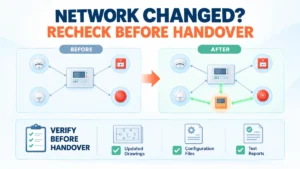
- Test the complete integrated system, fire alarm, surveillance, and emergency communication before handover.
Future Trends in Building Safety and Monitoring
The next wave of fire and surveillance technology moves from reactive to predictive:
- Predictive Safety Systems: Thermal cameras and environmental sensors identify heat build-up before combustion begins, flagging risk before a detector activates.
- AI-Powered Monitoring: Computer vision analyses video feeds continuously, detecting smoke wisps or abnormal thermal patterns at speeds and scales impossible for human operators.
- Smart Facility Management: Fire safety data feeds into building management systems, allowing automatic HVAC shutdown, door release, and lift recall on alarm activation.
- Centralised Command Centres: Multi-site organisations consolidate fire, security, and environmental monitoring into a single operations centre with unified dashboards.
- Integrated Safety Ecosystems: Open-protocol platforms allow GST fire alarm systems, third-party cameras, and building automation to share data, eliminating the siloed systems that create dangerous response gaps.
Conclusion
The new rules of fire detection and surveillance planning demand integration, intelligence, and foresight. Organisations that plan fire alarm and camera systems together using addressable technology, risk-based zone design, and networked monitoring detect threats earlier, respond faster, and build the documentation trail that protects them legally and operationally.
The technology now exists to make this achievable at every budget tier. The remaining barrier is planning discipline: engaging qualified designers early, aligning fire detection and surveillance coverage maps, specifying for future scalability, and maintaining systems rigorously throughout their life.
Proactive planning is not a cost. It is the most efficient investment a facility owner can make in the safety of people and the continuity of operations.
Read Also: Fire Alarm System Scalability: Planning for Tomorrow’s Expansion
Read Also: The Growing Demand for Intelligent Fire Detection and Surveillance in India