Industrial environments have changed dramatically over the past decade. Facilities are larger, operations run 24/7, regulatory expectations are stricter, and the cost of a fire incident in lives, assets, and downtime is higher than ever.
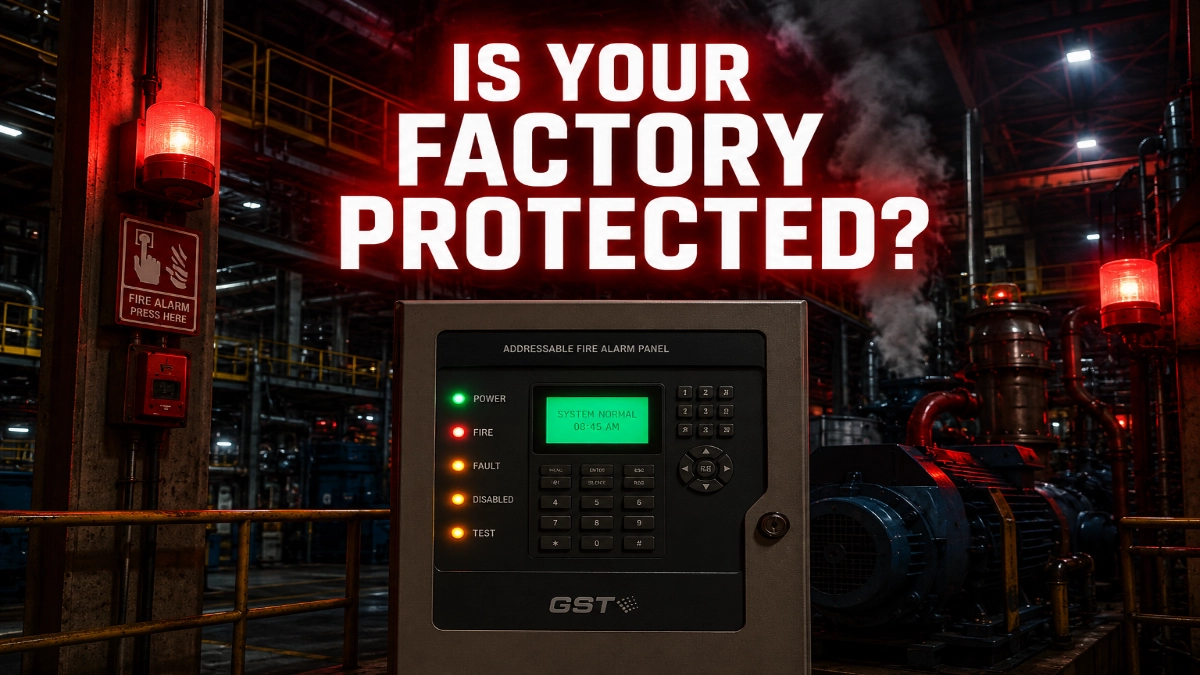
Traditional fire alarm systems, designed for simpler layouts and lower risk profiles, can no longer keep up. As a result, facility managers and safety engineers across sectors are making structured investments in modern fire alarm infrastructure.
Quick Answer: Industrial facilities are upgrading their fire alarm infrastructure to address ageing equipment, stricter compliance requirements, larger facility footprints, integration needs with modern building systems, and the demand for real-time remote monitoring. Modern systems offer faster response, fewer false alarms, and lower long-term costs.
Key Takeaways
- Ageing fire alarm systems increase the risk of undetected fires and compliance failures.
- Modern industrial facilities require addressable, networked, and scalable alarm solutions.
- Real-time remote monitoring reduces response times and improves operational continuity.
- Intelligent detection technology dramatically lowers false alarm rates.
- Upgrades deliver measurable ROI through reduced downtime, lower maintenance costs, and better compliance.
- Industries leading the upgrade trend include manufacturing, pharma, data centres, and logistics.
Why Fire Alarm Infrastructure Matters More Than Ever
Fire risk in industrial settings is not static. As facilities expand, processes become more complex, and hazardous material volumes increase, the potential severity of a fire incident grows proportionally.
Regulatory bodies such as NFPA (National Fire Protection Association) and ISO continue to update standards. NFPA 72, the National Fire Alarm and Signalling Code, sets baseline requirements for detection, signalling, and notification systems in industrial environments. Non-compliance can result in penalties, operational shutdowns, or increased insurance premiums.
Beyond compliance, business continuity is a core concern. A fire that halts operations for even 48 hours can cause significant revenue loss, supply chain disruptions, and reputational damage, especially for manufacturers, data centres, and pharmaceutical producers.
Key Reasons Industrial Facilities Are Upgrading Their Fire Alarm Systems
1. Ageing Fire Alarm Equipment
Many industrial facilities still rely on fire alarm panels and detectors installed 15 to 25 years ago. Older systems lack spare parts, have outdated firmware, and cannot integrate with modern building management platforms. Conventional fire alarm panels from this era offer only zone-level detection, meaning that when an alarm triggers, facility teams must manually search an entire zone to locate the source.
Modern systems, such as addressable fire alarm panels, pinpoint the exact device that triggered the alarm, enabling faster and more targeted emergency response.
2. Expansion of Industrial Sites
As facilities grow, adding new production lines, warehouses, or annexes, legacy systems struggle to scale. Adding new zones to a conventional fire alarm panel often requires significant rewiring and hardware replacement. Addressable systems, by contrast, allow new detectors and call points to be added to existing loops with minimal disruption.
3. Faster Emergency Response Requirements
Emergency response time directly affects life safety and asset protection. Modern industrial fire alarm systems provide instant, precise location data to on-site teams and connected fire stations. This precision eliminates investigation delays that can cost critical seconds during a real incident.
4. Integration with Modern Building Systems
Industrial facilities today operate complex ecosystems, including HVAC, access control, CCTV, and process control systems, all of which need to interact with fire safety infrastructure. A GST fire alarm system, for example, supports open-protocol integration, allowing alarm triggers to automatically activate suppression systems, lock fire doors, and alert emergency services simultaneously.
5. Compliance and Audit Readiness
Annual fire safety audits require documented evidence of system functionality, maintenance records, and regulatory compliance. Modern systems generate automated logs, event histories, and diagnostic reports that simplify audit preparation and reduce the risk of non-compliance findings.
6. Remote Monitoring and Diagnostics
Remote monitoring allows safety teams to receive real-time alerts, fault notifications, and system health reports via connected software platforms, even from off-site locations. This is critical for facilities that operate multiple shifts or manage several sites from a central team.
7. Reduction of False Alarms
False alarms disrupt production, erode trust in the alarm system, and waste emergency response resources. Advanced addressable detectors use multi-criteria sensing combining heat, smoke, and CO detection to validate alarms before triggering evacuation. This significantly reduces nuisance trips in dusty, humid, or high-particulate industrial environments.
8. Protection of Critical Assets and Operations
In a data centre, pharmaceutical cleanroom, or automotive assembly plant, a fire does not just threaten lives; it can destroy irreplaceable equipment, contaminate inventory, or compromise months of production. Early-warning detection and precise alarm location minimise response time and damage scope.
What Modern Fire Alarm Infrastructure Includes
The table below compares conventional and modern addressable fire alarm infrastructure:
| Feature | Conventional System | Modern Addressable System |
| Detection Granularity | Zone-level only | Device-level (exact location) |
| Scalability | Limited, requires rewiring | Easy loop expansion |
| False Alarm Management | Basic threshold triggers | Multi-criteria intelligent sensing |
| Remote Monitoring | Not available | Real-time cloud/network monitoring |
| System Integration | Standalone | HVAC, CCTV, suppression, BMS |
| Audit Reporting | Manual logs | Automated event history and diagnostics |
| Maintenance Alerts | Manual inspection required | Automated fault and battery alerts |
Modern infrastructure typically includes:
- Networked fire alarm panels with loop-based addressable architecture.
- Intelligent addressable detectors using optical, heat, or multi-sensor technology.
- Smart notification systems with voice evacuation and visual strobes.
- Real-time monitoring dashboards are accessible via a local network or the cloud.
- Scalable system design that supports facility growth without full replacement.
Business Benefits of Upgrading Fire Alarm Infrastructure
The business case for upgrading is clear and measurable:
- Improved Life Safety: Faster, more accurate detection reduces evacuation time and injury risk.
- Reduced Downtime: Precise alarm location allows targeted response rather than full facility shutdowns.
- Better Compliance Management: Automated logs simplify regulatory audits and reduce penalty risk.
- Faster Incident Response: Direct integration with fire stations and suppression systems cuts response time.
- Lower Maintenance Costs: Self-diagnostic systems flag faults early, reducing emergency maintenance callouts.
- Long-Term Investment Value: Scalable systems eliminate the need for full replacement as facilities grow.
Industries Leading the Upgrade Trend
Several sectors are at the forefront of fire alarm infrastructure upgrades:
- Manufacturing Plants: High fire loads from machinery, flammable materials, and heat sources demand reliable early-warning systems.
- Warehouses and Logistics Hubs: Large open spaces with racking and combustible goods require comprehensive coverage and fast alarm location.
- Pharmaceutical Facilities: Strict regulatory frameworks (FDA, WHO-GMP) and sensitive environments make upgrading a compliance imperative.
- Data Centres: Equipment value and uptime requirements make early detection and suppression integration essential.
- Food Processing Units: Steam, dust, and temperature extremes require detectors rated for harsh environments.
- Automotive Facilities: Paint booths, assembly lines, and fuel storage areas present multi-hazard fire risks.
How to Plan a Fire Alarm Infrastructure Upgrade
A structured upgrade approach reduces risk, controls costs, and ensures regulatory compliance.
- Risk Assessment: Identify high-risk zones, occupancy types, hazardous materials, and critical assets across the facility.
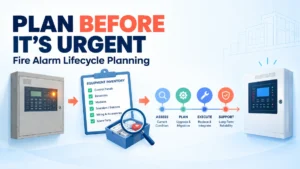
- System Audit: Document the current fire alarm infrastructure panel age, detector types (addressable detectors vs. conventional detectors), loop capacity, and compliance gaps.
- Technology Selection: Choose between addressable, analogue addressable, or hybrid systems based on facility size, risk profile, and integration requirements.
- Scalability Planning: Design the new system to accommodate planned facility expansion without requiring full replacement.
- Installation Strategy: Plan phased installation to minimise operational disruption, prioritising high-risk zones first.
- Maintenance Planning: Establish a preventive maintenance schedule aligned with NFPA 72 or local fire safety regulations.
Expert Perspective: What Facility Managers Should Prioritise
Based on real-world industrial fire safety practice, here is what facility managers should prioritise when planning a fire alarm infrastructure upgrade:
- Do not treat fire alarm upgrades as a one-time project. Treat them as a continuous improvement cycle aligned with facility changes and evolving regulations.
- Prioritise system integration from day one. A fire alarm system that cannot communicate with your HVAC, suppression, or access control system will always underperform.
- Insist on device-level addressability. Zone-level detection is no longer adequate for facilities above 1,000 sq. meters.
- Choose systems with proven remote monitoring capability. The ability to detect a fault at 2 AM without dispatching a technician saves both money and risk.
- Work with certified system integrators. NFPA 72, IS 2189 (BIS standard for fire alarm systems), and local fire authority requirements must guide every design decision.
- Budget for training. A modern fire alarm system is only as effective as the team that monitors and responds to it.
Conclusion
The decision to upgrade fire alarm infrastructure is no longer optional for most industrial facilities; it is a strategic necessity. Ageing systems, expanding footprints, stricter regulations, and the growing cost of operational downtime all point in the same direction.
Modern fire alarm infrastructure built on addressable detection, networked panels, real-time monitoring, and intelligent diagnostics gives industrial facilities the tools they need to protect lives, safeguard assets, and maintain operational continuity.
Facilities that act proactively today will be better positioned for the regulatory, operational, and safety challenges of tomorrow. The upgrade is not just about compliance; it is about building a safer, smarter, and more resilient industrial environment.
Read Also: How GST Fire Alarm Systems Improve Large Facility Fire Detection Efficiency
Read Also: Why GST Fire Alarm Systems Are Expanding Fast in Industrial India