Large distribution centres are the backbone of modern supply chains. Every day, thousands of products move through loading docks, storage racks, packing stations, and dispatch areas. Even a small security gap can result in inventory loss, operational delays, safety incidents, or compliance issues.
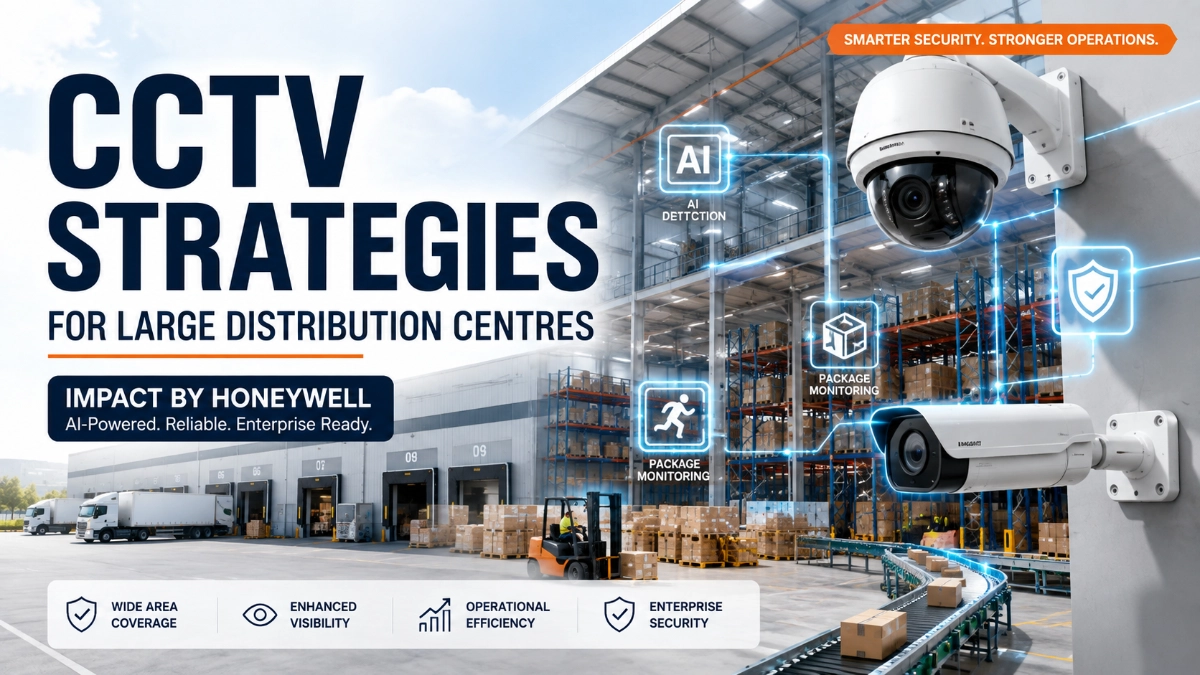
This is why CCTV surveillance has become much more than a theft prevention tool. Today’s intelligent surveillance systems help warehouse operators monitor operations, improve employee safety, optimise workflows, investigate incidents quickly, and make better business decisions.
Whether you manage an e-commerce fulfilment centre, FMCG warehouse, pharmaceutical distribution hub, logistics park, or manufacturing warehouse, implementing the right CCTV strategy is essential for long-term operational success.
This guide explains how to design an effective CCTV surveillance strategy for large distribution centres, including common challenges, camera placement best practices, network planning, storage requirements, and emerging technologies transforming warehouse security.
Why CCTV Matters in Large Distribution Centres
Unlike small warehouses, distribution centres operate across vast areas with continuous movement of goods, vehicles, forklifts, employees, contractors, and visitors. Monitoring every critical location manually is almost impossible.
An intelligent CCTV system provides:
- Continuous 24/7 surveillance
- Real-time monitoring of operations
- Theft and shrinkage prevention
- Employee safety monitoring
- Loading and unloading verification
- Incident investigation
- Regulatory compliance support
- Operational performance insights
Modern surveillance systems also integrate with access control, fire alarm systems, warehouse management systems (WMS), and AI-powered analytics to create a comprehensive security ecosystem.
Common Security Challenges in Large Distribution Centres
Before designing a CCTV strategy, it is important to understand the risks.
Inventory Theft
Internal theft remains one of the biggest concerns in warehouses. High-value products such as electronics, pharmaceuticals, automotive parts, and consumer goods require continuous monitoring.
Strategically positioned cameras help identify unauthorised handling of inventory.
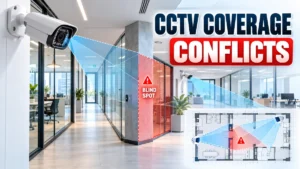
Blind Spots
Large shelving systems often block camera visibility.
Common blind spots include:
- High storage racks
- Corner aisles
- Temporary storage zones
- Packaging areas
- Dock corners
Proper camera placement eliminates these hidden areas.
Unauthorized Access
Distribution centres receive frequent visitors including:
- Vendors
- Drivers
- Contractors
- Maintenance teams
Access points require continuous monitoring to prevent unauthorised entry.
Loading Dock Fraud
Loading docks are among the busiest locations.
Common issues include:
- Incorrect shipment loading
- Missing inventory
- Package swapping
- Vehicle damage disputes
High-resolution cameras provide visual proof for every shipment.
Employee Safety
Forklifts, pallet movers, conveyors, and heavy machinery increase the risk of accidents.
Video monitoring helps identify unsafe practices before accidents occur.
Step 1: Conduct a Security Risk Assessment
Every warehouse has unique security requirements.
Start by identifying:
- High-value inventory zones
- Critical operational areas
- Employee movement patterns
- Vehicle routes
- Existing blind spots
- Previous security incidents
- Compliance requirements
A security audit helps determine the number and types of cameras required.
Step 2: Divide the Warehouse into Surveillance Zones
Instead of treating the warehouse as one large area, divide it into surveillance zones.
Typical zones include:
Perimeter
Monitor:
- Boundary walls
- Gates
- Parking areas
- Vehicle entry
- Fence lines
Outdoor weather-resistant cameras are ideal for perimeter protection.
Loading Bays
Cover:
- Incoming deliveries
- Outgoing shipments
- Dock doors
- Forklift movement
- Truck parking
High-resolution cameras help verify shipment accuracy.
Storage Aisles
Warehouse aisles require overlapping camera coverage to eliminate blind spots.
Consider:
- Long-range viewing
- Wide dynamic range
- Low-light performance
Packing Stations
Packing errors often result in customer disputes.
Cameras help verify:
- Packaging quality
- Product handling
- Label accuracy
- Parcel sealing
Dispatch Area
This zone records the final movement of goods before leaving the facility.
Footage can resolve disputes regarding:
- Missing products
- Damaged shipments
- Wrong dispatches
Server Room
Protect:
- NVRs
- Network switches
- IT infrastructure
- Control equipment
Access should be monitored continuously.
Step 3: Select the Right Camera Types
Different areas require different camera technologies.
Dome Cameras
Dome cameras are ideal for indoor warehouse surveillance.
Advantages include:
- Wide-angle coverage
- Tamper-resistant design
- Professional appearance
- Ceiling mounting flexibility
Many warehouses deploy Impact by Honeywell Dome Cameras in packing areas, offices, corridors, and storage aisles where discreet yet effective monitoring is required.
Bullet Cameras
Outdoor environments require longer viewing distances.
Bullet cameras provide:
- Extended range
- Better directional monitoring
- Weather resistance
- Easy identification of viewing direction
For perimeter protection and loading docks, Impact by Honeywell Bullet Cameras are commonly used because they deliver reliable long-distance monitoring in demanding environments.
PTZ Cameras
Pan-Tilt-Zoom cameras monitor large open spaces.
Ideal locations:
- Warehouse entrances
- Yard areas
- Parking zones
- Distribution yards
PTZ cameras allow operators to zoom into incidents in real time.
Fisheye Cameras
Useful for:
- Reception
- Control rooms
- Small warehouse sections
One fisheye camera can replace multiple conventional cameras.
Step 4: Focus on Camera Placement Instead of Camera Quantity
Installing more cameras does not always improve security.
Instead, focus on strategic placement.
Best practices include:
- Avoid pointing cameras directly at bright lights.
- Ensure overlapping fields of view.
- Position cameras above forklift height.
- Capture faces at entry points.
- Record license plates at vehicle gates.
- Cover emergency exits.
- Monitor emergency equipment.
- Protect valuable inventory racks.
A well-planned design provides better coverage with fewer cameras.
Step 5: Build a Reliable Network Infrastructure
Modern IP CCTV systems rely on stable network performance.
Large warehouses should use:
- Managed PoE switches
- Gigabit backbone
- Fibre uplinks
- VLAN segmentation
- Redundant network paths
- UPS backup
Proper network design reduces latency and prevents video loss during peak operations.
Step 6: Choose the Right Video Resolution
Resolution should match operational requirements.
General recommendations:
| Area | Recommended Resolution |
|---|---|
| Offices | 2 MP |
| Corridors | 2–4 MP |
| Warehouse aisles | 4 MP |
| Loading docks | 5 MP |
| Perimeter | 5–8 MP |
| Vehicle gates | 8 MP or ANPR-ready |
Higher resolution improves forensic investigations but also increases storage requirements.
Step 7: Plan Storage Requirements Carefully
Large distribution centres generate enormous amounts of video.
Storage planning depends on:
- Camera count
- Resolution
- Frame rate
- Compression method
- Recording schedule
- Retention policy
Many facilities retain footage for 30 to 90 days depending on operational needs and regulatory requirements.
A scalable recording platform such as Impact by Honeywell NVRs allows businesses to expand storage as surveillance requirements grow.
Step 8: Use AI Video Analytics
Artificial intelligence transforms CCTV from passive recording into proactive monitoring.
Popular AI features include:
Intrusion Detection
Detects unauthorised entry into restricted zones.
Line Crossing Detection
Alerts operators when someone crosses a virtual boundary.
Object Left Behind
Detects suspicious packages or abandoned inventory.
Object Removal
Identifies missing products or equipment.
People Counting
Useful for workforce planning and occupancy monitoring.
Vehicle Detection
Tracks truck movement around loading docks.
Heat Mapping
Visualises movement patterns to improve warehouse layouts and operational efficiency.
Step 9: Integrate CCTV with Other Security Systems
The most effective warehouses combine CCTV with complementary technologies.
Integration options include:
Access Control
Video verifies every door access event.
Fire Alarm Systems
When alarms activate, CCTV automatically displays affected areas, enabling faster assessment and response.
Intrusion Alarm
Camera recording begins immediately after an alarm event.
Warehouse Management System
Video evidence helps verify inventory movement.
Visitor Management
Link visitor records with surveillance footage.
Step 10: Improve Employee Safety
Warehouse CCTV is not just about theft prevention.
Video monitoring improves safety by identifying:
- Unsafe forklift driving
- Blocked emergency exits
- Improper lifting practices
- Missing PPE
- Slip hazards
- Unsafe loading procedures
Safety managers can use recorded footage for training and continuous improvement.
Step 11: Support Compliance and Audits
Many industries require video records to support audits and investigations.
Examples include:
- Pharmaceutical distribution
- Food and beverage logistics
- Electronics manufacturing
- Cold chain facilities
- Government warehouses
Recorded video provides objective evidence during inspections and dispute resolution.
Best Practices for Warehouse CCTV Deployment
Follow these recommendations to maximise system performance:
- Conduct a detailed site survey before installation.
- Design for future expansion.
- Use weather-rated cameras outdoors.
- Keep firmware updated.
- Protect the surveillance network with cybersecurity best practices.
- Test camera coverage after installation.
- Review footage quality regularly.
- Train security operators.
- Perform preventive maintenance.
- Document camera locations and retention policies.
Common Mistakes to Avoid
Even modern CCTV systems can underperform if they are poorly designed.
Avoid these common mistakes:
Ignoring Blind Spots
Always verify camera views after shelving layouts change.
Choosing Cameras Based Only on Price
A lower-cost camera may not deliver the image quality needed for investigations.
Underestimating Storage Needs
Insufficient storage can result in lost footage when it is needed most.
Poor Lighting
Even high-resolution cameras perform poorly in inadequate lighting. Assess lighting conditions during system design.
No Redundancy
Critical facilities should include redundant power and network paths to maintain surveillance during equipment failures.
Future Trends in Distribution Centre Surveillance
Warehouse surveillance continues to evolve with smarter technologies.
Emerging trends include:
- AI-powered behavioural analytics
- Edge-based video processing
- Cloud-assisted video management
- Predictive maintenance alerts
- Autonomous security patrol integration
- Digital twin integration
- Intelligent search using natural language
- Advanced cybersecurity for connected surveillance devices
Businesses that invest in scalable, standards-based surveillance systems today will be better prepared to adopt these innovations in the future.
Choosing a Scalable CCTV Solution
As distribution centres expand, surveillance systems must scale without disrupting operations. Look for solutions that support modular growth, centralised management, high-resolution recording, and integration with other building systems.
Many organisations evaluating enterprise-grade surveillance consider the Impact by Honeywell CCTV portfolio because it includes cameras, network video recorders, and management capabilities suitable for a range of warehouse environments. Working with an experienced Impact by Honeywell Distributor in India can also help ensure appropriate product selection, system sizing, and compatibility with existing infrastructure.
Conclusion
Large distribution centres demand more than basic video surveillance. They require a carefully planned CCTV strategy that combines intelligent camera placement, reliable networking, scalable storage, AI-powered analytics, and seamless integration with other security systems.
By focusing on operational risks, eliminating blind spots, and designing for future expansion, businesses can improve security, reduce losses, enhance employee safety, and streamline day-to-day warehouse operations.
As supply chains become increasingly automated and data-driven, CCTV systems are evolving into valuable operational tools that support not only security teams but also warehouse managers, compliance officers, and business leaders. Investing in a scalable and well-designed surveillance strategy today lays the foundation for a safer, more efficient, and more resilient distribution centre tomorrow.
Read Also: Choosing Surveillance Infrastructure That Can Scale With Business Growth
Read Also: AI Cameras and the Future of Industrial Operations