
Fire Alarm System Replacement Planning: What Should Be Reviewed Before Obsolescence?
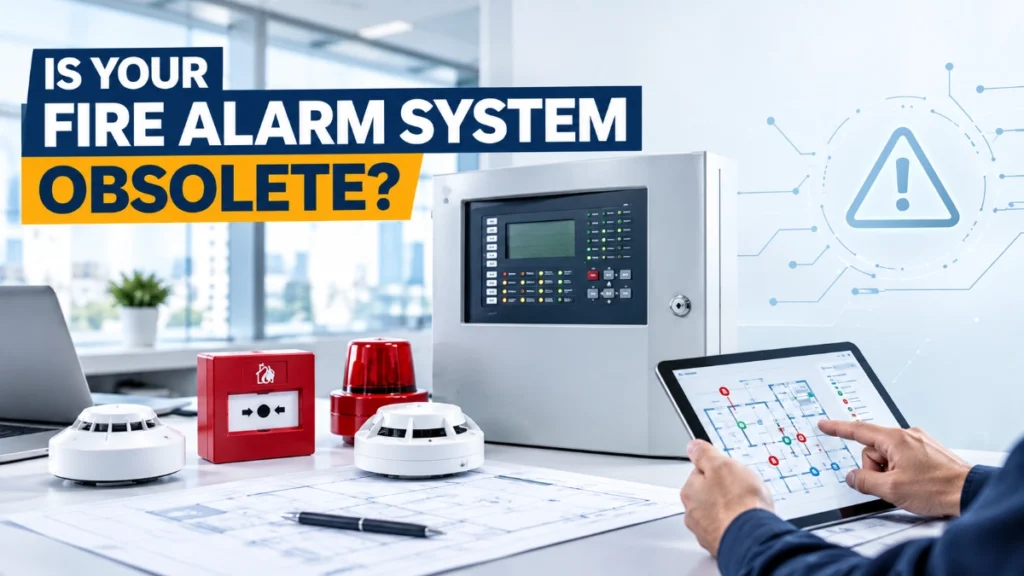
A facility has run the same fire alarm platform for over a decade. It still passes periodic tests, but replacement components are harder to source, documentation is incomplete, building areas have been reconfigured, and the maintenance team increasingly depends on a shrinking pool of engineers who know the platform well. None of this means the […]
The Difference Between a Recurring Fault and a Random Fault
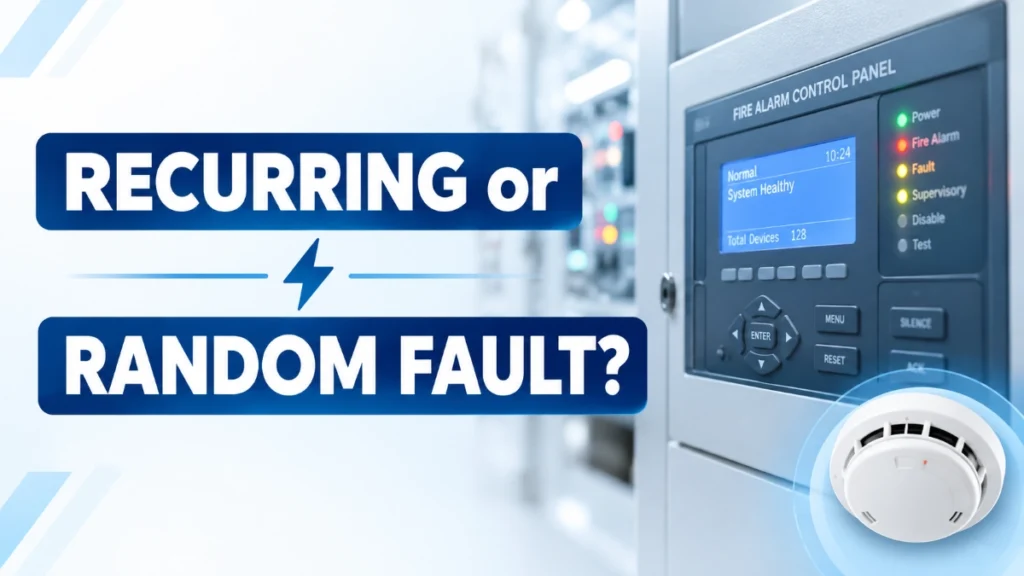
A technician replaces a detector after it reports repeated trouble conditions. The panel goes quiet for several days. Then, without warning, the same fault reappears. A colleague shrugs and calls it “random.” But is it actually random, or is the system quietly repeating a pattern no one has connected yet? Every fire alarm engineer eventually […]
How to Identify Single Points of Failure in a Fire Alarm Network
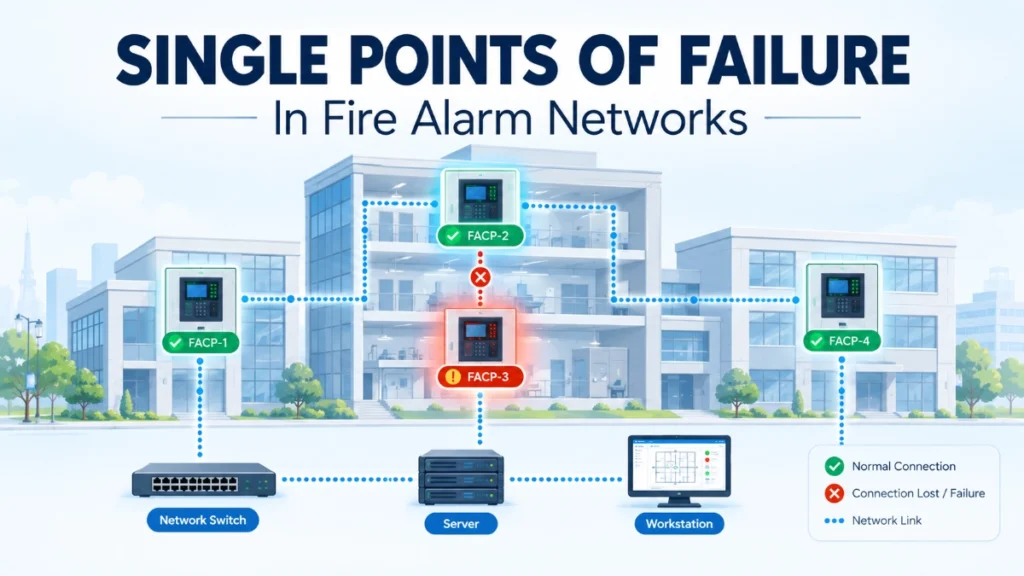
A commercial campus runs three buildings on a networked fire alarm system. Every panel shows normal. Every loop reports clean. Then a network switch in the main equipment room loses power, and the facility manager discovers two buildings have quietly dropped off central monitoring no obvious alarm, just a gap in visibility nobody notices until […]
How to Choose an EST Fire Alarm System for a New Commercial Project
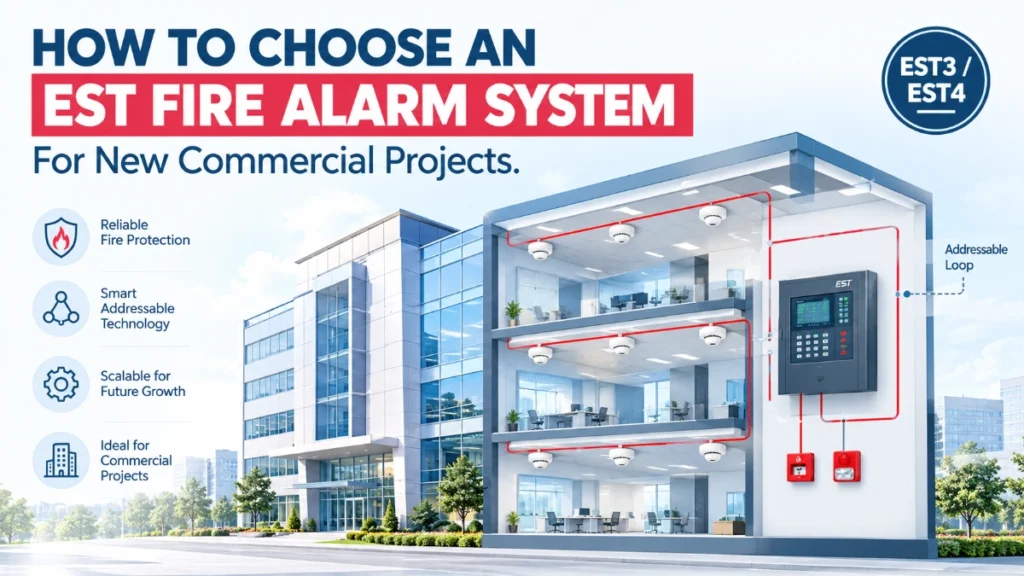
A new commercial building is still at the design stage. The project team knows it needs an addressable fire alarm system, but the harder question isn’t which panel to buy; it’s what the system will be asked to do over the life of the building. How many devices will it eventually support? How should floors […]
Fire Alarm to Access Control Integration: What Should and Should Not Be Automated?
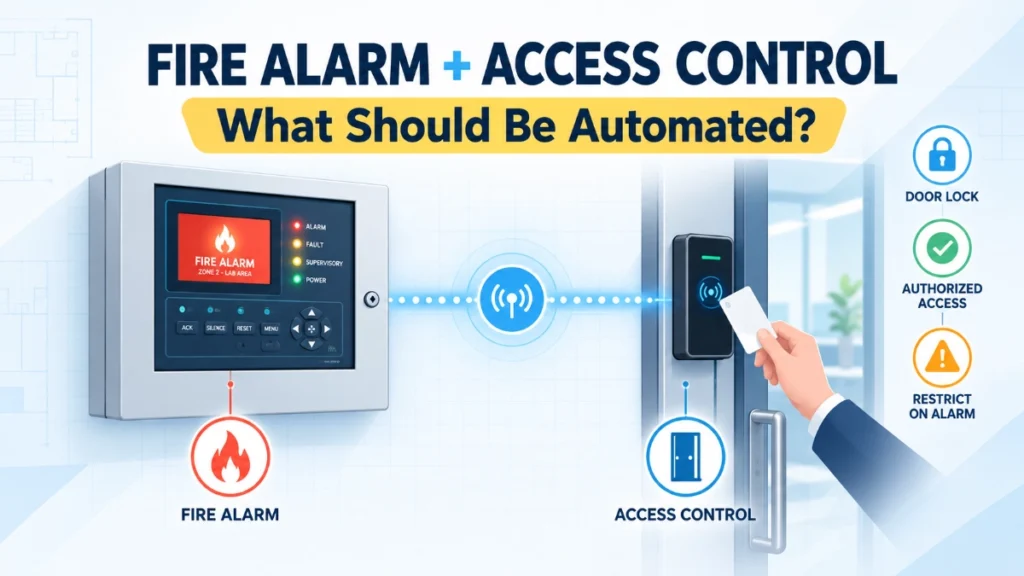
A facility integrates its fire alarm system with access control. During commissioning, the panel activates, and the room goes quiet for a different reason: nobody agrees on what should happen next. Which doors should release? Should every controlled door unlock, or only some? What happens to restricted technical areas? What is the expected behaviour if […]
How Event Logs Can Reveal Hidden Fire Alarm System Problems

A fire alarm system repeatedly reports a fault. A technician resets the panel, replaces a device, or clears the condition, and operation returns to normal until the same problem resurfaces weeks later. On its own, each occurrence looks like an isolated nuisance trip. Viewed together, it may be something else entirely. This is where fire […]
EST Fire Alarm System for Industrial Facilities: What Engineers Should Evaluate

Engineers should not evaluate an industrial fire alarm system based only on the number of devices it can support. Engineers need to assess how the system behaves across the facility’s environment, architecture, integrations, expansion path, and operational risk. Industrial projects rarely face the same challenges as simple commercial installations. Industrial sites bring large footprints, multiple […]
Fire Alarm Integration With PA/VA Systems: Where Engineering Gets Complicated
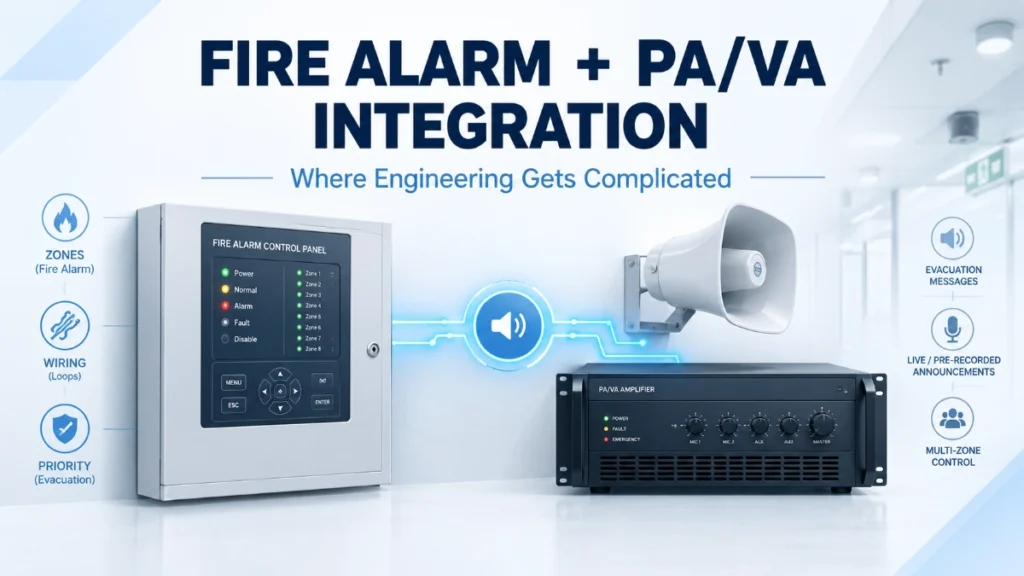
A building has a properly installed fire alarm system and a well-specified PA/VA system. Tested independently, both perform exactly as expected. Then, during an actual fire condition, the fire alarm must trigger the correct voice message, override whatever was playing, reach the correct zones, maintain the correct priority, and do this reliably for the duration […]
How Fire Alarm System Obsolescence Creates Hidden Engineering Risks
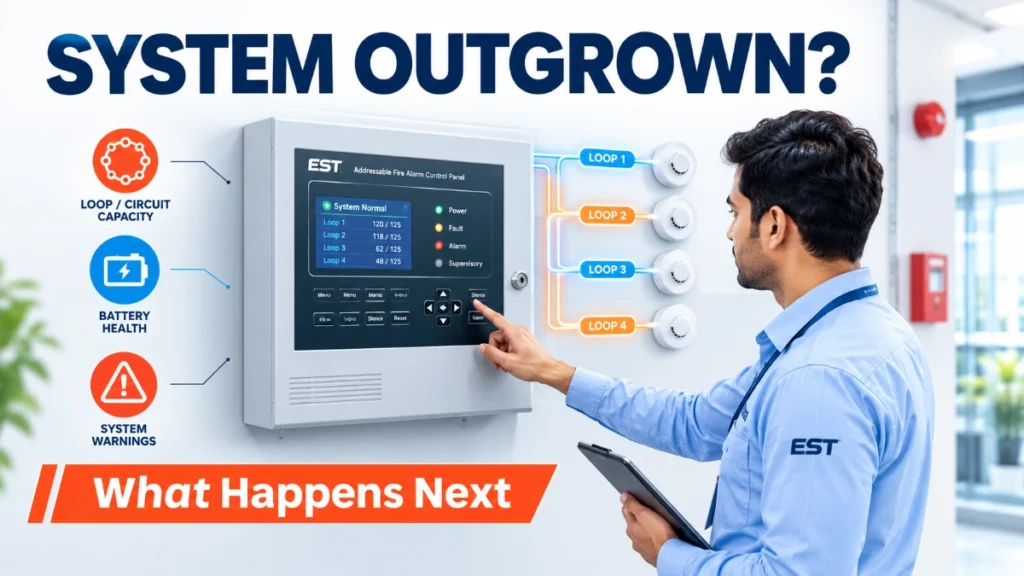
Every fire alarm system is designed around a specific building at a specific point in time. An engineer calculates the number of detectors, modules, notification appliances, zones or loops, and interfaces needed for the building on the approved drawings. That design is correct for that building, on that day. Years later, the building changes: a […]
Planning an EST3 to EST4 Migration: Key Engineering Questions
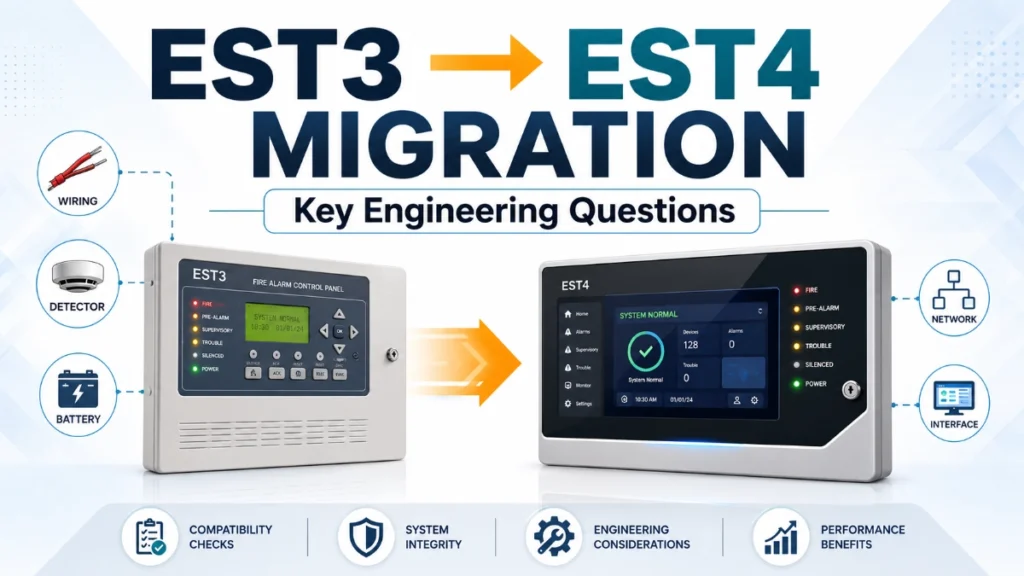
An EST3 system has often been protecting a building for a decade or more. The facility has expanded, some field devices have aged past their comfortable service life, documentation has thinned out through years of small modifications, and new interfaces access control, HVAC shutdown, elevator recall, PA/VA have been added along the way. At some […]
What Happens When a Fire Alarm System Outgrows Its Original Design?
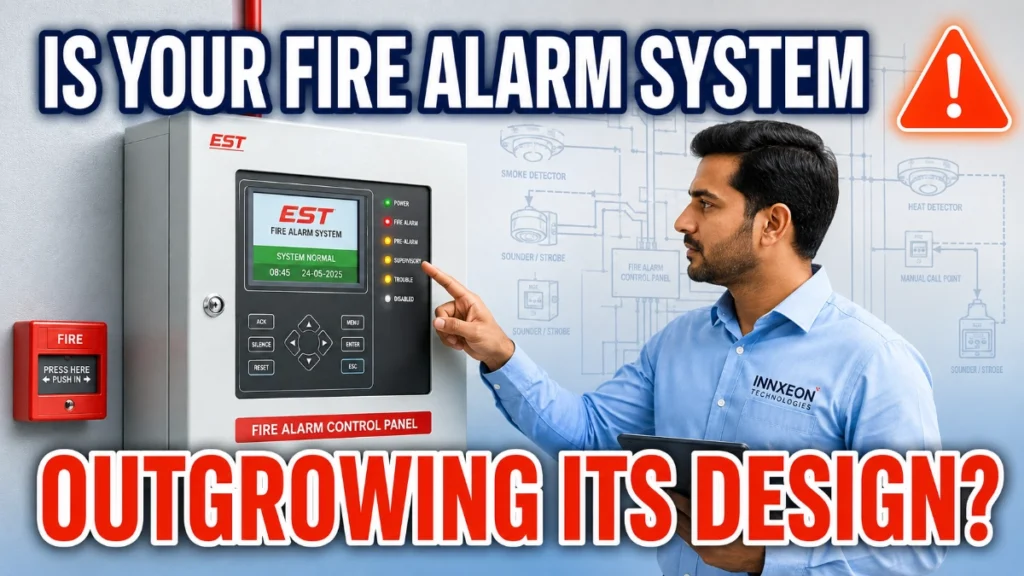
Every fire alarm system is designed around a specific building: a fixed number of detectors, modules, notification appliances, zones or loops, and interfaces. That design is correct on the day it’s commissioned. Years later, buildings rarely stay the same. Floors get added, open areas get partitioned, a warehouse becomes a production line, or new tenants […]
The Fire Alarm Handover Problem: Why Commissioning Is Not the End
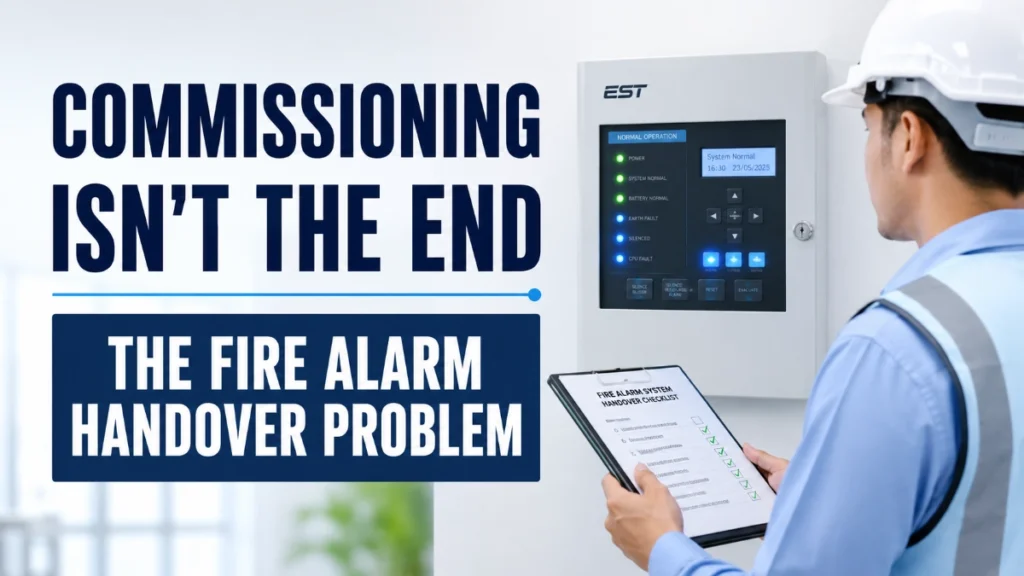
The panel has passed its tests. The cause-and-effect sequence has been verified point by point. The commissioning engineer has signed the report and packed up the laptop. So is the project finished? Not necessarily. A commissioned system proves something specific: the installed devices, loops, and programmed logic performed as expected under the conditions tested. It […]
