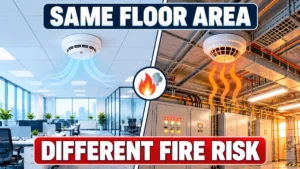
Modern safety systems are no longer isolated. In today’s intelligent buildings, fire alarm systems and surveillance systems must work together as a unified safety network. This integration enables faster detection, smarter response and better decision-making during emergencies.
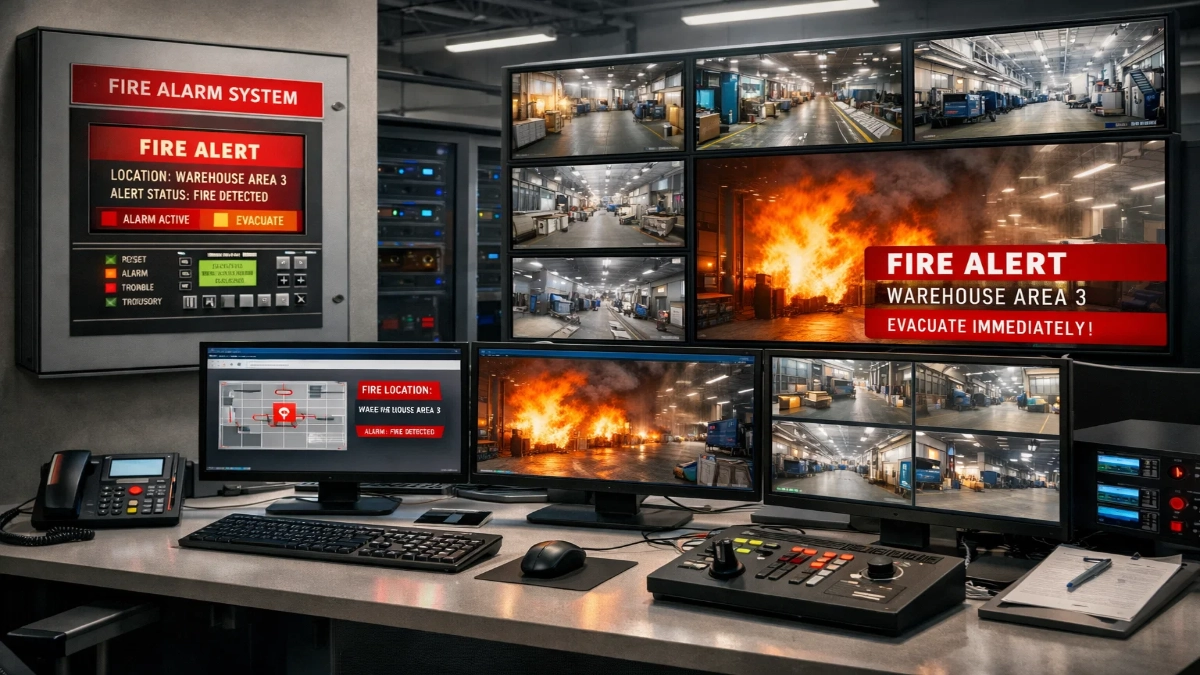
Data communication between fire alarm and surveillance systems transforms how facilities handle fire incidents. Instead of relying only on alarms or manual monitoring, integrated systems automatically trigger cameras, provide real-time visuals and assist emergency teams with accurate situational awareness.
For engineers, this is not just about connecting two systems; it is about designing a reliable, scalable and standards-compliant communication architecture.
This article provides a deep technical exploration of how data communication works between fire alarm and surveillance systems, including protocols, architectures, challenges and real-world applications.
1. Understanding the Core Systems
1.1 Fire Alarm Systems Overview
A fire alarm system detects fire conditions such as smoke, heat, or flame and alerts occupants. It consists of:
- Fire alarm control panel (FACP)
- Smoke detectors
- Heat detectors
- Manual call points
- Notification devices (sirens, strobes)
Modern systems are typically addressable, meaning each device has a unique ID and can send detailed information to the control panel.
1.2 Surveillance Systems Overview
Surveillance systems monitor environments through:
- IP cameras
- Network video recorders (NVR)
- Video management systems (VMS)
- Analytics software
These systems provide visual data, enabling operators to verify alarms and monitor events.
1.3 Why Integration Matters
When both systems communicate:
- Cameras automatically focus on fire zones
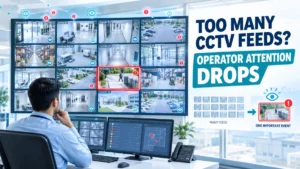
- Operators receive real-time visual confirmation
- False alarms can be verified instantly
- Emergency response becomes faster and more accurate
2. Fundamentals of Data Communication
2.1 What is Data Communication in This Context?
Data communication refers to the exchange of signals, commands and status information between fire alarm systems and surveillance systems.
This includes:
- Alarm triggers
- Device status updates
- Event logs
- Control commands (e.g., camera movement)
2.2 Types of Data Exchanged
1. Event Data
- Fire detected
- Fault conditions
- System status
2. Control Data
- Camera activation
- PTZ (Pan-Tilt-Zoom) commands
- Recording triggers
3. Metadata
- Device location
- Time stamps
- Alarm priority
3. Communication Architectures
3.1 Direct Integration
In direct integration:
- Fire alarm panel connects directly to surveillance system
- Uses hardware interfaces or APIs
Advantages:
- Fast response
- Simple architecture
Limitations:
- Less flexible
- Vendor dependency
3.2 Middleware-Based Integration
A middleware platform acts as a bridge between systems.
Features:
- Translates protocols
- Centralized control
- Scalable integration
Benefits:
- Multi-vendor compatibility
- Easier upgrades
- Advanced automation
3.3 Network-Based Integration
Both systems communicate over IP networks.
Key components:
- Ethernet switches
- Servers
- Cloud platforms
Advantages:
- High scalability
- Remote monitoring
- Real-time data sharing
4. Communication Protocols
Protocols define how systems exchange data. Choosing the right protocol is critical for reliability.
4.1 Common Protocols Used
1. Modbus
- Widely used in industrial systems
- Simple and reliable
- Limited for complex data
2. BACnet
- Designed for building automation
- Supports fire and HVAC integration
- Highly scalable
3. ONVIF
- Standard for IP cameras
- Enables interoperability between surveillance devices
4. TCP/IP
- Backbone of modern communication
- Enables real-time data transfer
5. MQTT
- Lightweight protocol
- Ideal for IoT-based fire systems
4.2 Protocol Selection Criteria
Engineers must consider:
- System compatibility
- Data speed requirements
- Security needs
- Scalability
- Regulatory compliance
5. Integration Workflow
5.1 Step-by-Step Communication Flow
- Fire detector senses smoke
- Signal sent to the fire alarm panel
- Panel generates an alarm event
- Event transmitted to the surveillance system
- Cameras in the affected zone activate
- Video feed displayed to the operator
- Event logged and stored
5.2 Real-Time Response Mechanism
Integrated systems can:
- Trigger nearby cameras
- Activate recording
- Send alerts to the control room
- Provide live video feed
6. Key Integration Technologies
6.1 API-Based Integration
Modern systems use APIs for communication.
Benefits:
- Flexible
- Scalable
- Easy to update
6.2 IoT-Based Integration
IoT enables:
- Smart sensors
- Cloud-based monitoring
- Remote diagnostics
6.3 Edge Computing
Processing happens near the device.
Advantages:
- Faster response
- Reduced network load
- Improved reliability
7. Design Considerations for Engineers
7.1 System Compatibility
Ensure both systems:
- Support common protocols
- Can exchange data seamlessly
7.2 Network Infrastructure
- High bandwidth required for video
- Redundant network paths recommended
- VLAN segmentation for security
7.3 Latency and Speed
Fire systems require instant response.
- Low-latency networks are critical
- Real-time communication must be prioritised
7.4 Cybersecurity
Integration increases vulnerability.
Best practices:
- Encryption
- Firewalls
- Secure authentication
7.5 Compliance and Standards
Follow standards such as:
- NFPA
- EN standards
- Local fire safety regulations
8. Benefits of Integration
8.1 Faster Emergency Response
- Immediate visual verification
- Reduced response time
8.2 Reduced False Alarms
- Operators can confirm incidents visually
- Minimises unnecessary evacuations
8.3 Improved Situational Awareness
- Real-time monitoring
- Better decision-making
8.4 Enhanced Safety
- Faster evacuation
- Better coordination with emergency teams
9. Challenges in Integration
9.1 Interoperability Issues
Different vendors use different protocols.
Solution:
- Use middleware or open standards
9.2 Network Limitations
High video data can overload networks.
Solution:
- Use compression
- Upgrade infrastructure
9.3 Security Risks
Integrated systems are more exposed.
Solution:
- Implement strong cybersecurity measures
9.4 System Complexity
Integration increases system complexity.
Solution:
- Proper planning
- Skilled engineering
10. Real-World Applications
10.1 Industrial Facilities
- Hazardous environments
- Need for rapid response
10.2 Commercial Buildings
- Offices
- Shopping malls
10.3 Airports and Transportation
- High passenger density
- Critical safety requirements
10.4 Data Centres
- Sensitive equipment
- High fire risk
11. Future Trends
11.1 AI Integration
- Automatic fire detection using video analytics
- Predictive maintenance
11.2 Smart Buildings
- Fully automated safety systems
- Centralised control platforms
11.3 Cloud-Based Systems
- Remote monitoring
- Scalable infrastructure
11.4 5G Communication
- Ultra-low latency
- Faster data transmission
12. Best Practices for Implementation
- Use open protocols
- Ensure redundancy
- Test integration thoroughly
- Train operators
- Maintain regular system audits
In regions like India, integration is becoming essential due to:
- Rapid urbanization
- Smart city initiatives
- Increasing industrial safety regulations
Engineers must design systems that comply with local fire safety norms while supporting modern communication technologies.
16. Conclusion
Data communication between fire alarm and surveillance systems is no longer optional; it is a critical requirement for modern safety infrastructure.
For engineers, the challenge lies in designing systems that are:
- Reliable
- Secure
- Scalable
- Standards-compliant
By leveraging the right protocols, architectures and technologies, integrated systems can significantly improve safety outcomes and operational efficiency.
As buildings become smarter, the integration of fire and surveillance systems will continue to evolve, driven by AI, IoT and advanced networking technologies.
Read Also: Types of Fire Alarm Systems Used in Industrial Facilities
Read Also: What Happens If Your Fire Alarm System Fails During an Audit?