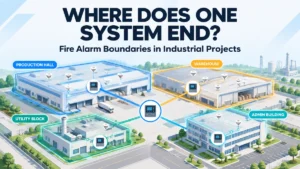
India’s logistics sector is undergoing one of its most significant transformations in decades. Massive investments in warehousing, e-commerce fulfillment, cold storage and industrial corridors are reshaping how goods move across the country. With this growth comes a critical question that many project teams are now confronting: are current fire detection strategies keeping pace with the scale and complexity of modern logistics facilities?
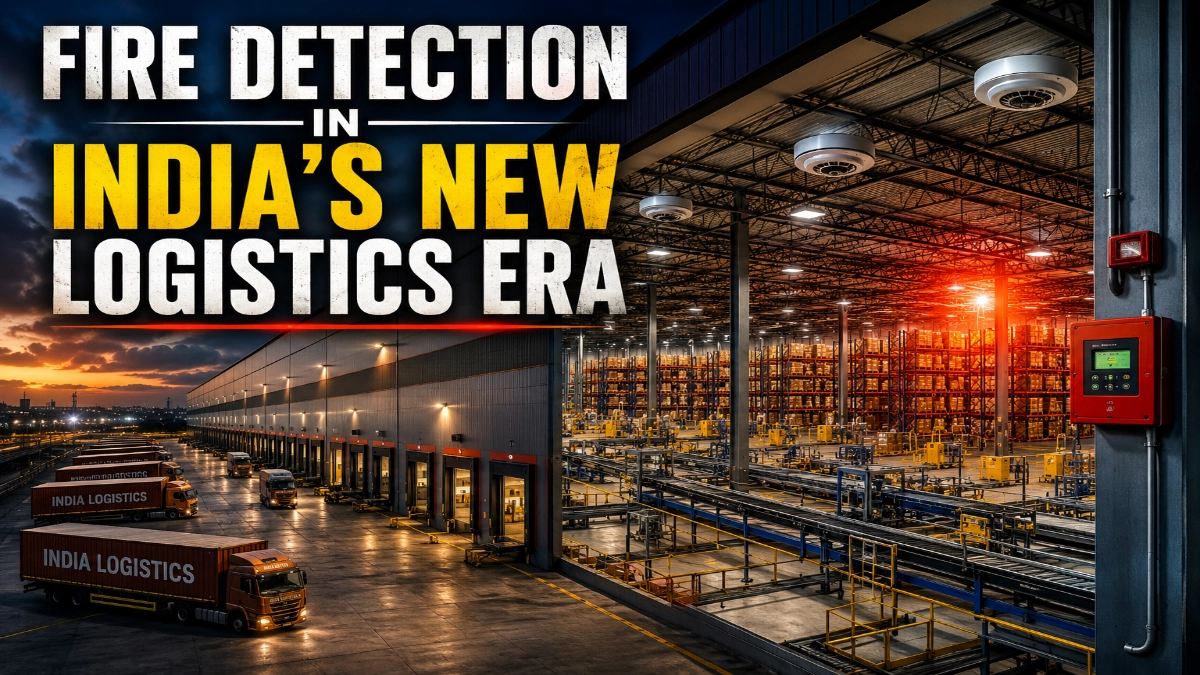
The answer, increasingly, is no. Traditional fire detection approaches designed for smaller, simpler facilities are proving inadequate in today’s high-density, automated and round-the-clock logistics environments. This article explores how India’s logistics revolution is driving a fundamental rethink of fire detection planning and what facility managers, safety engineers and project consultants need to know.
Understanding India’s Logistics Revolution
India’s warehousing and logistics sector has grown at an extraordinary pace. According to industry estimates, Grade A warehousing stock crossed 300 million square feet in 2023 and continues to expand rapidly. The government’s push through programs like PM Gati Shakti, Dedicated Freight Corridors (DFCs), and the National Logistics Policy has created an ecosystem where large-scale logistics infrastructure is being built faster than ever before.
Several key developments are defining this transformation:
- E-commerce fulfillment centers: Major players like Amazon, Flipkart, and Meesho have established multi-million square foot fulfillment hubs across tier-1 and tier-2 cities.
- Multi-modal logistics parks (MMLPs): These integrated hubs combine rail, road, and air freight under one roof, creating large, complex facilities with diverse fire risk profiles.
- Cold storage expansion: India’s cold chain capacity is growing to support food processing, pharma distribution, and fresh produce logistics.
- Automation and smart logistics: Automated storage and retrieval systems (AS/RS), conveyor networks, and robotic picking systems are becoming standard in new facilities.
- Industrial corridors: The Delhi-Mumbai Industrial Corridor and other projects are generating demand for large-format logistics and manufacturing hubs.
Each of these developments brings unique structural, operational, and fire risk characteristics that directly affect how detection systems must be designed and deployed.
New Fire Risks Emerging in Modern Logistics Facilities
Modern logistics environments introduce fire hazards that simply did not exist or existed at far smaller scale in traditional warehouses. Understanding these risks is the starting point for effective fire detection planning.
High-Density Storage
Rack storage systems now routinely reach 10–15 metres in height. Tightly packed inventory creates conditions where fire can spread vertically and horizontally with significant speed. Conventional smoke detectors mounted on ceilings at such heights often cannot detect smoke effectively until a fire is already well-developed.
Automated Storage and Retrieval Systems (AS/RS)
AS/RS installations involve dense metal racking, conveyor systems, and continuous electrical activity. Electrical faults within automated systems are a leading ignition source. In these environments, detection must operate reliably in spaces that are difficult to access during an incident.
Lithium-Ion Battery Storage and EV Charging Zones
The rise of electric forklifts, pallet movers, and last-mile EV fleets means that lithium-ion battery banks are now common in warehouse environments. Lithium-ion fires produce intense heat, toxic gases, and are extremely difficult to suppress once ignited. Early detection is critical thermal detectors and specialist gas sensors are increasingly being specified for these zones.
Cold Storage Environments
Cold storage facilities present distinct detection challenges. Sub-zero temperatures affect detector performance and fire behaviour. Insulated panels, compressor rooms, and refrigerant systems each carry specific ignition and detection requirements that standard warehouse configurations do not address.
24/7 Operations
Many modern fulfillment centers operate around the clock. This continuous activity means higher electrical loads, more people on-site at all hours, and reduced inspection windows. Fire detection systems must perform reliably under sustained operational conditions with minimal false alarms that could disrupt operations.
Why Traditional Fire Detection Planning Is No Longer Enough
Conventional fire detection approaches typically involve fixed-threshold smoke or heat detectors wired to a central panel that triggers a general alarm. While adequate for simple, low-density environments, this model has clear limitations in modern logistics settings:
- No device-level identification: When an alarm triggers, conventional systems often cannot pinpoint which detector has activated. In a 100,000 sq ft warehouse, this means security teams waste critical time locating the source.
- Limited scalability: Adding new zones, expanding coverage, or integrating with building management systems (BMS) is complex and costly with conventional architectures.
- Threshold-based detection only: Traditional detectors respond to fixed smoke or heat levels. They do not distinguish between dust, steam, or genuine fire signatures, leading to false alarms that erode staff confidence and cause unnecessary operational disruption.
- No data visibility: Conventional systems provide no diagnostic data. Faults may go undetected until routine inspections, creating unacceptable risk gaps in critical facilities.
A conventional fire alarm panel can serve basic requirements in smaller or lower-risk buildings. However, the scale and complexity of today’s logistics facilities demand more sophisticated solutions.
Key Fire Detection Requirements for Modern Warehouses
Effective fire detection planning for modern logistics facilities must address the following requirements:
| Requirement | Why It Matters in Logistics |
| Early warning detection | Minimises damage, protects inventory, enables faster evacuation |
| Large-area coverage | Facilities span tens of thousands of square metres |
| Faster incident localisation | Reduces response time; limits operational disruption |
| Scalability | Facilities expand; systems must grow with them |
| BMS integration | Enables automated responses: shutting HVAC, triggering suppression |
| High-risk zone monitoring | Battery rooms, cold storage, EV zones need dedicated coverage |
How Addressable Systems Improve Logistics Safety
Addressable fire alarm systems have become the preferred approach for large and complex logistics facilities and for good reason. Unlike conventional systems, addressable architectures assign a unique address to each detector, call point, and sounder on the network.
An addressable fire alarm panel receives real-time status information from every device on the loop. When a detector activates, the panel immediately identifies the exact device, its location, and the nature of the event. This has several important operational benefits:
- Faster response: Emergency teams go directly to the affected zone rather than searching across a large building.
- Reduced false alarm disruption: Addressable detectors can communicate pre-alarm conditions, allowing staff to investigate before a full evacuation is triggered.
- Easier maintenance: The panel can identify failing or dirty detectors before they malfunction, enabling proactive servicing.
- Expansion flexibility: Adding detectors, zones, or sub-panels to an existing addressable network is straightforward.
- Audit trail: Addressable systems log all events, supporting post-incident analysis and compliance reporting.
Addressable detectors including smoke, heat, multi-sensor, and beam detectors can be specified for different zones within the same facility, allowing tailored protection across varied risk environments.
For large logistics facilities procured through system integrators, working with a reliable gst fire alarm system distributor in India ensures access to compatible products, local technical support, and regulatory guidance that aligns with the National Building Code.
Fire Detection Planning for Different Logistics Environments
E-Commerce Fulfillment Warehouses
High SKU density, mixed materials, conveyor systems, and frequent staff movement create a complex risk environment. Beam detectors for wide-span areas, addressable multi-sensor detectors for pick zones, and aspirating smoke detection (ASD) for server rooms and control areas are commonly specified.
Cold Storage Facilities
Low-temperature rated detectors are essential. Compressor rooms require heat and gas detectors. Insulated panel interfaces and refrigerant detection should be factored into the detection design from the project outset.
Distribution Centers
Loading docks, vehicle marshalling areas, and cross-docking zones present unique ignition sources. Detectors must tolerate exhaust fumes and dust without generating false alarms. The gst fire alarm system range includes detectors calibrated for these conditions.
Manufacturing Logistics Hubs
Where manufacturing and warehousing co-exist, detection must address both process hazards and storage risks. Zoned addressable systems allow different alarm protocols for production and storage areas.
Multi-Modal Logistics Parks
MMLPs combine multiple building types under one management structure. A networked addressable system with a master panel and sub-panels for each zone enables coordinated monitoring across the entire park.
High-Rise Storage Facilities
Very high bay warehouses require in-rack detection in addition to ceiling-mounted devices. Beam detectors and linear heat detection cables are frequently used alongside conventional detectors in these environments.
Role of Smart Technologies in Fire Detection Planning
Technology is reshaping fire detection just as it is reshaping logistics operations. The most significant developments include:
- IoT-enabled monitoring: Cloud-connected panels allow remote monitoring of alarm status, detector health, and system diagnostics from any location. Facility managers can receive instant notifications and track system performance across multiple sites.
- Predictive maintenance: Data from addressable detectors can identify patterns such as a detector consistently reaching pre-alarm levels that signal developing issues before a fire occurs.
- AI-assisted alarm management: Advanced systems use machine learning to distinguish genuine fire signatures from environmental false alarm sources such as dust, steam, or exhaust fumes.
- Remote diagnostics: Service engineers can diagnose faults and plan maintenance visits without on-site inspection, reducing maintenance costs and improving system uptime.
- Digital twins: Large logistics facilities are beginning to use digital twin models that incorporate fire detection data, enabling simulation-based planning and emergency response training.
Compliance and Safety Standards Logistics Operators Must Consider
Fire detection planning in India must align with several key standards and requirements:
- National Building Code of India (NBC) 2016: Part 4 covers fire and life safety requirements, including detection system specifications for different occupancy types. Logistics facilities classified as high-hazard occupancies face the most stringent requirements.
- IS 2189: This Indian Standard covers the selection, installation, and maintenance of automatic fire detection and alarm systems. It provides detailed guidance on detector placement, spacing, and system configuration.
- Fire department NOC requirements: Most state fire departments require detailed fire safety drawings, system specifications, and third-party inspection reports before issuing No Objection Certificates for large warehouses.
- Insurance requirements: Many industrial property insurers specify minimum detection standards as a condition of coverage. Early engagement with insurers during the design phase can prevent costly retrofits.
- Ongoing inspection and maintenance: Periodic testing and maintenance records are required for compliance. Addressable systems simplify this process through automatic fault logging and remote diagnostics.
Best Practices for Fire Detection Planning in Large Logistics Facilities
Based on current industry practice and regulatory requirements, the following recommendations apply to fire detection planning in modern logistics environments:
- Engage fire safety engineers at the concept stage: Detection requirements should be factored into building design from the outset, not retrofitted after construction.
- Conduct a formal fire risk assessment: Identify all ignition sources, fuel loads, and fire spread pathways before specifying any detection system.
- Specify addressable systems for all large-format facilities: Any facility above approximately 5,000 sq m should use an addressable fire alarm panel architecture.
- Design for zone separation: Divide the facility into logical zones storage, operations, offices, utilities with separate detection loops that can activate independently.
- Plan for high-risk zones specifically: Battery storage, compressor rooms, server areas, and EV charging stations require dedicated detection strategies.
- Integrate with building systems: Ensure the detection system can interface with HVAC, access control, suppression systems, and emergency lighting.
- Plan for future expansion: Specify systems with sufficient loop capacity to accommodate facility growth.
- Maintain a preventive maintenance programme: Schedule regular inspections, testing, and cleaning of all devices to ensure continued system reliability.
Future Trends in Logistics Fire Safety
The trajectory of India’s logistics sector points toward facilities that are larger, more automated, and more technologically sophisticated than anything built previously. Fire detection strategies must evolve in step.
- Smart warehouses: Fully automated, sensor-rich environments will generate vast operational data streams. Fire detection systems that integrate into this data ecosystem will enable faster, smarter responses.
- AI-integrated fire safety: Next-generation detection platforms will use AI to analyse detector data in real time, providing early warning of conditions that precede ignition.
- Autonomous logistics facilities: As human presence in logistics facilities decreases, remote monitoring and automated suppression become essential, fire detection cannot depend on human observation.
- Digital twin integration: Fire detection data will feed directly into facility digital twins, supporting both ongoing operations and emergency planning.
- Sustainable infrastructure: Green building certifications increasingly incorporate fire safety performance criteria, creating additional incentives for advanced detection systems.
Conclusion
India’s logistics transformation is creating facilities that are fundamentally different in scale, complexity, and risk profile from the warehouses of a generation ago. Fire detection planning must keep pace with this change.
The shift from conventional to addressable systems is not simply a technology upgrade, it is a strategic investment in operational resilience. Facilities that experience a serious fire incident face not only physical damage but disruption to supply chains, loss of client confidence, and extended recovery timelines. Proactive, well-designed fire detection is one of the most effective ways to protect against these risks.
Whether planning a new fulfillment center, upgrading an existing distribution hub, or designing a multi-modal logistics park, fire detection strategy deserves the same level of attention and expertise as structural design, HVAC, or power systems. The time to plan is at the project outset, not after the first alarm sounds.
Read Also: How Fire Safety Is Evolving from Compliance to Intelligence
Read Also: What Would the Ideal Fire Safety Infrastructure Look Like in 2030?