A manufacturing facility is adding a new production line and a warehouse extension. The existing EST fire alarm system works correctly, so the project team assumes the expansion only needs more detectors, modules, and notification devices.
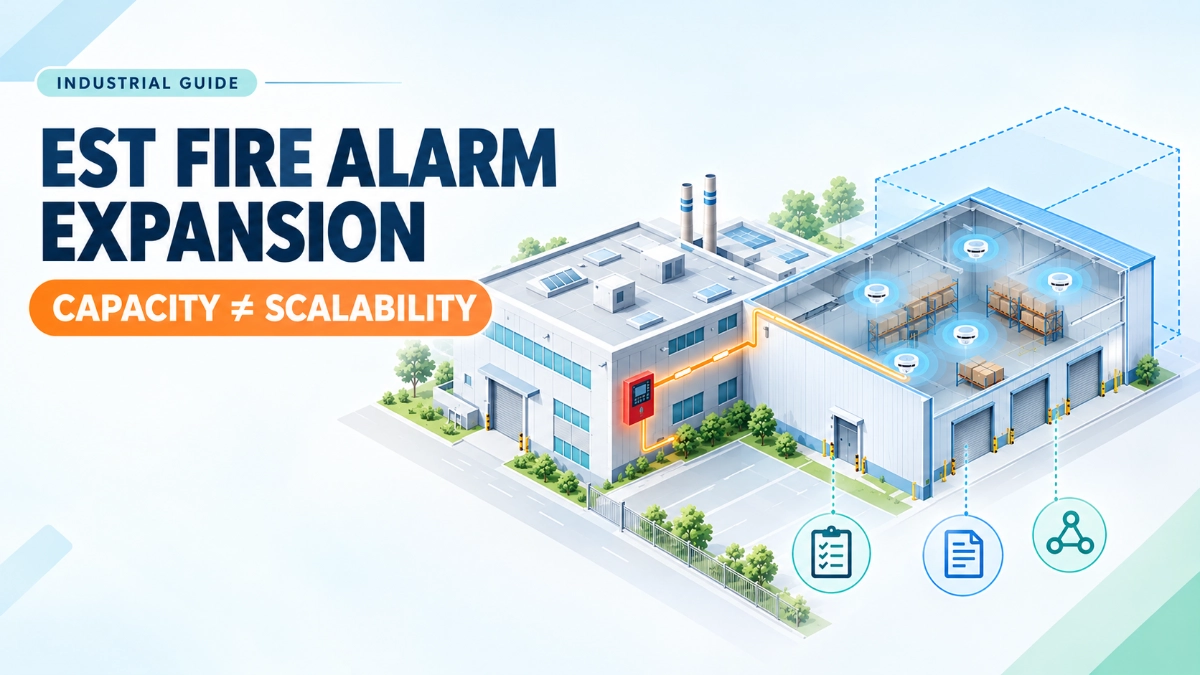
Then the engineering questions start. How much existing capacity is actually usable? Are the drawings current? Which cause-and-effect actions change? Can technicians safely reach the new devices? Can the infrastructure support the added load?
The core principle is simple: EST fire alarm expansion should be planned as an extension of an existing engineered system, not as an additional device count.
Engineers should plan EST fire alarm expansion by first assessing the existing installation: architecture, configuration, capacity, documentation, infrastructure, device distribution, cause-and-effect, interfaces, and foreseeable growth. Only then should they define the new protection requirement, design the extension, and plan commissioning and documentation. The right approach depends on the installed system and the approved engineering design. Depending on the assessment, the outcome may be expansion, modification, partial replacement, or a wider upgrade.
Why Fire Alarm Expansion Requires More Than Additional Devices
In an industrial fire alarm system, a new area changes the whole system, not just the building it sits in. Expansion can affect architecture, device distribution, capacity, infrastructure, cause-and-effect, interfaces, commissioning, maintenance, and future growth.
A common engineering challenge is that each of these looks manageable alone. Together they determine whether the expanded system stays reliable, documented, and maintainable. The new area must be considered in relation to the existing system from the start.
Step 1: Understand the Existing EST Fire Alarm Architecture
Before designing anything, establish how the current EST Fire Alarm System is built and operated. Record:
- Existing panels and their locations
- Protected areas and zoning
- Field devices and their distribution
- Circuits or loops, where applicable
- Network relationships, where applicable
- Power arrangements
- Interfaces to other systems
- Cause-and-effect logic
- Monitoring arrangements
- Any expansion provisions made in the original design
Verify this against the installed configuration, not only against drawings. Where drawings and site conditions differ, resolve that before design begins.
Step 2: Determine What the Existing System Can Actually Support
Available capacity is what remains unused in the system’s resources. Practical scalability is whether the system can absorb the new requirement without compromising architecture, performance, maintainability, or future growth.
Unused capacity may not be usable. It may sit in the wrong location, depend on infrastructure that cannot be extended, or leave no margin for the next phase.
| Area to Review | What Engineers Should Ask |
|---|---|
| Panel/system capacity | What resources remain available? |
| Field devices | Can the new devices be accommodated appropriately? |
| Infrastructure | Is the existing infrastructure suitable? |
| Power | Can the additional load be supported? |
| Wiring | Can the new area be connected appropriately? |
| Configuration | Can the required functions be incorporated? |
| Cause-and-effect | Will existing logic need modification? |
| Interfaces | Will other systems be affected? |
| Future growth | Is additional expansion likely? |
Answer each question from verified documentation and the installed system, not from assumptions.
Step 3: Define the New Fire Alarm Protection Area
Understand the new area before selecting devices. Consider:
- Building use and occupancy
- Fire hazards and storage conditions
- Ceiling arrangement
- Environmental conditions
- Production equipment
- HVAC and air movement
- Accessibility and maintenance requirements
- Relationship with adjacent areas
A new building or production area may need an architectural review rather than a simple extension of the existing device layout. A warehouse with high racking, a process hall with dust or heat, and an office block present different detection challenges and may sit within one expansion project.
Step 4: Review EST3 and EST4 Context Before Expansion
Identify the actual platform and installed configuration before planning. A facility may run EST3, EST4, or a mixed or evolved installation, and that context shapes the available options.
Review platform context, system age, existing configuration, documentation quality, compatibility, project requirements, and lifecycle plans. Those factors affect whether extending the system is practical or whether a broader approach is more sensible.
Do not assume that one platform supports a particular expansion method. Capacities, limits, networking, software functions, hardware compatibility, and migration paths must be verified against current technical documentation and the approved design.
Step 5: Plan Additional Detectors and Devices
Select devices against the actual detection objectives of each area. Review:
- Detector type and device location
- Coverage assumptions
- Environmental conditions
- Accessibility and maintenance access
- Device identification and addressing scheme
- Circuit or loop allocation, where applicable
- Documentation requirements
Consider access as a design input, not an afterthought. A detector that is difficult to reach will be tested, cleaned, and replaced less reliably. For product options, review the available range of EST Detectors and Devices against the environment and the approved design.
Step 6: Review Cause-and-Effect Before Adding New Areas
Facility expansion can change system behaviour. A new zone may need to influence existing outputs, and existing events may need to influence the new area.
Review relationships involving:
- Fire alarm outputs and notification
- Access control
- BMS
- PA/VA
- HVAC
- Monitoring
- Shutdowns and other project-specific interfaces
Whether a given interface needs a given response depends on the project. Review and update the approved cause-and-effect matrix, and confirm it with the relevant stakeholders before configuration changes begin.
Step 7: Review Infrastructure Before Installation
Use this checklist before committing to an installation approach:
- Power supply and its ability to support the added load
- Batteries, where applicable
- Cable routes and pathway availability
- Circuit or loop infrastructure
- Network infrastructure, where applicable
- Equipment and panel locations
- Equipment access for maintenance
- Environmental conditions at equipment locations
- Fire-rated or project-specific infrastructure requirements, where applicable
Calculations, cable specifications, and standards requirements should come from the approved design and applicable requirements, not from rules of thumb.
Step 8: Plan for Future Expansion — Not Just Today’s Requirement
Ask whether another building is planned, whether production lines or storage areas will grow, whether new interfaces will be added, and whether architecture and documentation will stay manageable as the system grows.
Future-proofing does not mean oversizing the system. It means making informed architectural decisions that avoid preventable constraints, such as placing equipment where later extension remains practical.
Step 9: Update Documentation Before Commissioning
Documentation should describe the actual final installation. Update:
- Fire alarm drawings and device schedules
- Panel information and configuration records
- Cause-and-effect matrix and interface schedules
- Cable documentation, where applicable
- Equipment locations
- Test documentation
- Change records
Reviewing documentation before commissioning lets teams catch discrepancies while they are still easy to correct.
Step 10: Commission the Expanded System
Commissioning should verify the modified configuration against the approved design. Cover:
- Device verification
- Alarm functions
- Fault and supervisory functions, where applicable
- Cause-and-effect
- Interfaces and notification
- Monitoring
- Configuration
- Documentation and final acceptance
There is no universal retesting rule. Testing scope should follow project requirements, the approved design, the extent of modification, applicable standards, and authority requirements.
When Expansion May Not Be the Right Answer
Expansion is not automatically appropriate. Factors that may point elsewhere include:
- Significant system age or obsolete equipment
- Poor or unreliable documentation
- Major architecture changes
- Insufficient practical scalability
- Extensive modifications to existing logic
- Compatibility limitations
- Maintenance challenges
- Future project requirements
Depending on the assessment, the project may need expansion, modification, partial replacement, migration, or broader modernisation. No single option is universally superior. The assessment should decide.
Common EST Fire Alarm Expansion Mistakes
- Starting with the new device count instead of the existing architecture.
- Confusing unused capacity with real scalability.
- Ignoring future facility expansion.
- Failing to review cause-and-effect.
- Ignoring interfaces with other ELV systems.
- Relying on outdated drawings.
- Adding devices without reviewing maintenance access.
- Not assessing power and infrastructure.
- Treating the new area as independent when it affects existing system logic.
- Completing installation without updating final documentation.
A Practical EST Fire Alarm Expansion Planning Framework
- Survey the existing system. Verify what is installed.
- Document the current architecture. Reconcile drawings with site conditions.
- Define the new protection requirement. Assess hazards, environment, and access.
- Assess capacity and scalability. Separate available resources from practical headroom.
- Review infrastructure and interfaces. Check power, pathways, and connected systems.
- Design the expansion. Include devices, logic, and documentation changes.
- Commission and verify. Test the modified system against the approved design.
- Update documentation and expansion records. Leave a clear baseline for the next phase.
Where specialist support is needed, an EST Fire Alarm System Distributor in India can assist with product selection, availability, technical documentation, and engineering coordination, provided the final design remains tied to the approved project requirements.
Questions Engineers Should Ask Before Approving an Expansion
- What is the existing system architecture?
- What capacity is actually available?
- Is that capacity usable for the proposed expansion?
- What changes are required to cause-and-effect?
- Will existing interfaces be affected?
- Are the existing drawings accurate?
- Are the existing devices and infrastructure suitable?
- How will maintenance access be handled?
- What future expansion is already foreseeable?
- Would expansion remain practical over the expected system lifecycle?
Key Takeaways
- Plan expansion from the existing system outward, not from the new device count inward.
- Available capacity and practical scalability are different questions.
- Identify the actual platform and configuration (EST3, EST4, or otherwise) before assuming any expansion method.
- New areas can change cause-and-effect and interface behaviour.
- Infrastructure, power, and maintenance access shape what is practical.
- Documentation and commissioning should reflect the actual final installation.
- Expansion is one option among several; assess before deciding.
Read Also: How Personnel Changes Can Create Hidden Fire Alarm Knowledge Gaps
Read Also: How Engineers Should Handle Fire Alarm Changes Made After Initial Testing