In 2022, a logistics warehouse in the US Midwest suffered a fire that destroyed $40 million in inventory. Investigators later confirmed that early heat signatures were visible on thermal cameras for nearly 18 minutes before any alert reached the response team. The system was recording. It just wasn’t thinking.
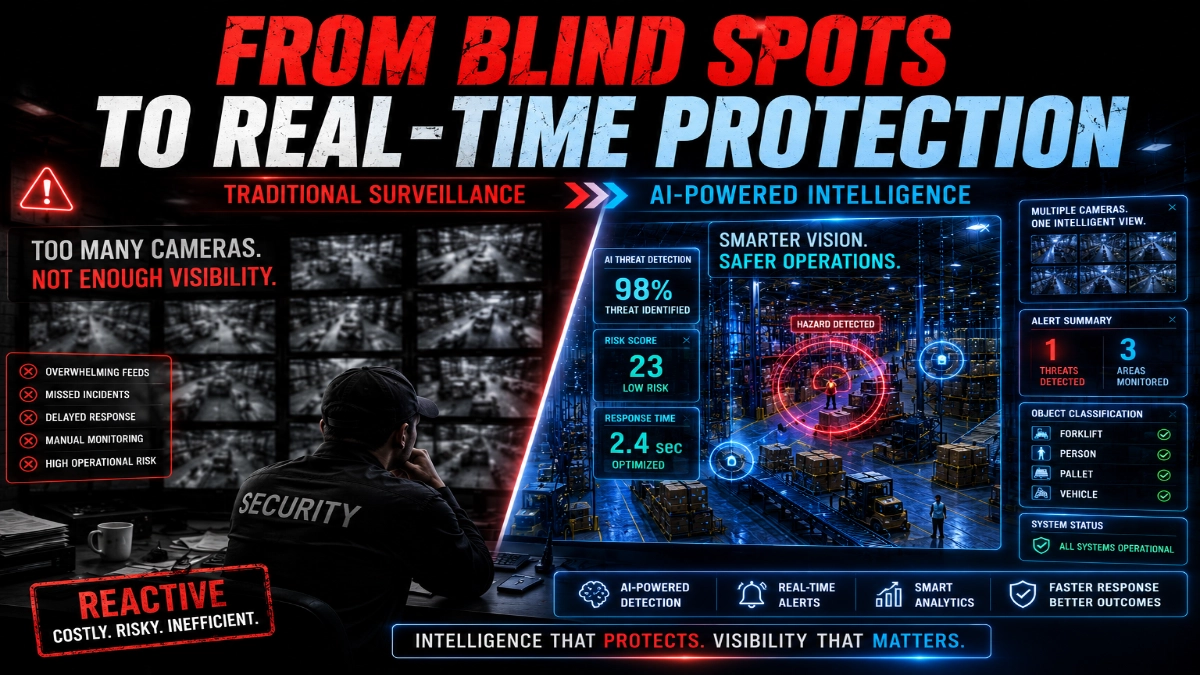
That gap between data collection and actionable intelligence is where modern facilities remain dangerously exposed and it is precisely where Artificial Intelligence is stepping in to change the equation.
AI-powered risk detection is not a future promise. It is actively transforming how manufacturing plants, hospitals, airports, data centres, campuses, and commercial buildings monitor for threats, identify hazards, and coordinate emergency responses. Facilities that once relied on reactive alarm systems are now deploying AI platforms that detect anomalies before they escalate into incidents.
This article explains how these technologies work, what risks they can catch, which industries are adopting them fastest, and what facility managers, safety engineers, and operations leaders need to understand before evaluating AI-based solutions.
Why Traditional Risk Detection Methods Are Falling Short
Conventional facility safety systems were designed for a simpler era. Motion sensors trigger on movement. Smoke detectors respond to particles. Access control logs entries. Each system generates data in isolation and waits for a threshold to be crossed before issuing an alert.
The fundamental problem is that traditional systems are reactive by design. They detect events after they begin, not before. And in large, complex facilities, the volume of data these systems produce far exceeds what human operators can meaningfully monitor.
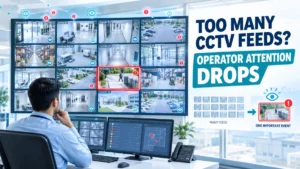
Consider a mid-sized manufacturing plant running 200 CCTV cameras across three shifts. Even with attentive security staff, consistent human monitoring of every feed is operationally impossible. Research in security science consistently shows that human attention degrades significantly after just 20 minutes of continuous video monitoring.
Meanwhile, the threat landscape has grown more complex. Insider threats, equipment failures, chemical leaks, unauthorized access, fire precursors, and behavioral anomalies all require different detection logic. Traditional sensor networks, operating in silos, cannot correlate signals across systems to identify compounding risks.
AI closes that gap by processing data continuously, across multiple sensor types simultaneously, and flagging risk patterns that no individual sensor could detect alone.
What AI-Powered Risk Detection Actually Means
AI-powered risk detection refers to the use of machine learning models, computer vision systems, and predictive analytics platforms to autonomously identify, classify, and prioritize risks in facility environments.
Unlike traditional systems that match predefined events to predefined responses, AI systems learn from data. They build models of what “normal” looks like in a given environment and flag deviations from that baseline. They improve over time as they process more data from the facility.
This shift has three critical implications for facility management:
- Detection moves from reactive to predictive, catching precursor signals before incidents occur.
- Correlation becomes possible across camera feeds, sensors, access logs, and environmental data simultaneously.
- Alert quality improves because AI can filter false positives that overwhelm traditional alarm systems.
| Key Definition: AI-powered risk detection combines computer vision, machine learning, edge computing, and behavioral analytics to identify safety threats, security incidents, and operational hazards in real time, often before human operators would notice them. |
Key Technologies Enabling AI-Based Facility Monitoring
Computer Vision and AI Video Analytics
Computer vision enables AI systems to interpret and understand video streams from CCTV and IP cameras. Rather than simply recording footage, AI video analytics systems analyze every frame for specific objects, behaviors, patterns, and anomalies.
Modern AI video analytics can simultaneously track dozens of variables across hundreds of camera feeds detecting objects like weapons, fire, smoke, or PPE violations while also analyzing behavioral patterns such as loitering, crowd density, or unusual movement trajectories.
Edge AI
Edge AI refers to deploying AI inference directly on cameras or local servers rather than sending all video data to a central cloud. This dramatically reduces latency critical for real-time safety alerts and reduces bandwidth costs for large multi-camera deployments.
Edge AI cameras process video at the source and send only structured metadata (alert flags, object classifications, risk scores) to central management platforms. This architecture also improves resilience: edge systems continue operating even during network disruptions.
Predictive Risk Detection and Digital Twins
Predictive risk detection uses historical incident data, sensor readings, maintenance records, and environmental conditions to forecast when and where risks are likely to emerge. Digital twins, virtual replicas of physical facilities, allow AI models to simulate scenarios, test emergency responses, and identify vulnerabilities before they manifest in the real world.
Behavioral Analysis
Behavioral analysis AI monitors patterns of human movement, interaction, and activity within a facility. It can identify behavioral indicators of distress, aggression, unauthorized access attempts, or pre-incident stress patterns that precede workplace violence or safety violations.
Major Risks AI Can Identify Before Humans Notice
The practical value of AI risk detection lies in its ability to recognize pre-incident signals, early warning indicators that experienced humans might not recognize in time across a large, complex facility.
Fire Detection Intelligence and Smoke Recognition
AI-powered fire detection uses computer vision to identify visible flame signatures, smoke plumes, and heat distortion patterns on standard CCTV cameras, often detecting fire precursors faster than traditional ionization smoke detectors, which require smoke particles to reach sensor elements.
Some AI platforms integrate thermal imaging data with visual analysis to detect abnormal heat signatures on electrical equipment, storage areas, or process machinery before visible smoke or flame appear.
PPE Compliance Detection
In manufacturing, construction, and industrial settings, AI video analytics continuously monitors whether workers are wearing required personal protective equipment, hard hats, high-visibility vests, safety glasses, gloves, and respirators. Non-compliance triggers immediate alerts to supervisors without requiring dedicated human observation.
Intrusion Detection and Perimeter Security
AI differentiates between authorized personnel, vehicles, and unauthorized intrusions with far greater accuracy than motion sensors alone. It can distinguish between a person and an animal crossing a perimeter, identify specific vehicle types, and track individuals across multiple camera zones.
Occupancy Monitoring and Crowd Density
AI occupancy monitoring tracks real-time people counts and crowd density patterns. In emergency scenarios, this data enables faster, more accurate evacuations by identifying where people are concentrated and which egress routes are passable.
Hazard and Chemical Leak Recognition
In industrial environments, AI integrated with gas sensors and visual cameras can recognize the visual signatures of chemical leaks, abnormal equipment states, or spill events, triggering containment protocols before exposure incidents occur.
How AI Dramatically Improves Emergency Response Times
Speed is the defining variable in emergency outcomes. Studies in industrial safety consistently show that reducing incident-to-response time by even two to three minutes can be the difference between a contained incident and a catastrophic loss of life or assets.
AI improves response speed through several mechanisms:
- Automated alert generation: AI systems trigger alerts in seconds upon detecting a risk signature, compared to the minutes it may take for a human operator to notice and escalate the same event.
- Risk scoring: AI assigns severity levels to detected risks, ensuring that emergency response teams prioritize the most critical alerts rather than triaging large volumes of undifferentiated notifications.
- Integrated dispatch: AI platforms can automatically notify relevant response teams, initiate lockdown protocols, alert emergency services, and adjust building systems such as ventilation, lighting, and access control based on the incident type.
- Post-incident analysis: AI provides detailed timeline reconstruction from synchronized camera feeds and sensor data, enabling faster root cause analysis and better prevention planning.
A 2023 report by the International Association of Fire Chiefs noted that AI-assisted fire detection and dispatch coordination reduced average response initiation times by 34% in pilot deployments across commercial facilities.
Real-World Use Cases Across Industries
Manufacturing Plants
Manufacturing environments combine the risks of heavy machinery, hazardous materials, and complex human workflows. AI systems in these settings monitor equipment vibration signatures for predictive maintenance, enforce PPE compliance continuously, detect unauthorized access to restricted zones, and identify ergonomic risk behaviors that precede musculoskeletal injuries.
Healthcare Facilities
Hospitals deploy AI for patient safety monitoring (detecting falls or distress events in rooms and corridors), infant security in maternity wards, perimeter access control, and early detection of aggressive behavior in emergency departments. AI also assists with infection control by monitoring hand hygiene compliance at entry points.
Airports and Transit Hubs
Airports use AI video analytics for threat detection across vast, high-traffic environments. Applications include abandoned baggage detection, crowd flow optimization, restricted area intrusion alerts, and behavioral analysis for suspicious passenger activity, all without requiring human operators to monitor every camera feed manually.
Educational Campuses
AI-powered surveillance systems on campuses monitor perimeters, detect unauthorized vehicle access, identify distress behaviors, and provide real-time occupancy data for emergency response coordination. Several US school districts have deployed AI platforms that integrate with local law enforcement dispatch systems.
Data Centres
Data centers face unique risks from fire, water infiltration, unauthorized access, and cooling system failure. AI platforms integrate with environmental sensors, access control systems, and infrastructure monitoring tools to detect anomalies across all these vectors simultaneously.
AI-Powered Surveillance Technology in Practice
The deployment of AI video analytics requires purpose-built surveillance infrastructure that can support on-camera or edge inference workloads. Leading platforms in this space combine advanced sensor hardware with AI analytics software to deliver real-time risk intelligence across facility environments.
Solutions such as Impact by Honeywell CCTV represent the convergence of high-resolution imaging hardware with integrated AI analytics, enabling facilities to deploy computer vision capabilities on existing camera infrastructure without requiring complete system replacement.
For organizations in South Asia building out AI-capable surveillance infrastructure, working with an Impact by Honeywell CCTV Distributor in India provides access to locally supported hardware, regional technical expertise, and integration services tailored to compliance requirements in the Indian market.
The broader category of AI video analytics platforms now supports deployment across cloud, hybrid, and fully edge-native architectures, giving facility managers flexibility to match deployment models to their operational, bandwidth, and latency requirements.
Benefits Across Safety, Compliance, Operations, and Business Continuity
The operational case for AI risk detection extends well beyond safety improvements alone.
Safety and Injury Reduction
Continuous AI monitoring addresses the coverage gaps inherent in human-operated surveillance. Facilities that deploy AI-based PPE compliance monitoring typically report significant reductions in safety violations and near-miss incidents within the first year of deployment.
Regulatory Compliance
AI platforms provide automated documentation of compliance-related activities, PPE adherence, access control events, safety procedure verification, reducing the administrative burden of regulatory reporting and providing auditable evidence trails.
Insurance and Liability
Documented AI monitoring activity can support favorable insurance assessments and provide critical evidence in liability investigations. Insurers increasingly recognize AI-monitored facilities as lower-risk environments.
Operational Efficiency
AI occupancy data, predictive maintenance alerts, and workflow monitoring provide operational insights that extend the value of safety infrastructure into broader business optimization. Facilities gain real-time visibility into resource utilization, throughput, and process adherence.
Challenges and Limitations Organizations Must Understand
AI risk detection delivers significant value, but organizations considering adoption need to approach implementation with clear-eyed awareness of the technology’s current limitations.
- Data quality dependency: AI models are only as reliable as the data they train on and the quality of sensor inputs they receive. Poor camera placement, inadequate lighting, or degraded sensor calibration directly compromises detection accuracy.
- False positive management: AI systems require careful calibration to minimize false positives, which can desensitize response teams and erode trust in automated alerts if not properly managed.
- Privacy and ethics: Behavioral analytics and continuous video monitoring raise legitimate employee privacy concerns. Organizations must implement transparent policies, obtain appropriate consents, and comply with applicable data protection regulations.
- Integration complexity: Deploying AI across legacy facility infrastructure often requires significant integration work. Organizations should budget realistically for integration, training, and ongoing model maintenance.
- Model drift: AI models can lose accuracy over time as facility conditions change. Ongoing model monitoring and periodic retraining are operational requirements, not one-time implementation tasks.
Future Trends: Predictive Safety and Autonomous Risk Management
The trajectory of AI in facility risk management points toward increasingly autonomous systems that move beyond detection and alerting into active risk mitigation and self-directed response coordination.
Autonomous Incident Response
Next-generation AI platforms will integrate directly with building automation systems, access control infrastructure, ventilation controls, and emergency communication systems, enabling automated, multi-system incident responses that begin before human operators initiate them.
Predictive Maintenance at Scale
Industrial safety AI will increasingly combine equipment sensor data with computer vision to predict failure events weeks or months in advance. Digital twin simulations will allow facilities to model the cascading effects of individual component failures across interconnected systems.
Multi-Modal Risk Fusion
Future AI platforms will fuse data from acoustic sensors, air quality monitors, vibration analyzers, thermal cameras, and traditional CCTV into unified risk intelligence models, providing facility managers with holistic situational awareness that no single-sensor system can deliver.
AI-Assisted Regulatory Compliance
AI will increasingly take on the work of continuous compliance monitoring, automatically generating audit-ready documentation, flagging emerging compliance gaps, and recommending corrective actions aligned with current regulatory standards.
Key Takeaways
- AI risk detection shifts facilities from reactive alarm systems to predictive, pre-incident intelligence platforms.
- Computer vision, edge AI, behavioral analytics, and predictive maintenance are the core enabling technologies.
- AI can detect fire precursors, PPE violations, intrusions, hazardous conditions, and behavioral anomalies faster and more consistently than human monitoring.
- Emergency response speed improves significantly when AI automates alert generation, risk scoring, and dispatch coordination.
- The benefits extend across safety, compliance, insurance, and operational efficiency, making AI risk detection a business continuity investment, not just a safety cost.
- Implementation challenges around data quality, privacy, and integration require careful planning and realistic resource allocation.
Conclusion: The Intelligent Facility Is Not a Future State
The facilities that will define best practice in safety and operations over the next decade are already deploying AI risk detection today. The technology has matured from research prototype to enterprise-scale deployment, and the operational evidence increasingly supports it.
For facility managers and safety engineers, the practical starting point is not a complete infrastructure overhaul. It is identifying the highest-risk, highest-value monitoring gaps in your current setup, the camera feeds no one consistently watches, the PPE checks that happen only during scheduled audits, the equipment with no predictive maintenance visibility, and applying AI to close those specific gaps first.
The organizations gaining the most from AI risk detection are not necessarily those with the largest technology budgets. They are the ones that approach AI as an operational intelligence layer built on top of their existing infrastructure, enhancing human judgment rather than replacing it, and delivering measurable safety and business continuity improvements that justify continued investment.
The alarm that never rang does not have to be your facility’s story.
Read Also: Why Future Facilities Will Be Built Around Data, Visibility and Safety
Read Also: The Future of Video Intelligence in Manufacturing and Logistics