Most businesses obsess over revenue, new customers, bigger deals, faster growth. But there is a quieter force that determines whether all of that growth actually sticks: risk.
Unmanaged risks do not wait for a convenient moment. A warehouse fire triggered by an undetected electrical fault. A data breach exposing client information. An equipment failure that halts production for days. Each of these scenarios can erase months of hard-won profit in a single event.
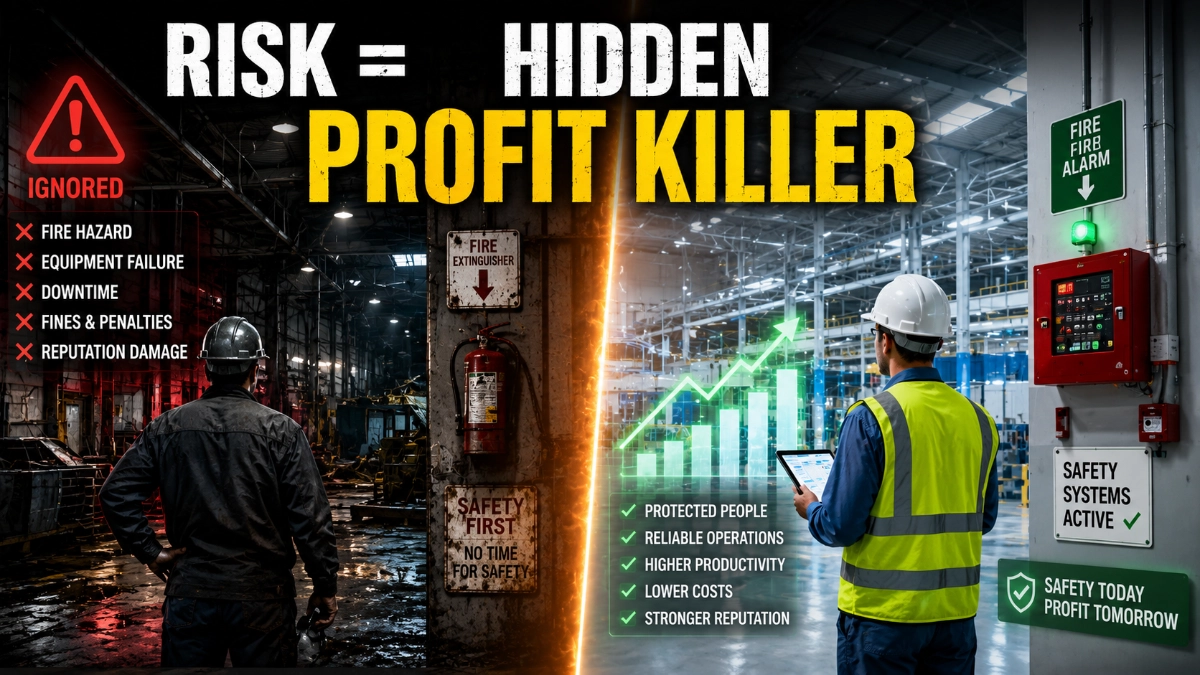
Yet risk reduction is rarely celebrated at board meetings. It does not appear on growth dashboards. It sits quietly in the background, until the day it is urgently needed.
This article reveals the hidden connection between risk reduction and business growth. It explains why businesses that invest in safety infrastructure, proactive risk management, and operational resilience grow more sustainably, protect their brand more effectively, and ultimately outperform competitors who only chase revenue.
| “Businesses that invest in risk reduction often gain competitive advantages through improved continuity, trust, and operational efficiency.” |
Why Risk Reduction Is Often Seen as a Cost Centre
The perception problem is real. Walk into most business planning meetings and you will find budgets allocated to marketing, product development, and sales. Risk management, safety systems, and compliance sit under a different category, overhead.
This framing is fundamentally flawed. Here is why businesses fall into this trap:
- Risk costs are invisible until a crisis happens
- Safety investments do not generate direct revenue on a spreadsheet
- Short-term financial pressure pushes safety budgets down
- Leaders underestimate probability and impact of low-frequency risks
The result? Businesses under-invest in risk reduction, then face catastrophic financial consequences when risks materialize.
The shift in mindset required is simple but powerful: stop thinking of risk reduction as a cost. Start treating it as an investment in growth infrastructure.
The Real Cost of Unmanaged Risks
The financial impact of unmanaged risks extends far beyond the immediate incident. Consider these layers:
Direct Costs
- Property damage and asset replacement
- Emergency response and remediation
- Medical and liability claims
- Regulatory fines and penalties
Indirect Costs
- Lost revenue during operational downtime
- Customer churn from service disruption
- Increased insurance premiums post-incident
- Legal fees and dispute resolution
- Reputational damage requiring expensive brand recovery
A single significant incident, whether a fire, safety violation, or supply chain disruption, can cost a mid-size business several times more than years of proactive risk management investment would have cost.
| “The strongest growth strategies are built on stability, not just expansion.” |
How Safety, Security, and Business Growth Are Connected
Safety and business growth are not separate agendas. They are deeply intertwined through three core mechanisms:
Operational Stability Enables Growth
A business cannot grow if it is constantly recovering from incidents. Stable operations, supported by proactive safety systems and risk controls, create the foundation for confident expansion.
Trust Is a Growth Asset
Clients, partners, and investors evaluate risk when choosing who to work with. A business with documented safety protocols, clean compliance records, and robust infrastructure signals trustworthiness, a genuine competitive advantage.
Employee Performance Depends on Safety
Teams that work in safe, well-managed environments perform better. Reduced injury rates, lower absenteeism, and higher morale all translate into measurable productivity gains.
Financial Benefits of Proactive Risk Management
Proactive risk management delivers measurable financial returns across multiple dimensions:
| Financial Benefit | Business Impact |
| Lower insurance premiums | Demonstrable safety records reduce risk ratings |
| Reduced incident costs | Prevention is a fraction of post-incident recovery costs |
| Avoided regulatory fines | Compliance prevents expensive penalties and shutdowns |
| Higher asset longevity | Maintained environments reduce equipment wear and loss |
| Investor confidence | Lower risk profiles attract better financing terms |
Operational Continuity and Reduced Downtime
Business continuity is not just about disaster recovery. It is about designing operations so that disruptions, when they do occur, are minimal, contained, and quickly resolved.
The biggest operational risks companies face today include:
- Fire and physical safety incidents
- Equipment and infrastructure failure
- Supply chain disruptions
- Cybersecurity breaches
- Regulatory non-compliance leading to shutdowns
Each of these has one thing in common: they are significantly more manageable with proactive systems in place than with reactive responses after the fact.
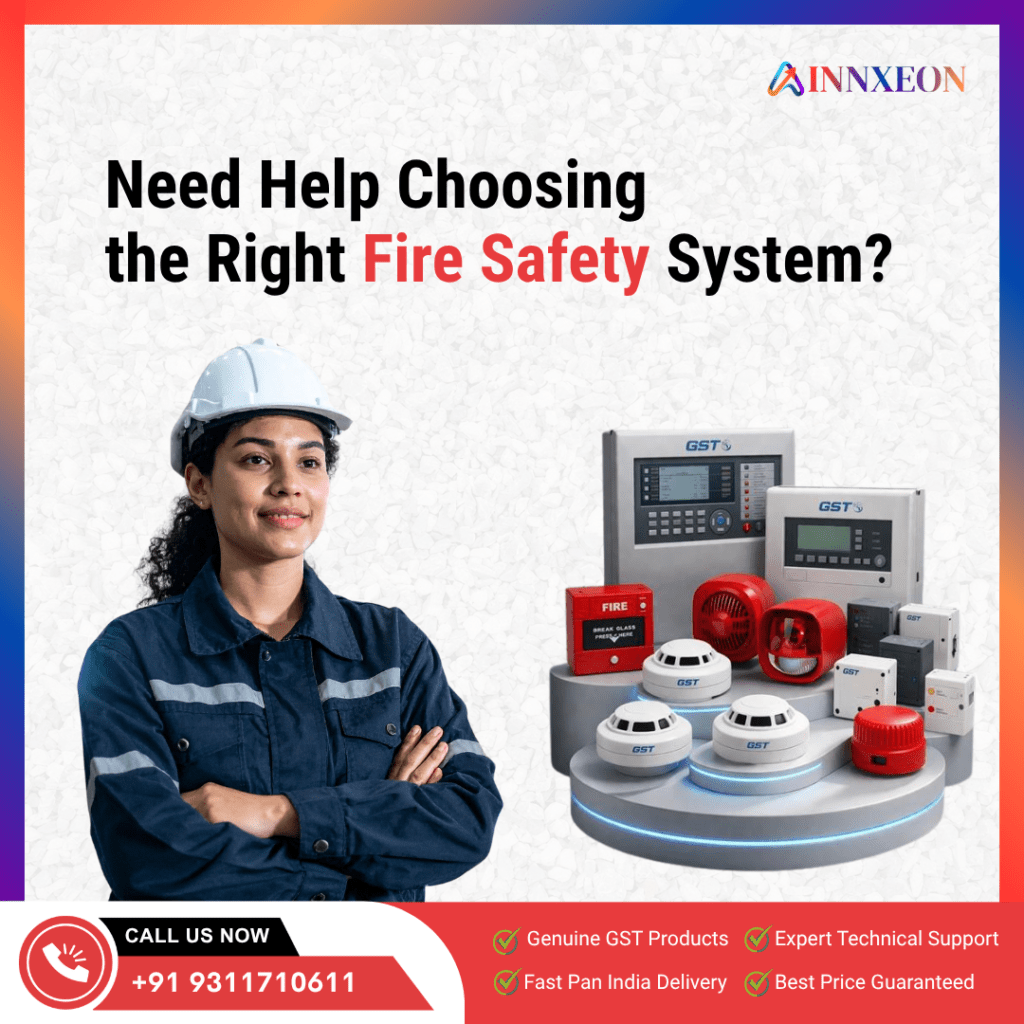
Fire detection systems, for example, are not just life-safety tools. An addressable fire alarm panel can pinpoint the exact location of a fire in a large facility within seconds, allowing targeted response rather than full evacuation and operational shutdown. This precision translates directly into reduced downtime.
Similarly, conventional fire alarm panels deployed across smaller zones create reliable early-warning infrastructure that protects both people and processes.
| “Operational continuity is the bridge between current performance and future growth. Risk management is what keeps that bridge intact.” |
Protecting Brand Reputation Through Risk Reduction
A brand takes years to build and hours to damage. Risk events, fires, safety failures, compliance violations, generate news, social media attention, and regulatory scrutiny that can permanently alter how customers perceive a business.
Brand reputation is directly tied to risk management through three mechanisms:
- Consistency of service delivery signals reliability to customers
- Safety records signal responsibility to partners and suppliers
- Compliance history signals trustworthiness to regulators and investors
Can risk management improve customer trust? Absolutely. Businesses that publicly demonstrate their safety infrastructure, through certifications, compliance records, and visible safety systems, build deeper customer confidence than competitors who remain silent on safety.
In industries like manufacturing, hospitality, healthcare, and logistics, customers actively evaluate safety standards before awarding long-term contracts. Risk reduction is a business development tool in these sectors.
Employee Confidence and Productivity Benefits
The relationship between safety and profitability is direct when examined through the lens of human capital. Employees who feel safe and valued at work perform at higher levels.
Consider what happens when safety is neglected:
- Injury rates rise, increasing absenteeism and healthcare costs
- Workers lose confidence in management, increasing turnover
- Productivity drops as employees operate under stress or fear
- Recruitment becomes harder as safety reputation spreads
Now consider the opposite. Businesses with proactive safety cultures enjoy:
- Lower employee turnover and associated hiring costs
- Higher engagement and discretionary effort
- Fewer insurance claims and workers compensation costs
- Stronger employer brand in competitive labor markets
Safety is not a peripheral HR concern. It is a core performance driver with a measurable impact on the bottom line.
Regulatory Compliance as a Growth Enabler
Regulatory compliance is often viewed as a burden, a checklist to satisfy auditors. In reality, compliance is a growth enabler when approached proactively.
Here is how compliance creates business opportunity:
- Businesses with clean compliance records qualify for more government and enterprise contracts
- Certified facilities can enter regulated industries and export markets that require safety standards
- Compliance-driven businesses attract lower-cost insurance and better credit terms
- Demonstrated compliance reduces legal exposure in disputes
In India, fire safety regulations under the National Building Code and state-specific fire service acts require businesses to maintain approved fire detection and suppression systems. Businesses that invest in compliant GST fire alarm systems and certified fire detection technologies protect themselves from regulatory shutdowns while positioning for growth in regulated sectors.
Innxeon Technologies, as a trusted GST fire alarm system distributor in India, supplies enterprise-grade fire safety infrastructure that meets national compliance requirements across commercial, industrial, and institutional facilities.
The Role of Modern Fire Detection and Safety Systems
Fire represents one of the most significant operational risks for businesses of all sizes. A well-designed fire detection infrastructure does more than alert occupants, it protects revenue, assets, and the business itself.
Types of Enterprise Fire Safety Infrastructure
Addressable Fire Alarm Systems: Addressable detectors communicate individual device status to an addressable fire alarm panel. This enables precise fault and fire location identification across large, complex facilities, critical for minimizing response time and operational disruption.
Conventional Fire Alarm Systems: Conventional detectors organized in zones connect to a conventional fire alarm panel, providing reliable, cost-effective detection for smaller buildings and single-zone installations.
GST Fire Alarm Systems: GST fire alarm systems represent a proven line of fire detection products widely deployed in commercial and industrial environments across India. As part of a professionally designed system, GST addressable detectors and conventional detectors provide reliable performance aligned with national safety standards.
The investment in proper fire detection is not just about compliance. It is about protecting continuity. A fire that is detected in 30 seconds rather than 3 minutes can mean the difference between a contained incident and a total facility loss.
| “Modern fire detection systems are not safety expenses, they are business continuity investments that protect revenue, assets, and people simultaneously.” |
Real-World Examples of Businesses Benefiting from Risk Reduction
Manufacturing Facility — Downtime Prevention
A mid-size manufacturing plant installed an addressable fire alarm panel across its production floor and storage areas. During a late-night shift, the system detected elevated heat levels in a storage room. Maintenance was alerted before any fire developed. Downtime: zero. Cost avoided: significant production losses plus potential total facility damage.
Hospitality Group — Insurance and Reputation
A hotel chain conducting a group-wide safety audit upgraded its conventional fire alarm panels and detectors across multiple properties. The upgrade yielded a meaningful reduction in annual fire insurance premiums while enabling the group to qualify for corporate contracts requiring verified safety certifications.
Logistics Warehouse — Compliance Enabling Contracts
A logistics company investing in a certified GST fire alarm system gained compliance certification required by an international client. The safety investment directly opened a new revenue stream that would not have been accessible without the infrastructure upgrade.
Future Trends in Business Risk Management
Risk management is evolving rapidly. Businesses that understand emerging trends will gain competitive advantages over those reacting to risk after the fact.
- Integrated Safety and Building Management Systems (BMS): Fire detection, access control, and HVAC increasingly integrate into unified platforms for faster, more coordinated response.
- Predictive Risk Analytics: IoT sensors and AI-powered monitoring enable businesses to identify risk patterns before incidents occur, shifting from reactive to genuinely predictive risk management.
- ESG and Safety Alignment: Environmental, Social, and Governance frameworks increasingly include safety performance metrics. Investors and institutional buyers evaluate safety records as part of due diligence.
- Supply Chain Risk Visibility: Businesses are mapping risk across their supply chains, not just internal operations, requiring suppliers to demonstrate safety and continuity standards.
- Remote Monitoring and Intelligent Fire Detection: Next-generation addressable detectors with remote diagnostic capabilities allow facility managers to monitor system health across multiple sites from a single dashboard.
Reactive vs. Proactive Risk Management: At a Glance
| Approach | Cost Impact | Continuity | Brand Reputation |
| Reactive Risk Management | Higher incident costs | Frequent disruptions | Weak; rebuilt post-crisis |
| Proactive Risk Management | Lower total risk cost | Consistent operations | Strong; trust retained |
Conclusion
Business growth is not only about what you build, it is about what you protect.
Companies that invest in proactive risk management, fire safety infrastructure, and operational resilience do not just avoid disasters. They build businesses that clients trust, regulators approve, investors back, and employees commit to.
The hidden connection between risk reduction and business growth is no longer hidden once you understand it: every well-designed safety system, every compliance milestone, and every risk control in place is quietly enabling the conditions for sustainable growth.
Whether you operate a warehouse requiring robust fire detection, a manufacturing facility seeking compliance, or a commercial building managing enterprise fire safety, the right infrastructure matters.
Innxeon Technologies supports businesses across India with professional-grade GST fire alarm systems, addressable and conventional fire alarm panels, and certified fire detection technologies, the foundational infrastructure behind operational resilience and business continuity.
| “The businesses that grow sustainably are not the ones that take the biggest risks, they are the ones that manage risk the smartest.” |
Read Also: How India’s Logistics Transformation Is Influencing Fire Detection Planning
Read Also: How Fire Safety Is Evolving from Compliance to Intelligence