
Standardising EST Across Buildings: Benefits and Risks
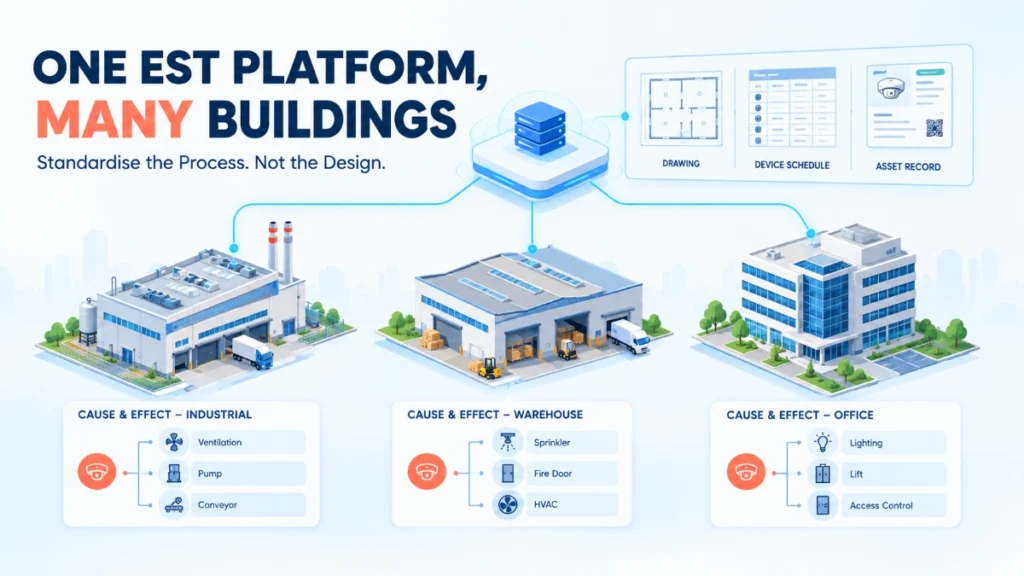
An industrial campus has a production facility, two warehouses, an administration block and a utility building. The buildings were commissioned in different phases, and each has its own drawings, naming style and maintenance habits. The engineering team wants one fire alarm platform, one documentation standard and one maintenance approach across the site. The appeal is […]
Fire Alarm Platform Lifecycle Planning: How to Prepare Before Support or Replacement Becomes Urgent
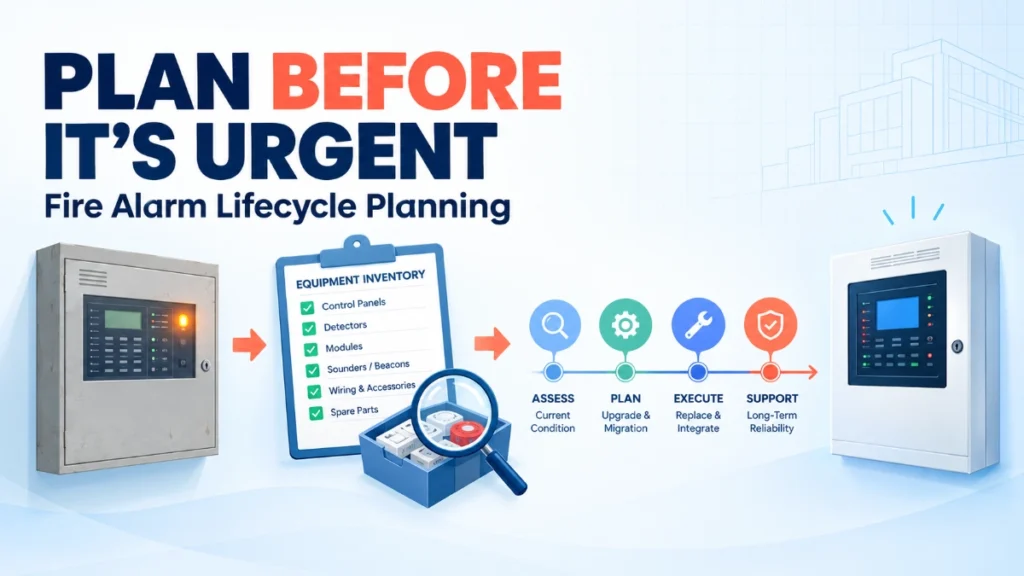
A pharmaceutical plant’s fire alarm network passes every routine test. The maintenance supervisor still sees a pattern. A repaired module took weeks to come back, the original programming files sit on one retired laptop, and a planned warehouse extension may exceed the network’s capacity. Nothing has failed, but the options are narrowing. Waiting for a […]
When Fire Alarm Network Topology Changes: What Must Be Rechecked Before Handover?
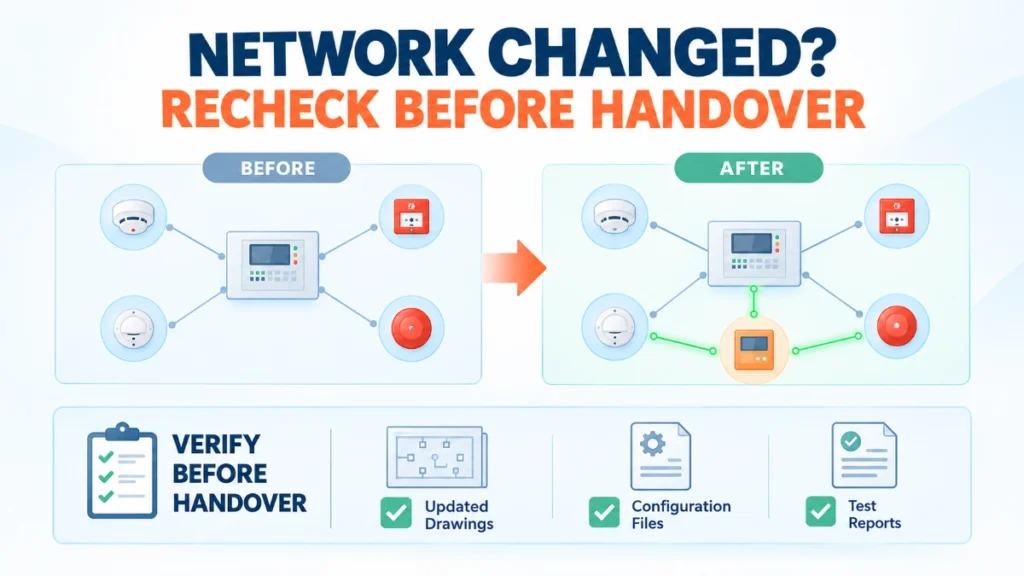
A production facility extends its main hall. The approved design adds a fire alarm panel to the existing network. The installer reports that the new node is communicating, and no faults are displayed. The commissioning engineer still cannot sign off. Does the installed arrangement match the approved design? Are supervised conditions reported as intended? Have […]
Fire Alarm Cybersecurity: What Changes When Safety Systems Become More Connected?
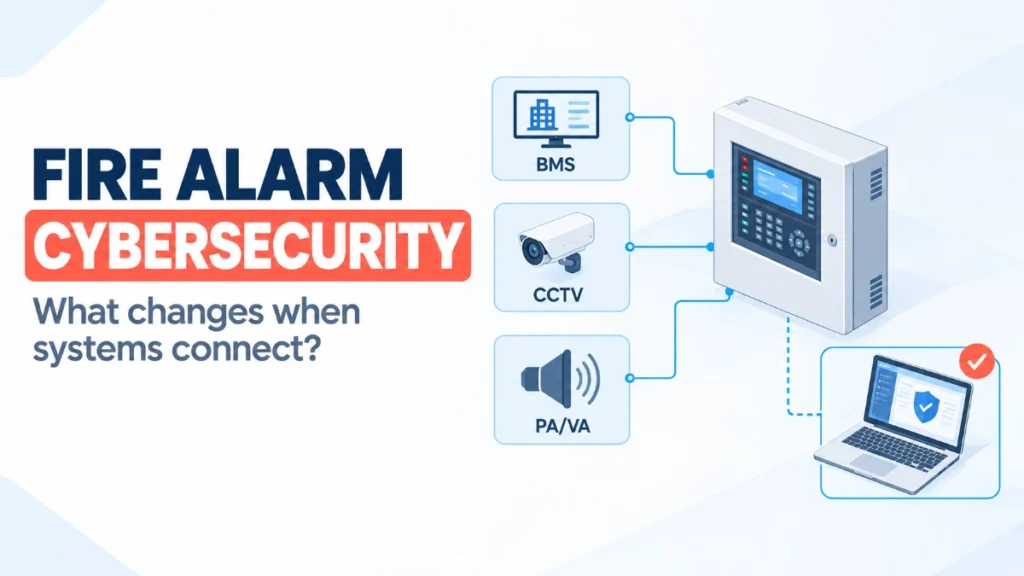
A manufacturing facility commissions its fire alarm system around a defined control architecture. Years later, the site adds a BMS interface for status reporting, places monitoring equipment on a shared network, and lets an external contractor use a maintenance workstation. The system keeps operating normally, and nothing is compromised. But the engineering team now has […]
The ELV Data Gap: Why Building Operators Cannot Always Connect Alarms, Video, and Maintenance History
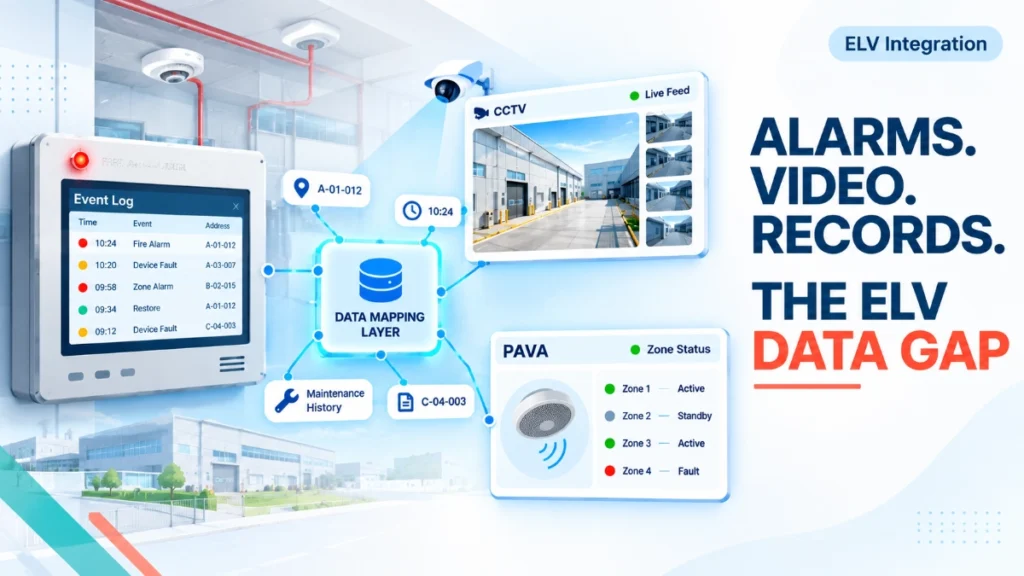
A fire alarm event appears on the operator’s screen for a warehouse zone. The operator needs to review the CCTV footage, confirm which PAVA zone was involved, and check whether maintenance recently affected nearby equipment. The panel identifies the device by an address and label. The CCTV platform names cameras after columns or aisles. The […]
Configuration Version Control for Fire Alarm Systems: An Overlooked Engineering Discipline
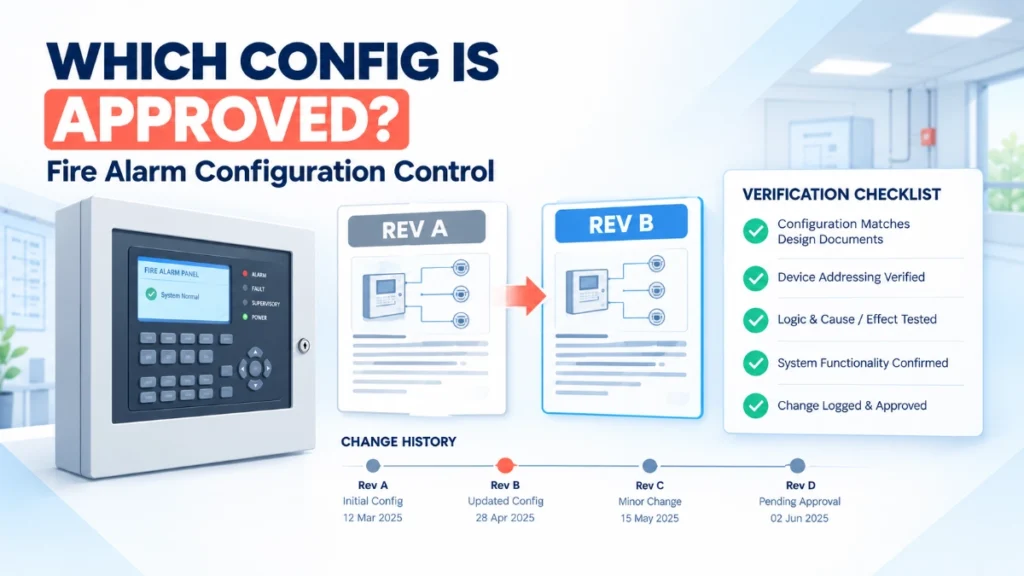
A fire alarm system is commissioned and handed over. Months later, a detector is replaced, a device is added during a layout change, and a cause-and-effect setting is adjusted. A maintenance engineer opens the project folder and finds several configuration files and scattered records. None is clearly marked as the approved operational state. Which configuration […]
Fire Alarm Event Correlation: How Engineers Distinguish One Fault From a Wider System Problem
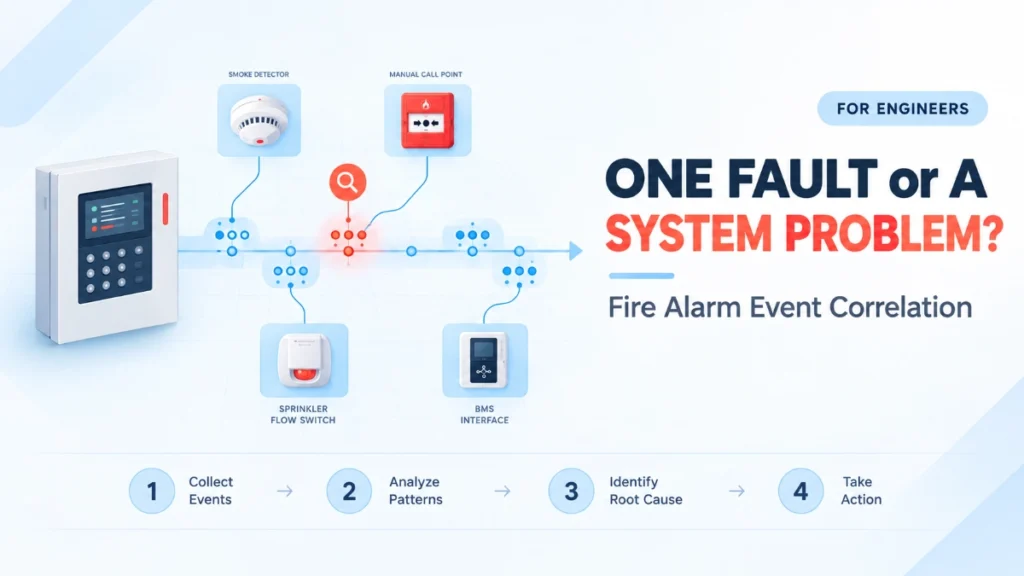
A maintenance engineer at an industrial facility pulls a fault report for one warehouse bay. It looks minor. Then the panel history shows similar faults from nearby devices over the past fortnight, plus an intermittent communication event late one night. Questions follow. Are these events independent? Did one precede the others? Are the devices related […]
Fire Alarm and BMS Data Integration: Which Information Should Cross the Interface?
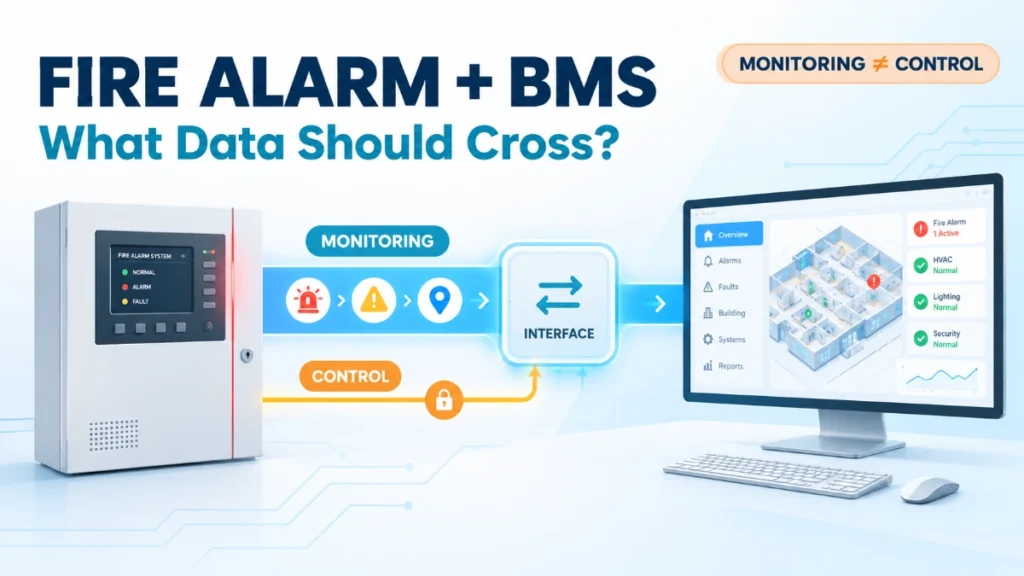
Consider a hypothetical commissioning walkthrough. The fire alarm system is connected to the BMS, and the BMS graphics show several fire alarm points. Then the questions start. Two points carry nearly identical labels. A fault and an alarm look alike on the operator screen. The interface schedule never states which system owns each function. The […]
A Fire Alarm Modification Was Small. Why Did It Create a Bigger Engineering Problem?
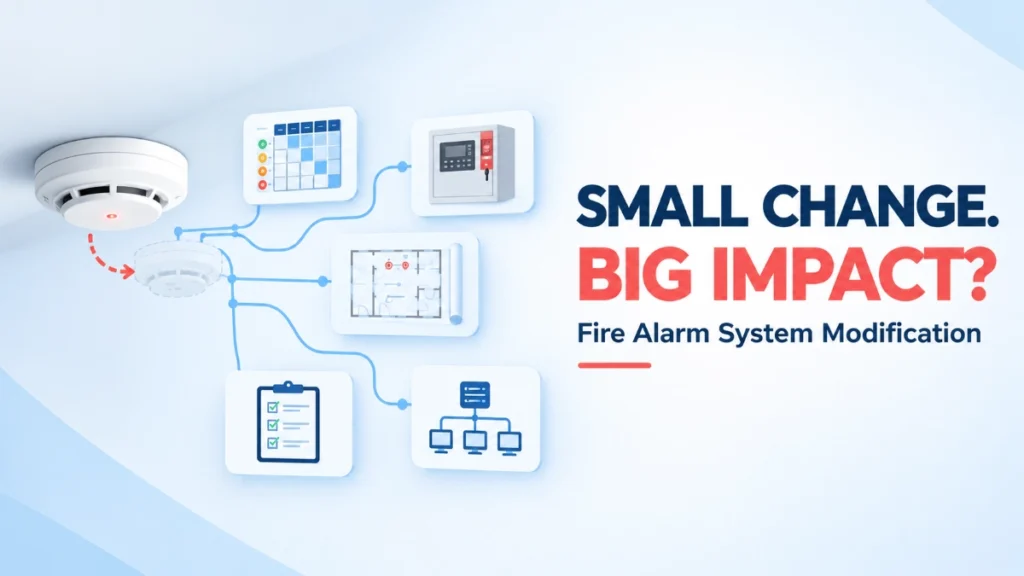
A facility changes its production layout, and a smoke detector ends up in the wrong place. The job looks simple: move one device a few meters. But the engineer reviewing the request soon has more questions. Does the new location suit the environment? Does the device’s identification still match the drawings? Is it referenced in […]
What Engineers Miss When Reviewing Fire Alarm Systems One Panel at a Time
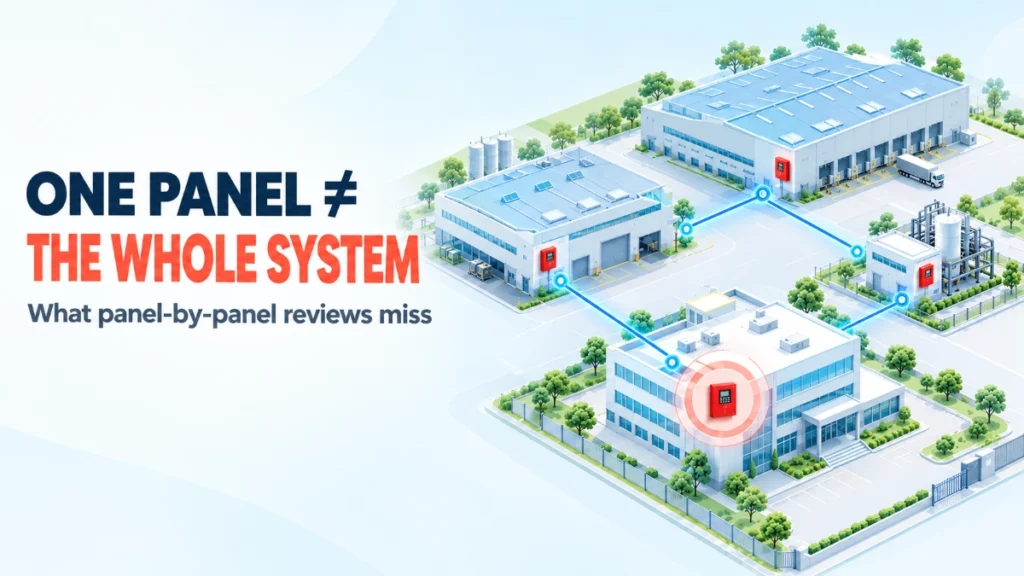
Consider a facility with separate production, warehouse, utility, and administration buildings. Each building has its own fire alarm panel. During individual inspections, every panel shows normal status, and its local device and circuit checks are satisfactory. A wider review then raises different questions. How are alarm events communicated between buildings? Which team handles shared functions? […]
What Happens When Fire Alarm and ELV Systems Are Designed in Isolation?
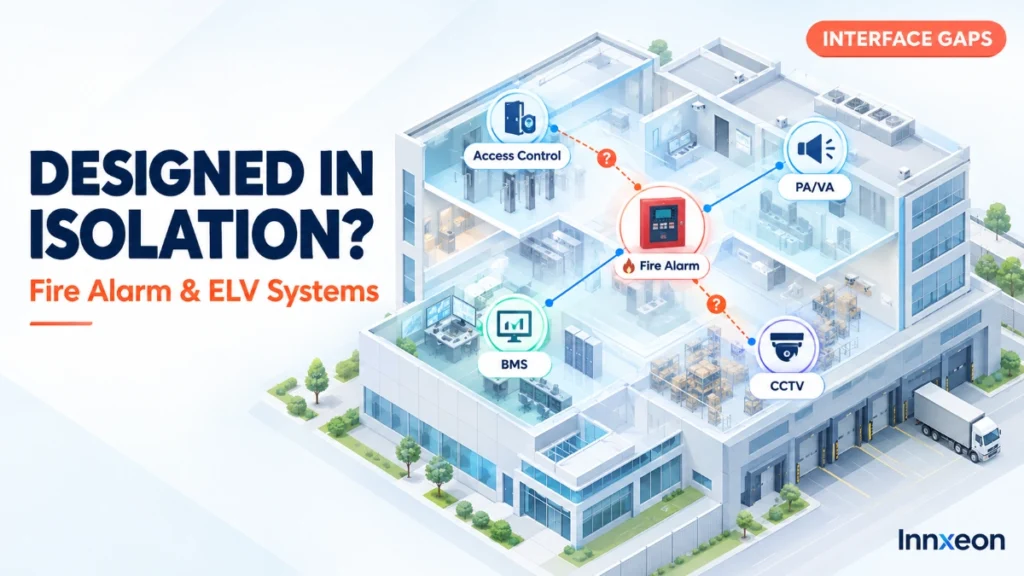
A new industrial facility has separate teams designing fire alarm, access control, CCTV, BMS, PA/VA and networking. Each discipline completes its own drawings. The fire alarm system is tested. Access control works. The BMS works. CCTV works. Then integrated testing begins. Emergency door-release behaviour is unclear. Two teams each assume the other owns a particular […]
How False Alarm Patterns Can Point Toward Environmental Changes
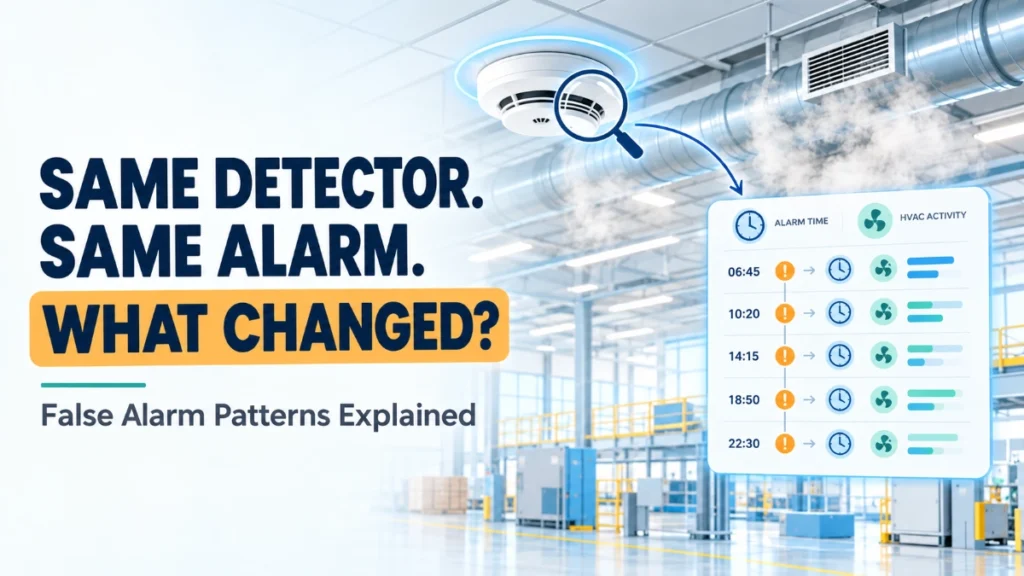
A detector in a production area has generated several false alarms over several weeks. Each time, someone silences it, cleans it, resets it, and occasionally replaces it. The alarms continue. Then someone overlays the event history on the site calendar. The activations cluster after a process line was extended, an exhaust schedule was modified, and […]
