
Planning an EST3 to EST4 Migration: Key Engineering Questions
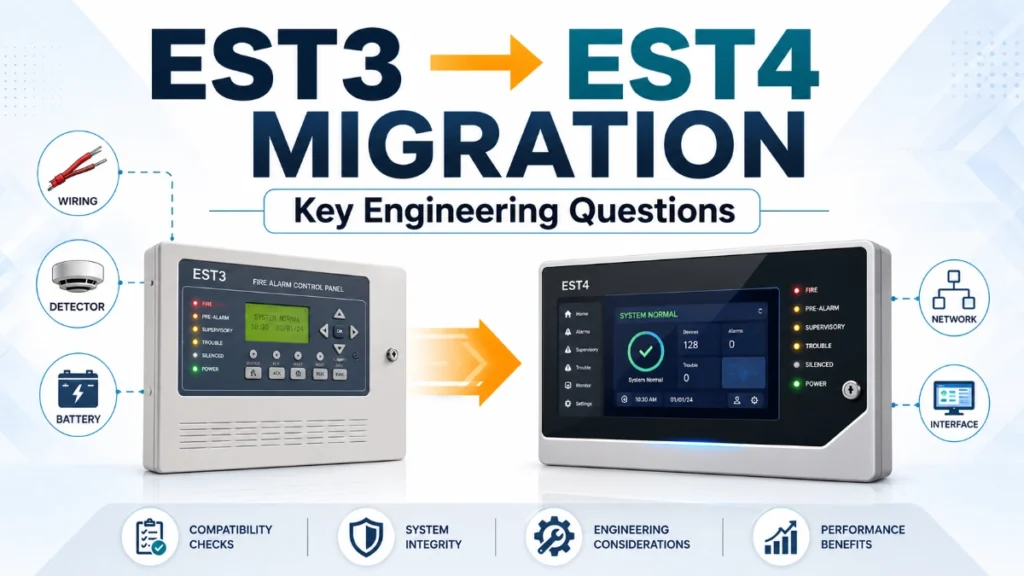
An EST3 system has often been protecting a building for a decade or more. The facility has expanded, some field devices have aged past their comfortable service life, documentation has thinned out through years of small modifications, and new interfaces access control, HVAC shutdown, elevator recall, PA/VA have been added along the way. At some […]
What Happens When a Fire Alarm System Outgrows Its Original Design?
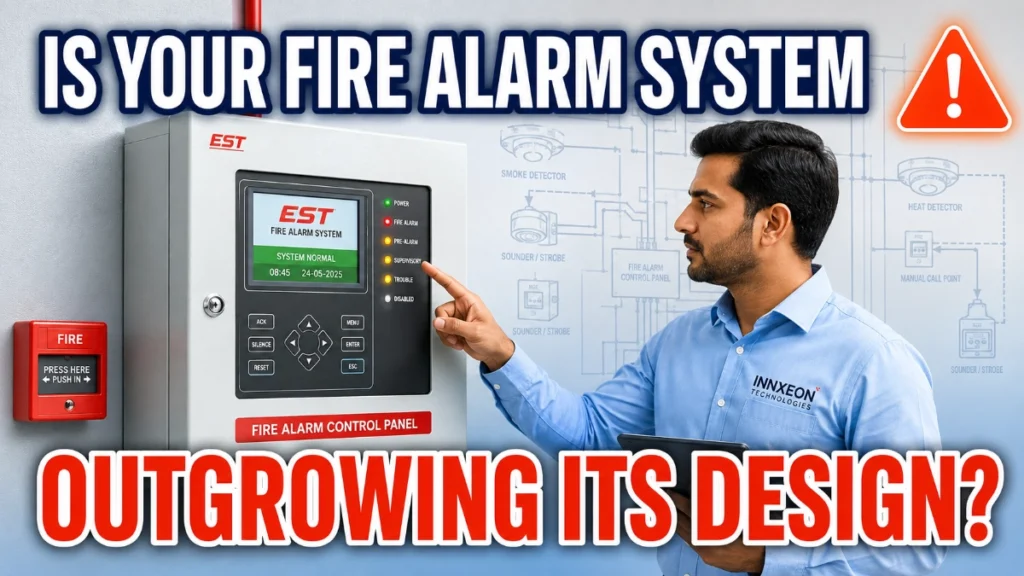
Every fire alarm system is designed around a specific building: a fixed number of detectors, modules, notification appliances, zones or loops, and interfaces. That design is correct on the day it’s commissioned. Years later, buildings rarely stay the same. Floors get added, open areas get partitioned, a warehouse becomes a production line, or new tenants […]
The Fire Alarm Handover Problem: Why Commissioning Is Not the End
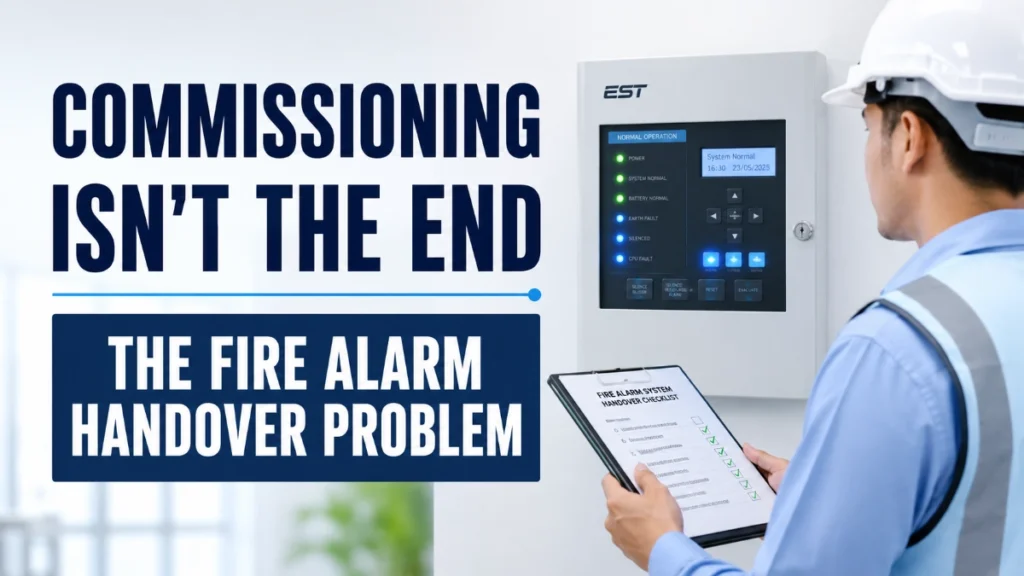
The panel has passed its tests. The cause-and-effect sequence has been verified point by point. The commissioning engineer has signed the report and packed up the laptop. So is the project finished? Not necessarily. A commissioned system proves something specific: the installed devices, loops, and programmed logic performed as expected under the conditions tested. It […]
Why Fire Alarm Faults Should Be Analysed as Patterns, Not Individual Events
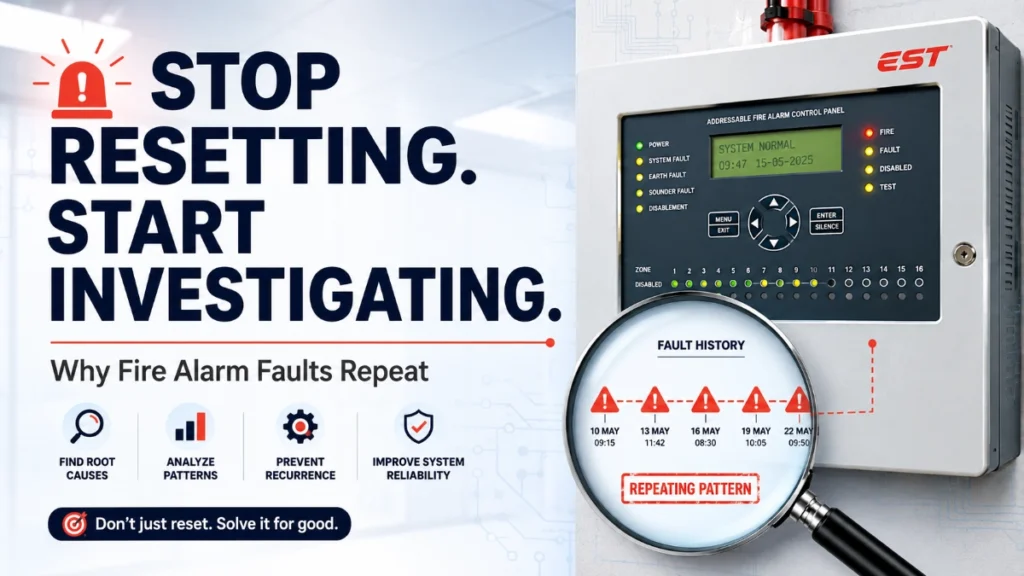
A detector faults on Monday. A technician resets the panel and the log shows normal. Two weeks later, the same fault reappears and gets reset again. Six weeks later, it happens once more during a site walkdown, when nobody has time to dig in. Viewed alone, each event looks minor. But three faults on the […]
The Hidden Engineering Behind a Multi-Building Fire Alarm Network
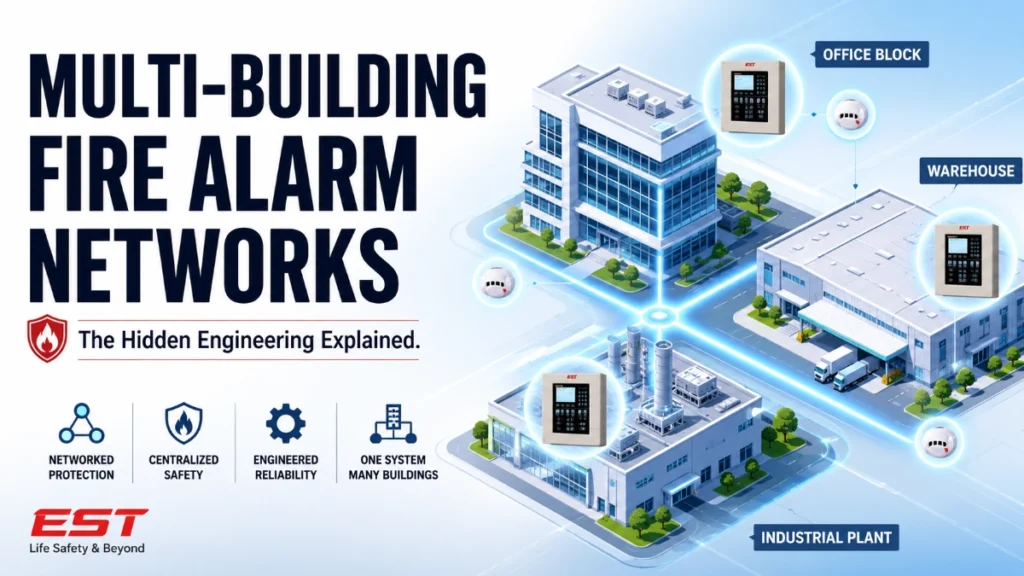
A single-building fire alarm system is forgiving. If a loop takes an unusual path or a panel sits in a less-than-ideal location, the consequences are usually minor. A multi-building fire alarm network does not offer that same margin. The moment two or more panels need to share alarm status, supervisory conditions, and cause-and-effect logic across […]
Why Every Large Fire Alarm System Needs a Lifecycle Strategy
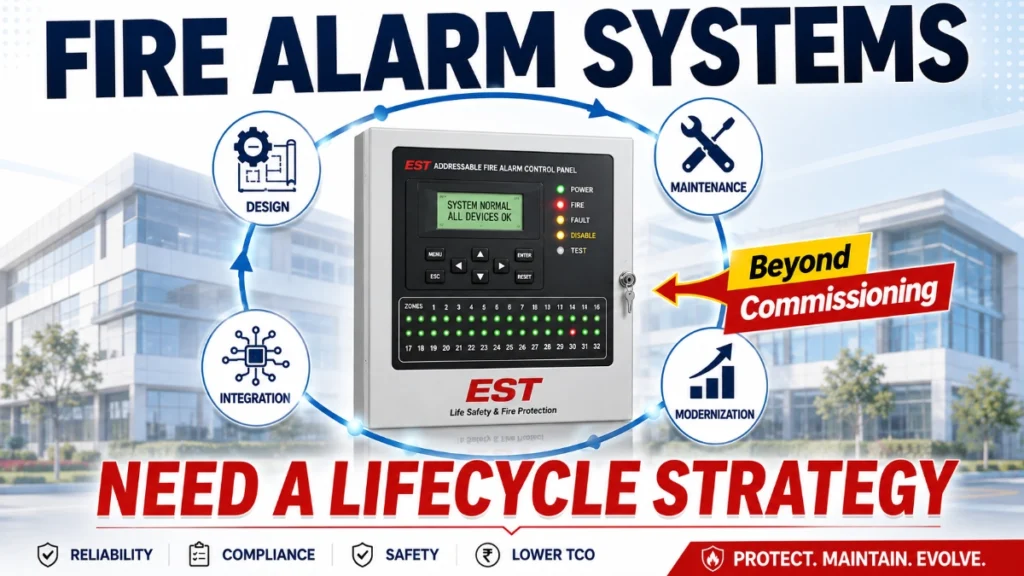
A fire alarm system can be fully operational today and still be poorly prepared for tomorrow. As buildings expand, devices age, technologies change, and support requirements evolve, the system that once met a project’s needs can gradually become harder to maintain. For large, networked, multi-panel installations, this gap between “working” and “well-managed” widens every year. […]
Why Fire Alarm System Scalability Is Often Misunderstood by Project Teams
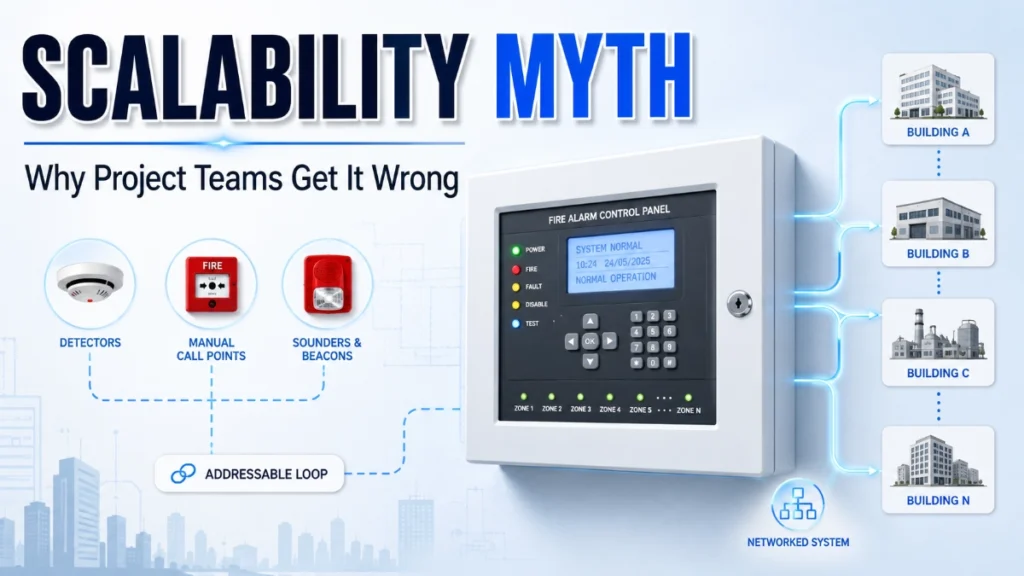
Most project teams treat fire alarm scalability as a spare-capacity number on a datasheet: how many more devices a panel can technically hold. In practice, scalability is rarely limited by the panel. It’s limited by the wiring topology, power budgets, and network architecture, all decided months before anyone thought about expansion at all. This gap […]
Why Fire Alarm System Modernisation Is Not Just About Replacing the Panel
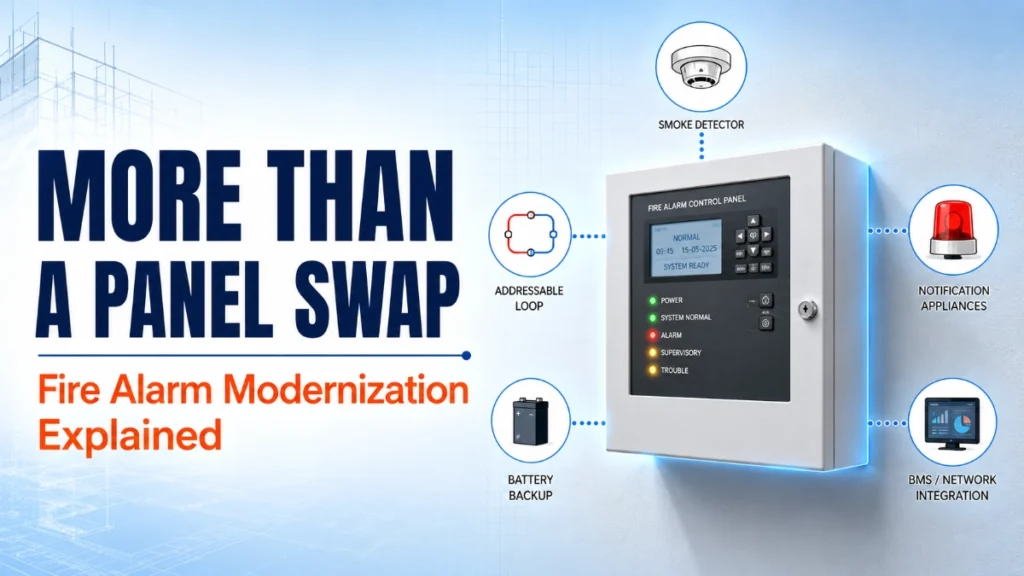
Replacing an ageing fire alarm panel may look like the obvious modernisation strategy. But if the detectors are obsolete, the wiring is undocumented, the cause-and-effect logic is unclear, and the existing interfaces are incompatible, a new panel may solve only one part of the problem. Many facility teams treat fire alarm system modernisation as an […]
Why Fire Alarm Engineers Should Treat Configuration Files Like Critical Assets
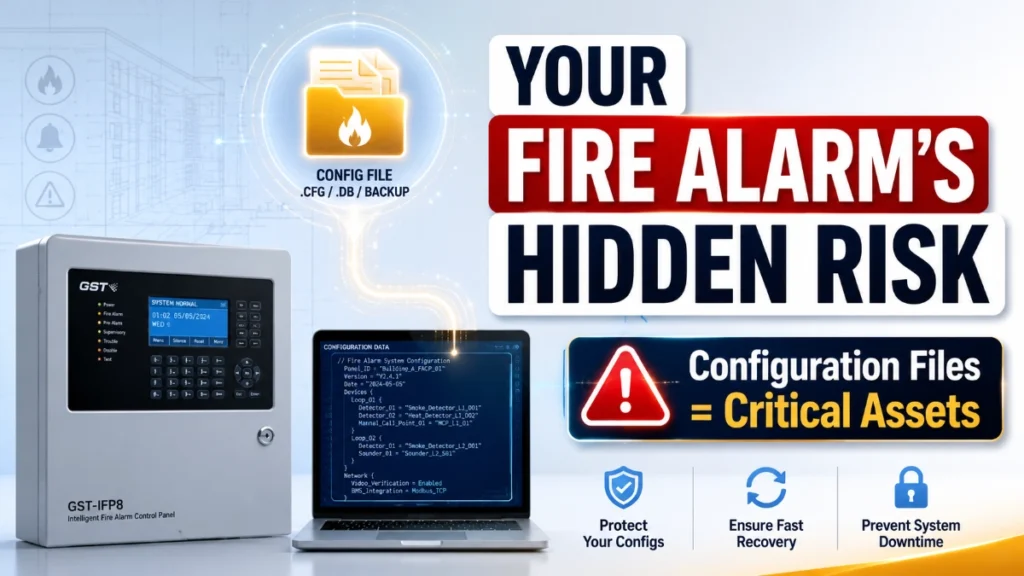
A fire alarm control panel can be physically healthy, its detectors operational, and its wiring intact. However, years of engineering knowledge can still disappear if the system’s configuration file is lost, outdated, or controlled by only one person. Most fire alarm teams focus on physical assets: panels, detectors, modules, wiring, batteries. Configuration files rarely get […]
How Fire Alarm System Architecture Influences Future Maintenance Costs
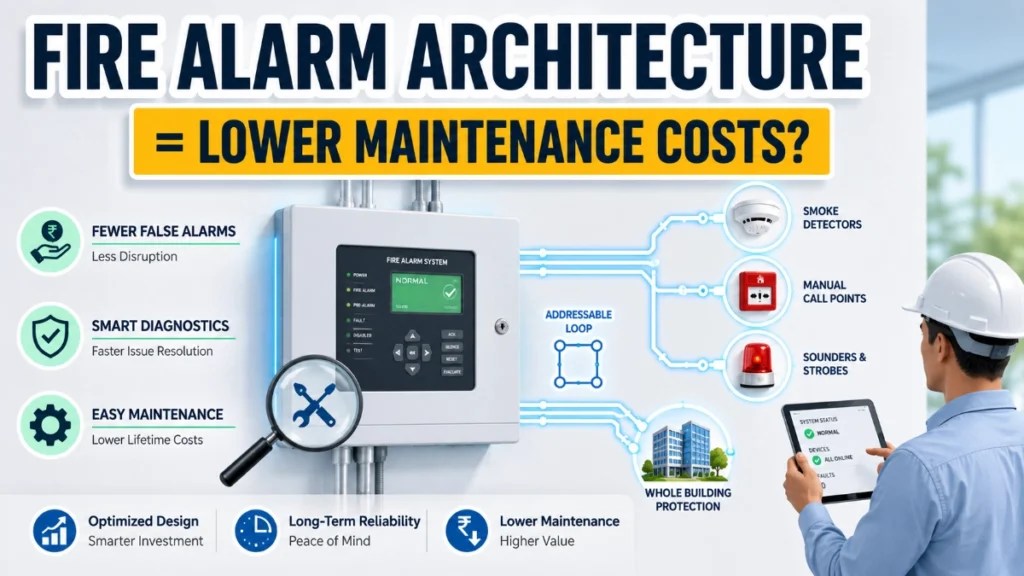
The cost of maintaining a fire alarm system is often assumed to begin after installation. In reality, many maintenance challenges are set years earlier when engineers decide how the system is structured, networked, documented, and expanded. Two buildings with nearly identical detectors and panels can have very different maintenance experiences simply because of architecture. Maintenance […]
Why Fire Alarm Fault History Is More Valuable Than Most Teams Realise
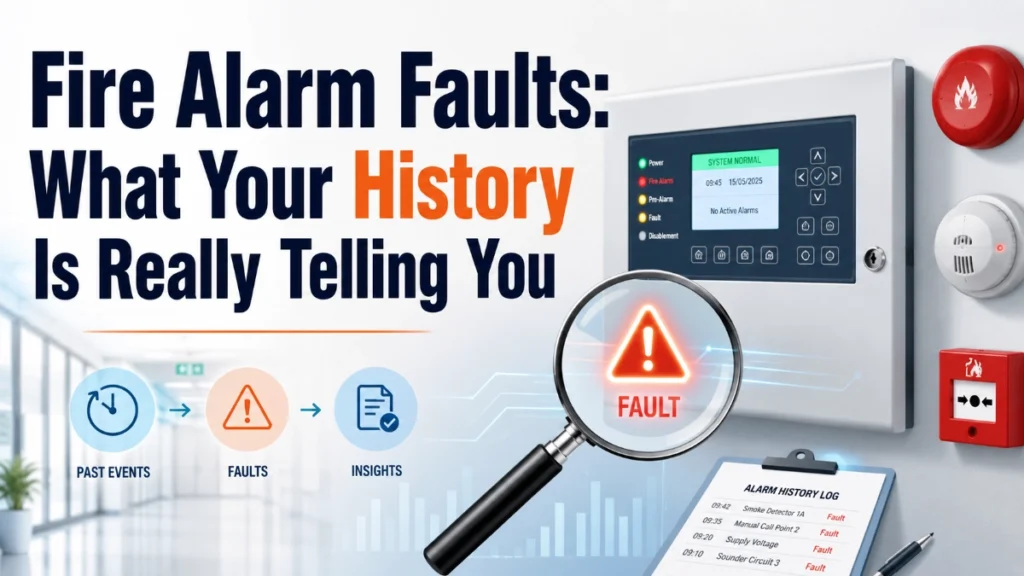
Most maintenance teams see a fire alarm fault, correct it, reset the panel, and move on. But what if the real value isn’t that it occurred once, but the pattern hidden across months of system history? Repeated faults can sometimes reveal issues individual inspections fail to show. Fire alarm fault history is often treated as […]
Why Fire Alarm System Specifications Are Becoming More Important Than Product Features
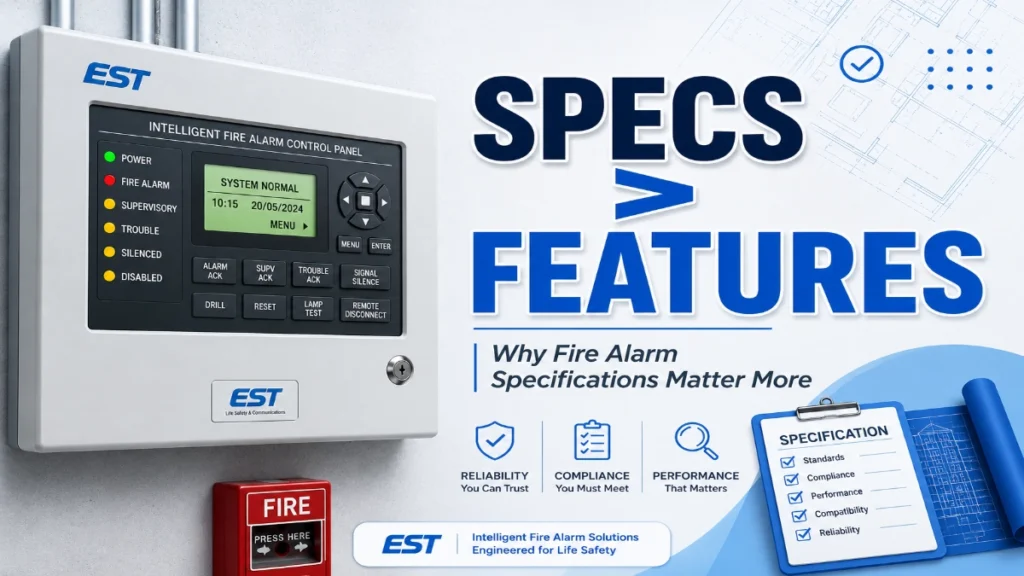
A fire alarm panel may offer more zones, more devices, more connectivity, and more advanced features, but does that automatically make it the right system for a project? Not necessarily. In modern fire alarm engineering, the better question is whether the system satisfies the project’s technical specification, integration requirements, environmental conditions, compliance obligations, and lifecycle […]
